

Franchise Gym Management: Keep Staff, Standardize Tech Before Growth

Franchise gym management means running operations, staff, finances, and brand compliance at your location, using four tools the franchisor should supply: the Franchise Disclosure Document, a teachable operations manual, structured training, and one standardized technology system. Judge yourself on two yardsticks: whether you open within your planned timeline and whether your first year runs steadily, with stable staff and predictable billing.
TL;DR:
- Allow 6–18 months for due diligence, site selection, buildout, hiring, and presale marketing; permit delays can extend costs through rent and payroll.
- Get the FDD at least 14 calendar days before signing or paying, then compare Item 7 investment estimates with independent quotes and franchisee accounts.
- Instructor departures can trigger member churn within 60–90 days, so budget for mentorship, benefits, and flexible scheduling to keep popular instructors.
- Require one platform for bookings, recurring billing, lead follow up, staffing, waivers, and reporting across locations; confirm monthly fees, integrations, and report refresh frequency first.
- Ask whether the franchisor’s 40–80 hours of initial training includes opening week support and later field visits, rather than classroom instruction alone.
Getfitnessflow
Standardize Gym Operations
Fitness Flow brings sales, scheduling, billing, and member engagement into one platform, helping franchise teams reduce administrative workload as they grow.
Table of Contents
- 1. How do you get from evaluation to opening day?
- 2. What does a franchise gym owner actually do all week?
- 3. What support should your franchisor provide?
- 4. How should you plan the finances and financing?
- 5. Which technology should every franchise location require?
- 6. How do you move from hands-on operator to manager?
- 7. What marketing brings in members for a franchise gym?
- 8. What compliance and legal issues come with a gym franchise?
- 9. How do branded member features fit within franchise standards?
- 10. Why system readiness, staff continuity, and one platform come first
- 11. Run every location from one platform with Fitness Flow
- FAQ
- Sources
1. How do you get from evaluation to opening day?
Start with an honest self-assessment. A franchise gym rewards an operator, not a passive investor: owner-operators outperform absentee investors in early ramp success, because the first months demand daily decisions on staffing, scheduling, and member experience. If you plan to stay hands-off, you need a strong general manager from the start.
When you compare brands, look for a mature, documented system, clear unit economics, and an operations manual you could actually train a new hire from. The same research notes that franchising works best when the concept was proven in company-owned locations first, which tells you the system was tested before it was sold.
Plan for 6–18 months from signing the franchise agreement to opening. Work through these milestones in order:
- Complete due diligence: read the FDD, call current franchisees, and review the franchise agreement with a franchise attorney.
- Secure financing and an entity structure.
- Select a site and negotiate the lease.
- Manage the build-out and equipment installation.
- Hire and train your core team before doors open.
- Run pre-opening marketing so you start with a lead list, not an empty floor.
Budget these cost categories, and size your contingency conservatively, since delays in permits or construction burn cash through rent and payroll:
- Franchise fee and any required deposits
- Lease deposits and build-out costs
- Equipment and signage
- Pre-opening payroll and training travel
- Working capital to cover the ramp period
Pro Tip: Insist on receiving the FDD at least 14 days before you sign or pay anything, and use that window to cross-check Item 7 against quotes you gather yourself.
For pre-opening lead generation, a competitive analysis of local gyms helps you position your offer and pick the channels worth paying for before launch.
2. What does a franchise gym owner actually do all week?
Your routine splits into tasks you do daily and controls you review weekly. Daily, you oversee class scheduling, member onboarding, front-desk coverage, billing exceptions, and facility condition. Weekly, you look at attendance trends, failed payments, staffing gaps, and maintenance logs.
Staff continuity is the part owners underestimate. Instructor quality and continuity strongly predict group-fitness retention, and instructor departures often cause member churn within 60–90 days. That means your highest-draw instructor is a revenue risk as much as an employee. Compensation models vary between flat per-class pay and salaried roles. Whichever you choose, mentorship, benefits, and scheduling flexibility give instructors reasons to stay.
Build controls that do not depend on your presence:
- Opening and closing checklists signed off each shift
- Written shift handovers that flag member issues and equipment problems
- A short weekly KPI sheet covering attendance, retention by join month, and per-instructor class draw
- A defined win-back sequence when an instructor leaves, with personal outreach to their regulars
- Consistent class formats so members get the same experience whoever teaches
You can tell a manager is ready for delegation when they keep schedules filled, resolve billing issues promptly, and handle member complaints before they reach you.
Pro Tip: Tie your retention work to the early months. Our 90-day member retention playbook walks through outreach timing that holds up when staffing changes.
3. What support should your franchisor provide?
Franchisor support shows up in four places, and you should verify each before signing.
The FDD. Under the amended Franchise Rule, franchisors must furnish a disclosure document at least 14 calendar days before you sign or make a payment. It covers background, costs, legal obligations, and audited financial information. Read the fee tables, your obligations, and the Item 7 investment estimates line by line.
The operations manual. It should be detailed enough that a new manager could run a shift from it: opening procedures, sales scripts, class standards, cleaning schedules, incident handling. If a franchisor hesitates to show you a sample, treat that as information.
Training. Initial programs benchmark at 40–80 hours. Ask whether that includes on-site support during your opening week and early field visits afterward.
Ongoing field support. Ask what the cadence looks like in practice:
- Weekly operations updates
- Monthly performance reviews against system benchmarks
- Quarterly or annual visits from a field consultant
- A named contact for urgent issues
Franchisor-mandated technology is the fourth pillar. When every location runs on the same platform, the franchisor can compare locations fairly, and you can benchmark yourself against peers. Ask which software is required, what it costs per month, and how data flows to headquarters.
4. How should you plan the finances and financing?
Your initial investment covers the franchise fee, build-out, equipment, pre-opening payroll, and working capital. Budget beyond the Item 7 range for working capital, since a slow ramp means paying rent and payroll before membership revenue catches up.
Ongoing, expect to pay royalties, marketing fund contributions, mandated software subscriptions, and payroll, with rent on top.
Many franchise buyers use SBA 7(a) loans. According to Franchise Evidence, the lender underwrites with SBA guarantees and expects an equity injection, collateral or a personal guaranty, and detailed documentation. Get your file ready before you apply:
- Personal tax returns for the years the lender requests
- Month-by-month financial projections
- The complete FDD and signed franchise agreement
- Contractor quotes for your build-out
- A personal financial statement and a clear plan for your equity injection
Pro Tip: Apply with more than one lender, and ask your franchisor which lenders have recently funded deals in the system. Those lenders already understand the model.
5. Which technology should every franchise location require?
A single platform matters because it standardizes reporting, training, and member experience across sites. When one location tracks retention in a spreadsheet and another uses a separate booking tool, headquarters and owners cannot compare results fairly.
Require these capabilities:
- Class scheduling and bookings
- Recurring payments and billing
- A CRM for leads and follow-up
- Multi-site reporting
- Staff scheduling
- Digital waivers
- A branded member app
The data should drive decisions: instructor-level attendance, retention cohorts, and financial dashboards. Before committing, ask vendors about multi-site permissions, migration support, integrations with payment and communications tools, and how often reports refresh. Stage the rollout with training, as laid out in our software implementation playbook, and compare options using our gym management software guide.
6. How do you move from hands-on operator to manager?
Most owners start by doing everything: teaching classes, closing the front desk, answering member messages. That works for the first few months and burns people out after that. The transition happens in deliberate steps, not by gradually doing less.
First, document what you do. Every task you repeat more than a few times becomes a checklist or a short video. Second, hire a general manager and give them written decision rights: what they can spend, refund, or change without asking you. Third, replace your presence with reporting. A weekly review of attendance, payment failures, and staff scheduling tells you more than hovering on the floor.

Protect your own schedule the way you protect member classes. Block one day per week with no operational duties, and set a rule for which problems justify a call. If everything qualifies, your systems are not ready yet.
Your role shifts toward the work only an owner can do: coaching your manager, reviewing numbers, building community relationships, and deciding whether a second location makes sense. Owners who stay on the floor indefinitely tend to cap their growth at one location and their own energy.
7. What marketing brings in members for a franchise gym?
Franchise marketing works on two levels: the brand’s national or regional campaigns funded by your marketing fee, and the local work only you can do. Do not assume the first covers the second.
Before opening, build a pre-sale list through local partnerships, founding-member offers, and community events, so launch week has real attendance. After opening, focus on the channels closest to purchase:
- Local search profiles with accurate hours, photos, and fresh reviews
- Paid ads aimed at a tight radius around your site
- Referral offers that reward members for bringing a friend
- Trial passes with a structured follow-up, not just a free visit
- Partnerships with nearby employers, schools, and clubs
Check your franchise agreement for approval requirements on creative, logos, and offers. Most systems require franchisor sign-off, and ignoring that can create compliance trouble.
Track cost per lead and trial-to-member conversion by channel. A channel that produces cheap leads who never convert is more expensive than one with fewer, better leads. Connect your CRM to your billing data so you can see which source produces members who stay past 90 days, not just members who sign up.
8. What compliance and legal issues come with a gym franchise?
Your legal exposure starts before opening. The franchise agreement is a long-term contract with terms on territory, renewal, transfer, and termination, so have a franchise attorney review it during your 14-day window. The FTC’s Franchise Rule compliance guide explains what franchisors must disclose and when.
Once you operate, the compliance load is mostly local and ongoing. Confirm which of these apply in your jurisdiction, and verify each with local counsel or the relevant agency:
- Business licenses, building permits, and certificates of occupancy
- Membership contract and auto-renewal rules, which vary by state
- Liability waivers and incident reporting procedures
- Staff certifications such as CPR and first aid, plus employment classification for instructors
- Safe handling of payment card data and member health information
- Insurance coverage that meets franchisor minimums
Keep a compliance calendar with renewal dates for licenses, certifications, and insurance. Store signed waivers and incident reports in your system rather than on paper, so you can retrieve them quickly if a claim arises.
Brand standards are a compliance issue too. Franchisors audit signage, cleanliness, class formats, and approved vendors. Falling short repeatedly can put you in breach of your agreement.
9. How do branded member features fit within franchise standards?
Members stay when the gym feels connected to them between visits. A branded app, challenges, live classes, and progress tracking all serve that goal, but in a franchise they must sit inside the brand’s rules.
Start by asking your franchisor what is already standardized: logo use, color palette, tone of messages, approved class names, and promotional offers. Then ask what room exists for local flavor, such as location-specific events, local coaches’ bios, or community challenges.
A practical split works well. The franchisor owns the brand identity and core experience, so every location presents the same app look, class formats, and program names. You own the local layer: your coaches, your schedule, your member milestones, and your community events.
Gamified features like attendance streaks and challenges are especially useful because they are easy to run consistently across sites while still feeling personal. Retention-focused work we cover in our workout programming case study shows how structured programming supports that connection.
Before launching any member-facing feature, confirm it meets franchise brand guidelines and data-handling rules, and train your staff to promote it at the front desk.
10. Why system readiness, staff continuity, and one platform come first
Here is my stance after weighing the evidence: most franchise gym problems trace back to three decisions made early. The first is system readiness. A franchise built on a thin manual forces every owner to reinvent processes, so before you buy, test whether you could train someone from the documents alone. The second is staff continuity. Instructors are the face of the gym, and losing a strong one can cost you members within weeks, so mentorship and fair pay deserve budget from day one. The third is standardization. One platform for scheduling, billing, and reporting beats three tools that never agree.
— Louis
11. Run every location from one platform with Fitness Flow
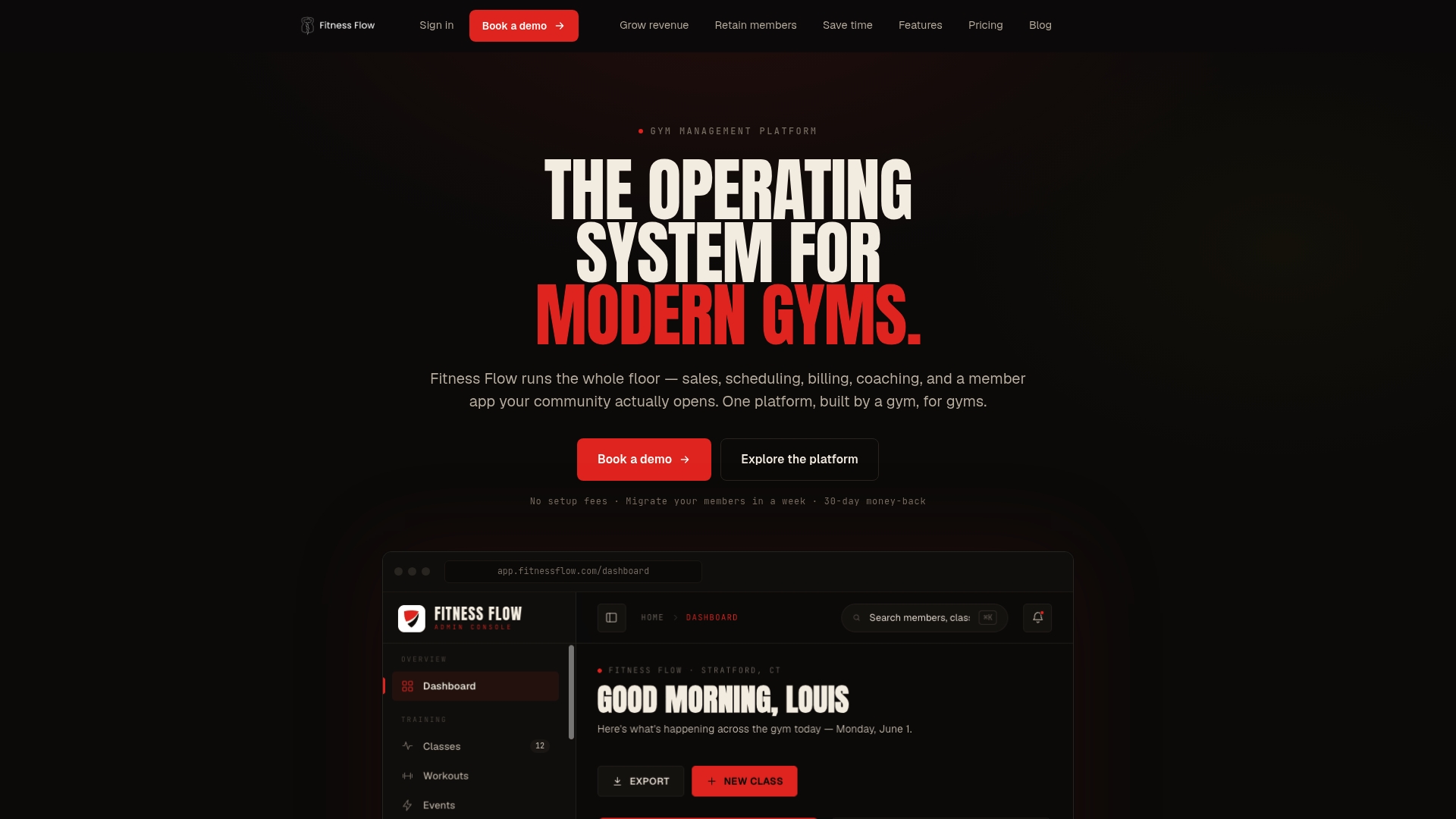
We built Fitness Flow to centralize scheduling, billing, CRM, and multi-site reporting in one place, with a fully branded member app that keeps your members engaged between visits. Our Solo, Studio, and Multi-site plans are available, and we support migration from your current tools. See how it works on our platform page.
FAQ
How profitable is owning your own gym?
Profitability depends on membership volume, retention, rent, and payroll, and it varies widely between locations. Your FDD may include financial performance information, so review it and speak with current franchisees before projecting your own numbers.
What is a gym management system?
A gym management system is software that handles class scheduling, bookings, recurring billing, member records, and reporting in one place. Franchise systems often require a single platform so locations report data the same way.
How long does it take to open a gym franchise?
Typical franchisee onboarding timelines run 6–18 months, covering due diligence, site selection, build-out, hiring, and pre-opening marketing. Permit delays and construction schedules are the usual causes of slippage.
What should I check before choosing a gym franchise?
Review the FDD, request a sample of the operations manual, and ask about training hours and field support. Then call current franchisees to ask how the franchisor responds when something goes wrong.
Sources
- COMPLIANCE GUIDE
- Gym Franchise Model Guide: Franchise vs Company-Owned, FDD & Franchisee Selection - 2025
- Understanding Franchise SBA Financing | Franchise Evidence