
Fitness Challenge Ideas That Actually Get People Moving

Micro-challenges (one minute, no equipment) win for meetings and quick engagement, 30-day challenges win for building real habits, and team or points-based formats win for community and retention. Match the format to the goal, keep tracking dead simple, and add a small incentive. Everything else in a challenge program is just details.
TL;DR:
- Short micro-challenges under one minute are ideal for office meetings, virtual breaks, or low-commitment participation with no equipment needed.
- Thirty-day challenges, like progression of planks or squats, are most effective for establishing lasting habits and measurable improvements.
- Simple tracking methods such as shared spreadsheets or a whiteboard keep participation high; complex systems often cause drop-offs.
- Offering low-impact modifications and clear instructions increases challenge accessibility and minimizes dropout rates.
- Automated platforms improve challenge management by reducing staff workload, increasing engagement, and providing instant recognition through badges and leaderboards.
Table of Contents
- Fitness Challenge Ideas For Every Goal And Setting
- Choosing The Right Format And Duration
- Setting Up And Running A Challenge Without Chaos
- Making Challenges Safe And Accessible For Everyone
- Why Recognition And Small Rewards Make Challenges Stick
- Run Better Challenges Without The Spreadsheet Headache
- Sources
Fitness Challenge Ideas For Every Goal And Setting
The best fitness challenge ideas share three traits: a clear goal, a ruleset a fifth-grader could follow, and a tracking method nobody has to think twice about. Below are ready-to-run templates grouped by type, each with a quick modification so nobody gets left out.
Group and team challenges
1. Department Step-Off. Teams of four to six log daily steps for two weeks; highest team average wins. Track with a shared spreadsheet or a group fitness app. Modification: swap steps for minutes of movement for anyone using a wheelchair or recovering from injury.
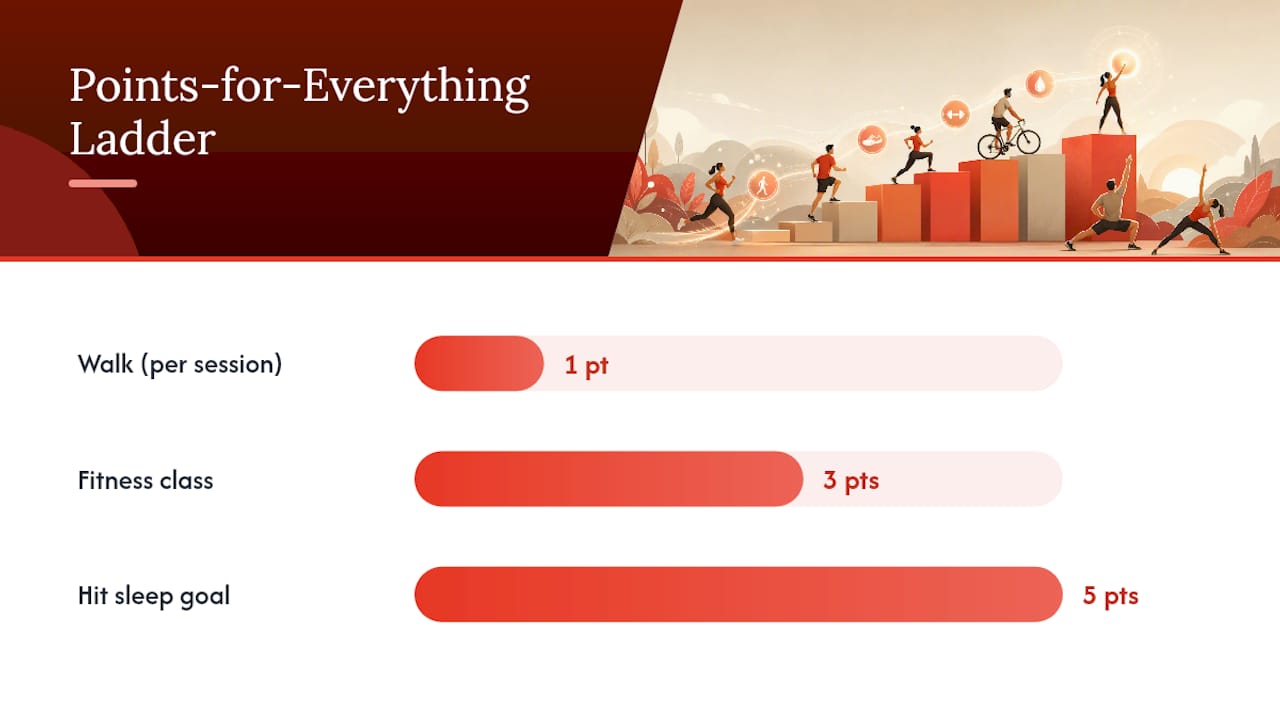
2. Points-for-Everything Ladder. Assign point values to workouts, classes, and healthy habits (1 point for a walk, 3 for a class, 5 for hitting a sleep goal). Members log points weekly on a card or app. This format rewards consistency over intensity, which is exactly why it works for mixed-ability groups.
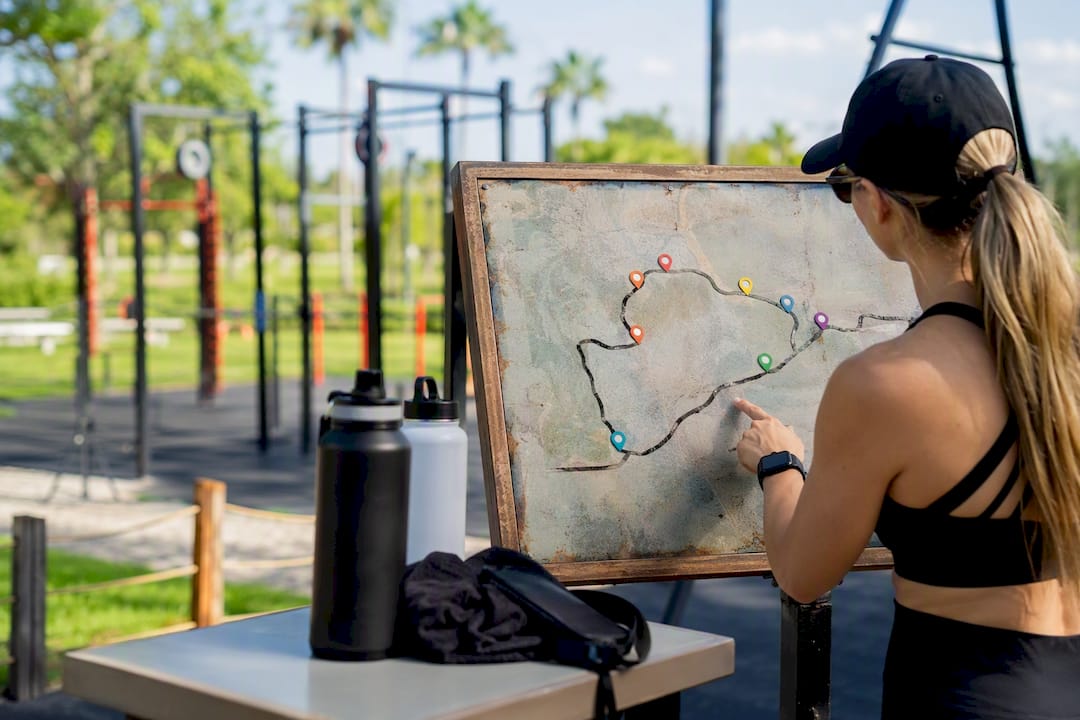
3. Relay Mileage Challenge. A gym-wide team logs collective miles (running, walking, rowing, cycling) toward a symbolic distance, like the length of a famous trail. A wall-mounted progress map does the tracking for you.
4. Buddy Accountability Pairs. Partner up members who check in with each other three times a week. No app needed. Modification: pair by schedule compatibility, not fitness level.
Time-based challenges (7-day and 30-day)
5. 30-Day Plank Progression. Start at 20 seconds, add 5 seconds daily. Track on a printed calendar taped to a locker. Modification: knee-plank variation for anyone with wrist or shoulder issues.
6. 30-Day Squat Challenge. Escalating rep counts by day, with rest days built in every fourth day. This is one of the most commonly cited formats because it requires zero equipment and scales to any 30-day fitness plan structure a gym already runs.
7. 7-Day Reset Week. Combine one workout, one mobility session, one nutrition swap, and one extra hour of sleep, every day for a week. Good as a low-stakes trial run before committing to a full month.
8. 30-Day Cardio Streak. Minimum 15 minutes of elevated heart rate daily, tracked via wearable or honor-system checklist. Modification: brisk walking counts equally to running.
Micro-challenges (1-minute and under)
9. Meeting-Break Plank Hold. One minute, done standing at a desk if needed. These fit directly into virtual meeting breaks because they need no equipment at all.
10. 60-Second Wall Sit. Simple, brutal, and trackable by feel. No app required.
11. Desk Dance-Off. One minute, any song, filmed or not. Pure engagement, zero fitness gatekeeping.
12. Stair Sprint Minute. Climb stairs for one minute; count flights. Stair climbing carries a documented cardiovascular benefit even in short bursts, which makes it a strong pick for office buildings with a stairwell nobody uses.

13. 60-Second Activity Cards. Draw a card, do the move for 60 seconds. Pre-built card sets like the Youth Sport Trust’s activity cards work just as well for adult groups as they do for classrooms.
Performance and skills challenges
14. Max Push-Up Test, Retest. Baseline on day one, retest on day 30. The gap is the motivation.
15. Deadlift Progression Ladder. For gym settings only, with a coach signing off on form before weight increases.
16. Flexibility Bingo. A bingo card of stretches and mobility drills; complete a row for a small prize.
Wellness and lifestyle challenges
17. Hydration Tracker. Log eight glasses a day for two weeks. Pairs naturally with any exercise challenge, since sleep, hydration, and nutrition challenges commonly run alongside workout-based ones.
18. Sleep Consistency Challenge. Same bedtime, same wake time, for 21 days. Track with a phone alarm log or a simple checkmark card.
19. No-Sugar-Added Two Weeks. Optional, opt-in, never mandatory given how personal nutrition rules can get.
Gym engagement challenges
20. New Member 30-Day Onboarding Challenge. A structured checklist (attend three classes, try two equipment types, log one nutrition log) that doubles as a retention tool.
21. Monthly Theme Challenge. Rotate a theme each month (mobility March, strength September) with a small badge or patch awarded at the end.
22. Class Attendance Bingo. Attend five different class types in a month to fill a card, redeemable for a small reward.
Choosing The Right Format And Duration
Pick the length by matching it to the goal, not the calendar. Micro-challenges (under a minute) fit meetings, virtual check-ins, and anyone who needs a zero-barrier entry point. Thirty-day challenges build the repetition needed for actual habit change. Monthly or year-long formats work best for community pacing, seasonal themes, and gym-wide benchmarks.
- Micro (60 seconds or less): best for workplace engagement and low-commitment onboarding
- 7-day: good as a trial run before a longer commitment
- 30-day: the sweet spot for habit formation and measurable before/after results
- Monthly: ideal for recurring community events and themed programming
- Year-long: works for point accumulation, mileage clubs, or annual mastery goals
A simple weekly template: Monday strength, Wednesday cardio, Friday mobility, with a Sunday check-in for logging progress. A monthly template: week one baseline testing, weeks two and three progressive loading, week four a retest and celebration.
Pro Tip: Ramp intensity in thirds, not straight lines. Start flat for the first third to build the habit, increase moderately in the middle third, and save the hardest push for the final third when motivation naturally dips.
Setting Up And Running A Challenge Without Chaos
A challenge fails from bad logistics far more often than from bad ideas. Before launch, nail down the objective, the audience, accessibility needs, the exact ruleset, the timeline, and how you’ll communicate updates.
Tracking options, ranked by friction:
- Paper cards or a whiteboard: zero learning curve, but no automatic leaderboard
- Shared spreadsheets: free and flexible, but manual entry causes drop-off
- Fitness trackers and apps: accurate, but excludes anyone without the device
- Gym or membership software: automated tracking and leaderboards, best for gyms already running member apps
Choosing the lowest-friction method the group will actually use matters more than choosing the most precise one, since accountability through simple tracking drives participation better than perfect data ever does.
Scoring systems that hold up under scrutiny:
- Points-based (rewards consistency over raw performance)
- Totals-based (best for mileage or rep-count challenges)
- Streak-based (rewards showing up daily, forgives one missed day)
Engagement tactics worth the effort: public leaderboards, weekly checkpoints, a midpoint shoutout, and a closing celebration event with a tangible reward. Monthly frameworks that hand out patches or small badges consistently boost repeat engagement compared to challenges with no recognition at all.
Common pitfalls: rules so complicated nobody remembers them by week two, tracking methods that require ten minutes of data entry, and prizes so big they turn a fun challenge into a competition only the fittest members can win.
Making Challenges Safe And Accessible For Everyone
Every challenge needs a seated or low-impact version of its core movement. A plank challenge becomes a modified knee-plank or wall-plank; a step challenge becomes a minutes-of-movement challenge for anyone using mobility aids.
- Offer at least two intensity bands (beginner and advanced) for every challenge you launch
- Use opt-out language upfront: “modify anything, skip anything, no explanation needed”
- Flag challenges that need medical clearance, particularly for pregnant participants or anyone with joint pain
- Cap cardio intensity targets using general public-health guidance on heart-healthy activity levels rather than guessing
Pro Tip: Print modification options directly on the challenge card or sign-up sheet. If a member has to ask for the easier version, most won’t, and they’ll quietly drop out instead.
Why Recognition And Small Rewards Make Challenges Stick
People don’t finish challenges because they love burpees. They finish because a badge, a leaderboard spot, or a teammate’s check-in makes them feel seen. That’s identity and social proof doing the heavy lifting, not willpower. Tie challenges to onboarding moments, not just calendar dates, and the small rewards do more retention work than any prize budget could.
— Louis
Run Better Challenges Without The Spreadsheet Headache
Running one challenge with a whiteboard is manageable. Running six challenges a year across hundreds of members, with leaderboards, badges, and progress tracking, is where spreadsheets fall apart. That’s the exact gap Fitness Flow was built to close for gym owners.
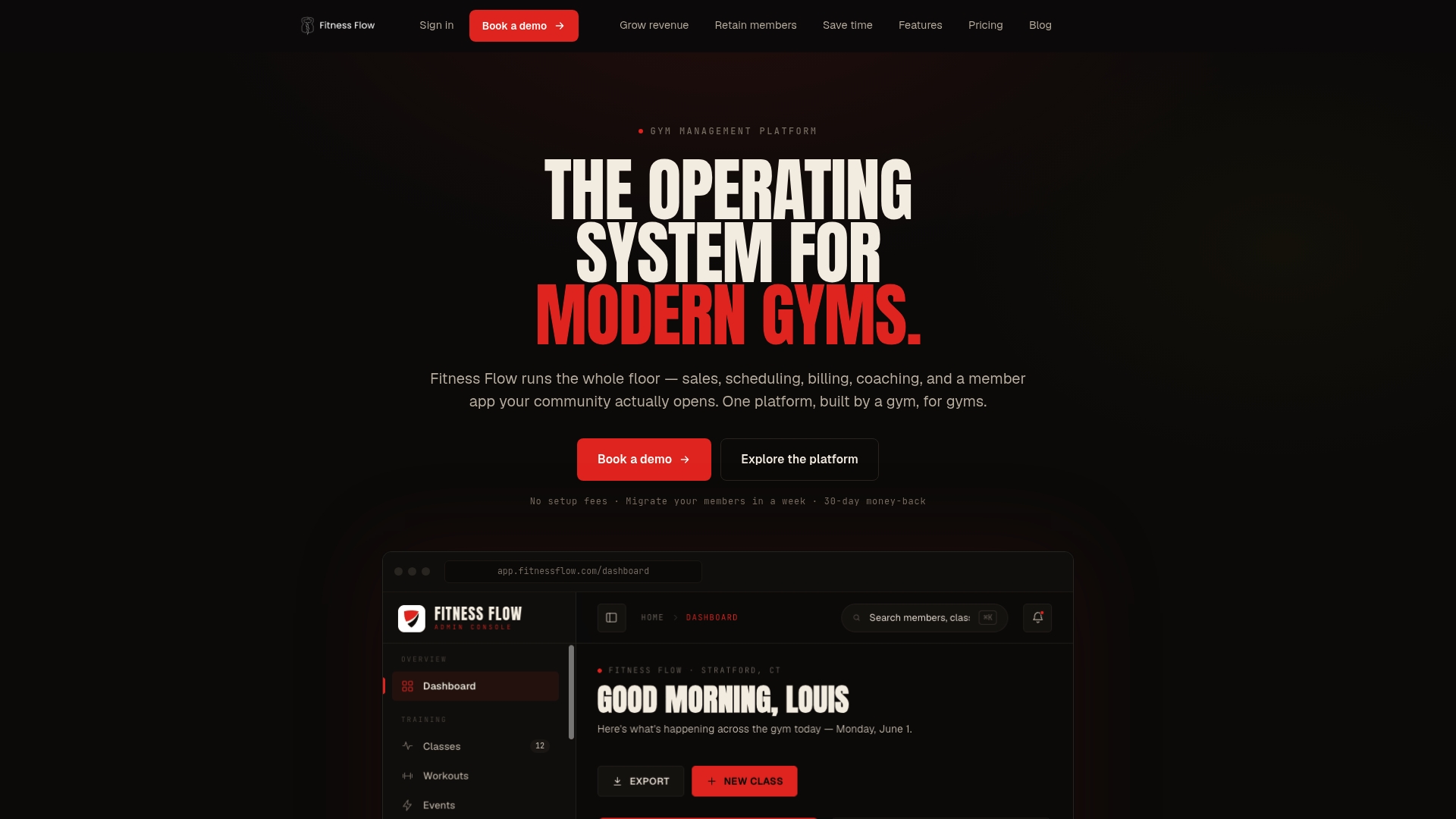
Fitness Flow automates the parts of a challenge that eat up staff time: signups happen inside the branded member app, progress updates automatically, leaderboards publish themselves, and badges get delivered the moment a milestone hits. Gyms using the platform report an average lift in member retention and save time in administrative work, time that used to go into manual tracking now goes into coaching. Before a demo, list your last three challenge formats and where each one broke down (tracking, communication, follow-through), so you can see exactly how automation would have fixed it. Start with a single pilot challenge on the Fitness Flow platform and expand once you see the leaderboard data your members actually engage with.
Sources
- Inclusive 1-Minute Fitness Challenge Ideas to Do From Home
- 17 Exercise And Wellness Challenge Ideas 2026 | TZ Blog
- 60 Second Physical Activity Challenges
- Fitness Challenge Ideas for Personal Trainers (2026) | My PT Hub