
Automate Your Gym Cancellation Policy Into Software Rules for Owners

A gym cancellation policy has to define the notice method, the effective date, and what happens to billing the moment a member cancels, with disclosure conspicuous enough to satisfy state law. Every clause you write needs a matching rule in your management software, or the policy is just a document nobody follows. The next move is simple: update your agreement template, then map each clause to a setting in a platform like Fitness Flow so cancellations, freezes, and refunds process the same way every time.
TL;DR:
- A clear notice window aligning with billing cycles, such as 30 days for full-service gyms or 24 hours for small classes, is essential to avoid disputes.
- State laws often require specific cancellation rights, like a three-business-day cooling-off period or explicit notice on the signature page, which must be incorporated legally.
- Management software must be configured to enforce contract clauses for cancellations, freezes, and refunds, with automated confirmations and detailed audit logs.
- Staff must be trained with scripts and exception protocols, and all policies should be published prominently at sign-up points and on digital platforms.
- Regular testing of cancellation automation and checking compliance with state-specific rules help prevent legal exposure and improve retention.
Table of Contents
- What to include in your gym cancellation policy
- Legal must-haves and state rules you can’t skip
- How to implement cancellations, freezes, and refunds in your software
- Communicating the policy and training staff to enforce it fairly
- Sample clauses and a quick implementation checklist
- Why owners keep treating cancellations as an afterthought
- Turning your policy into automated software rules
- Where to check state-specific rules
- Sources
What to include in your gym cancellation policy
Most disputes trace back to a policy that’s vague about timing or method, not one that’s too strict. Start with a cancellation window that matches how you actually bill. A studio running weekly small-group sessions might need 24 hours’ notice; a full-service gym with monthly dues can reasonably ask for 30 days. Whatever you choose, write down exactly when the clock starts, because “effective date” arguments are the single most common billing complaint owners deal with.
Beyond the window, your written policy needs to spell out:
- Notice method: which channels count (member app, email, signed form) and whether a digital timestamp is required as proof.
- Fee tiers: a late-cancel fee for short-notice cancellations and a separate no-show charge for missed sessions.
- Refund and proration rules: how prepaid packs, unused sessions, or partial months get calculated and returned.
- Freeze and pause terms: who qualifies, the maximum freeze length, and how reactivation billing resumes.
- Exceptions: relocation, documented medical issues, and military deployment are the three carve-outs almost every enforceable contract includes.
A gym contract template that limits prepaid commitment length also protects you if your facility ever has to close or relocate. Long prepaid terms create refund exposure that a shorter, renewing agreement avoids entirely.
Legal must-haves and state rules you can’t skip
Your contract language means nothing if it conflicts with the law of the state you operate in. State consumer-protection statutes routinely override club agreements, and a clause that looks airtight on paper can be unenforceable the moment a member challenges it, according to legal analysis from FindLaw. Many states also require a cooling-off period after signing, typically framed as a short window of business days during which a new member can cancel penalty-free, and a contract that buries this right in fine print risks being voided outright.
Ohio offers a useful concrete example. Its Prepaid Entertainment Contracts Act requires a written contract, a separate cancellation form, a three-business-day right to cancel, and a cap on how long a prepaid contract can run, according to KJK’s legal analysis. That’s the level of specificity your own state’s statute may demand, even if the exact numbers differ.
Before finalizing any template, check for:
- A statutory cooling-off period and how many business days it covers.
- Requirements for “clear and conspicuous” cancellation notice on the signature page itself.
- Facility-closure rules that trigger automatic refunds or contract extensions, as Nolo’s consumer guide documents state by state.
Regulatory context worth knowing: the FTC’s click-to-cancel effort pushed the broader subscription industry toward a standard where canceling online should be no harder than signing up. Even where that federal rule has faced legal setbacks, the expectation stuck. Legal scholarship on the FTC rule and industry response recommends owners keep dated proof of every cancellation request and confirmation, since that recordkeeping is what actually protects you in a dispute.
How to implement cancellations, freezes, and refunds in your software
A policy clause is only real once it exists as a rule in your management platform. Treat the translation from contract to software as a discrete project, not an afterthought.
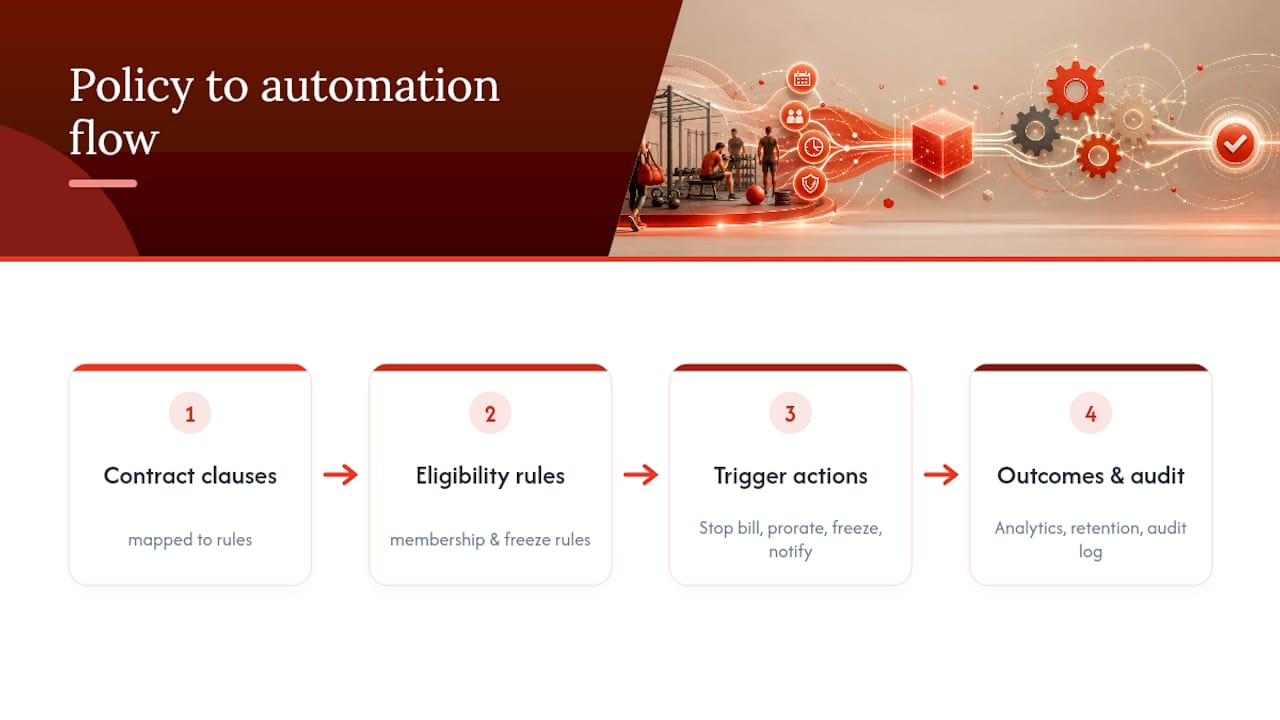
- Map each clause to a system rule. Notice periods become a billing-stop trigger; refund language becomes a proration formula; freeze terms become a counter with a hard cap and an auto-reactivation date.
- Configure access control alongside billing. A canceled member’s key fob or app access should deactivate on the same effective date the contract specifies, not days later.
- Set up confirmation and audit trail automations. Every cancellation, freeze, or refund should generate a timestamped record and a member-facing confirmation message automatically.
- Retain consent records. Keep the original signed agreement plus every cancellation request and confirmation, tied to staff IDs and timestamps, based on the recordkeeping standard described in the Marquette Sports Law Review analysis.
- Test the path on a schedule. Submit a mock cancellation request monthly, then check that the confirmation fired, billing actually stopped, and the audit log recorded it correctly.
Pro Tip: Run your mock cancellation test right after any software update or pricing change. That’s when broken automations slip through unnoticed, usually discovered only after a member disputes a charge.
Reconcile the audit log against your billing report at least once a quarter. If the numbers don’t match, you’ve found a gap before a member or a regulator does.
Communicating the policy and training staff to enforce it fairly
Publish the policy everywhere a member might look for it: the website’s policy page, the checkout checkbox at signup, booking confirmation emails, and the signature page of the physical or digital agreement. Redundancy here isn’t overkill. It’s what satisfies the “clear and conspicuous” standard that courts and regulators actually check for.
Front-desk staff need a script, not just a PDF to point to. A one-page reference covering standard cancellation language, the fee schedule, and the exact list of approved exceptions keeps every conversation consistent. When a staff member grants an exception outside that list, document why, because uneven enforcement is what most often turns a routine cancellation into a chargeback dispute or a bad review.
- Post the policy at signup, checkout, and on every booking confirmation.
- Give staff a short script covering fees, notice windows, and approved exceptions.
- Log every discretionary exception with a reason.
- Offer a freeze or a retention discount before processing a full cancellation when it fits your policy.
Sample clauses and a quick implementation checklist
Adapt this language to your state’s requirements before using it in a live contract.
Sample cancellation clause: “Member may cancel this agreement by submitting notice through the member portal, in writing via email, or by signed form at least [30] days before the next billing date. Cancellation becomes effective on the first billing date following the notice period.”
Sample freeze clause: “Member may freeze this membership for up to [90] days per calendar year, subject to a [$10] monthly hold fee. Membership automatically reactivates and full billing resumes at the end of the freeze period unless canceled per the terms above.”
- Update your contract template with the clauses above.
- Configure matching billing, access, and notification rules in your management software.
- Run a mock cancellation test and check the audit log.
- Publish the policy at every touchpoint listed above.
- Train staff on the script and exception list.
Why owners keep treating cancellations as an afterthought
Most gym owners write a cancellation policy once, at launch, and never touch it again. That’s the real pitfall: treating cancellations as hidden administrative work instead of a member-facing process that deserves the same attention as your sales funnel. The fix is straightforward. Automate the path, then test it on a schedule instead of waiting for a dispute to expose the gap.
Two priorities matter more than the rest. Disclose the terms clearly at the point of sale, and make sure billing actually stops the moment a cancellation takes effect, not three days later when someone finally processes the paperwork. Platforms built for this, Fitness Flow among them, report meaningful retention gains when member communication and billing automation work together instead of against each other, which is a strong argument for treating this as a systems problem rather than a paperwork problem.
— Louis
Turning your policy into automated software rules
This platform can take the clauses covered above and turn them into working rules: billing stops the day a cancellation takes effect, prorations calculate automatically, freeze counters track themselves, and confirmation messages go out automatically.
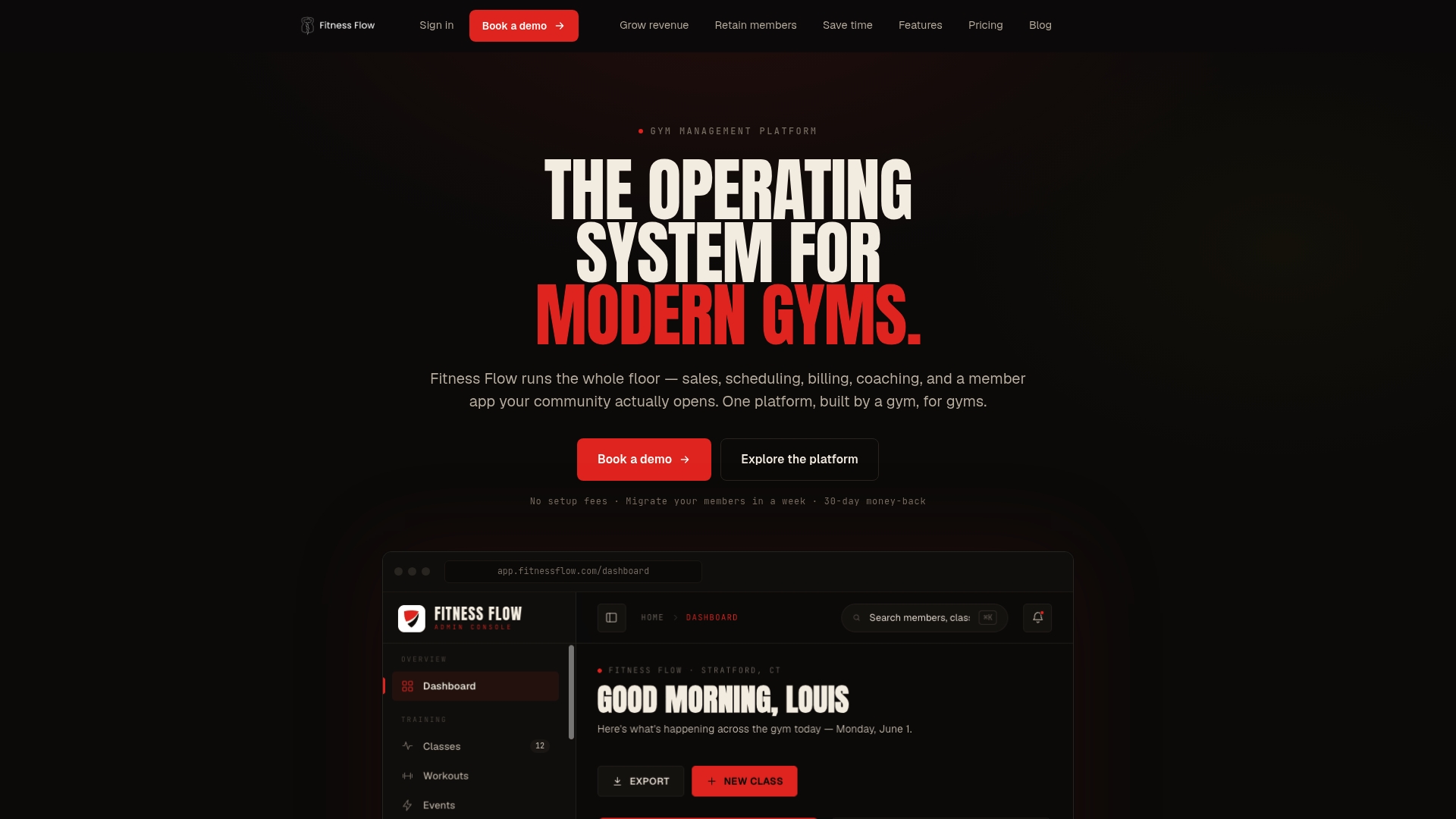
For owners juggling scheduling and cancellation logistics across team sports or group classes, the approach used in managing pickup game cancellations offers a useful parallel: clear rules communicated up front avoid most disputes before they start. Fitness Flow applies that same logic to membership billing, layered with a branded member app and analytics that flag at-risk members before they cancel at all. Gyms report increased member retention and substantial weekly time savings on administrative tasks previously spent chasing cancellation paperwork by hand when using similar management platforms.
If your current contract and software don’t talk to each other, that gap is worth closing before your next billing cycle. Book a demo of Fitness Flow to see how policy clauses map to live automations.
Where to check state-specific rules
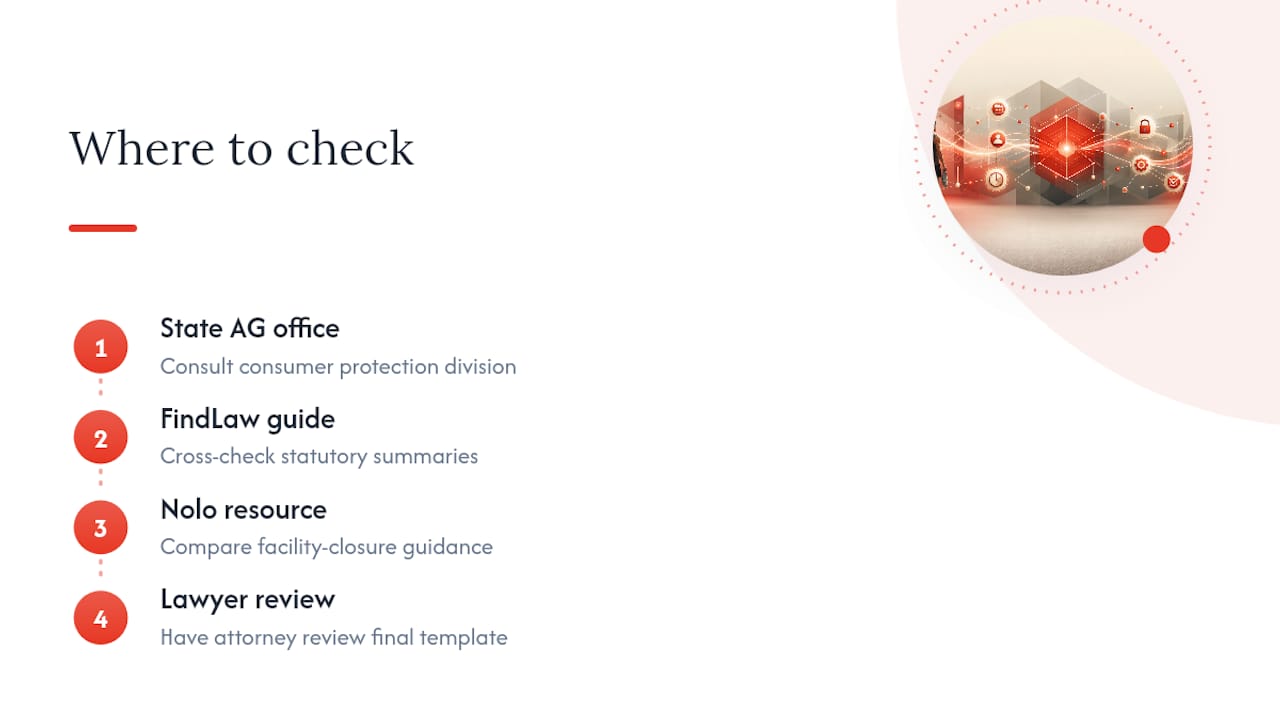
For exact statutory language, start with your state attorney general’s consumer protection division, then cross-check with FindLaw’s cancellation law guide and Nolo’s facility-closure resource. Have a lawyer review your final template before signing new members under it.
This article is general information, not a substitute for advice from a qualified lawyer. Consult a qualified legal professional about your own circumstances before acting on anything here.