Gym Equipment Maintenance: A Schedule and Checklist
The fastest way to cut equipment downtime and protect your warranties is a simple, recurring preventive maintenance schedule: daily wipe, weekly checks, regular lubrication as recommended by manufacturers, quarterly deep inspections. Skip that rhythm and you’re not gambling on breakdowns, you’re scheduling them. Manufacturer data backs this up directly, and the fix costs almost nothing compared to a replacement motor or a voided warranty claim.
Start this week with three moves:
- Assign one staff member to do a five-minute daily wipe-down on every cardio console and bench.
- Block 30 minutes every Monday for a weekly cable, fastener, and belt-tracking check.
- Put regular lubrication as recommended by manufacturers on the calendar now, not after something squeals.
TL;DR:
- Implement a clear hierarchy of maintenance tasks: daily wipes, weekly checks, monthly lubrications, and quarterly inspections assigned to specific staff roles.
- Use manufacturer-approved cleaning products and lubricants to prevent equipment damage and avoid voiding warranties.
- Regularly monitor humidity levels and avoid damp conditions to reduce corrosion and extend equipment lifespan.
- Recognize early warning signs like squeals, burning smells, or frayed cables as urgent issues requiring immediate technician intervention.
- Keep detailed logs with timestamps or photos for all maintenance tasks to ensure accountability and warranty compliance without relying on memory.
Table of Contents
- Building a Gym Equipment Maintenance Schedule by Frequency
- Caring for Cardio Machines, Strength Equipment, and Free Weights
- What Cleaners and Lubricants Are Safe for Gym Equipment?
- How Do You Know When a Machine Needs a Technician?
- Do Humidity and Storage Conditions Affect Equipment Life?
- Turning Your Maintenance Checklist Into a Repeatable Workflow
- A Facility Manager’s Take on Maintenance Schedules
- Key Takeaways
- Sources
Building a Gym Equipment Maintenance Schedule by Frequency
Most gym equipment maintenance problems trace back to one thing: nobody wrote down who does what and when. Manufacturer schedules from Life Fitness, Horizon, Keiser, and Matrix all follow the same logic, just tuned to their own machines. Copy the structure below into whatever task system you already use.
- Daily. Wipe down consoles, handrails, and upholstery. Do a quick visual safety scan for frayed cables, loose pads, or debris around moving parts. Clear dust and sweat buildup before it hardens.
- Weekly. Vacuum under and around cardio decks where dust chokes motors. Check fasteners on benches and racks for any give. Give cables a visual pass, looking for fraying near pulleys.
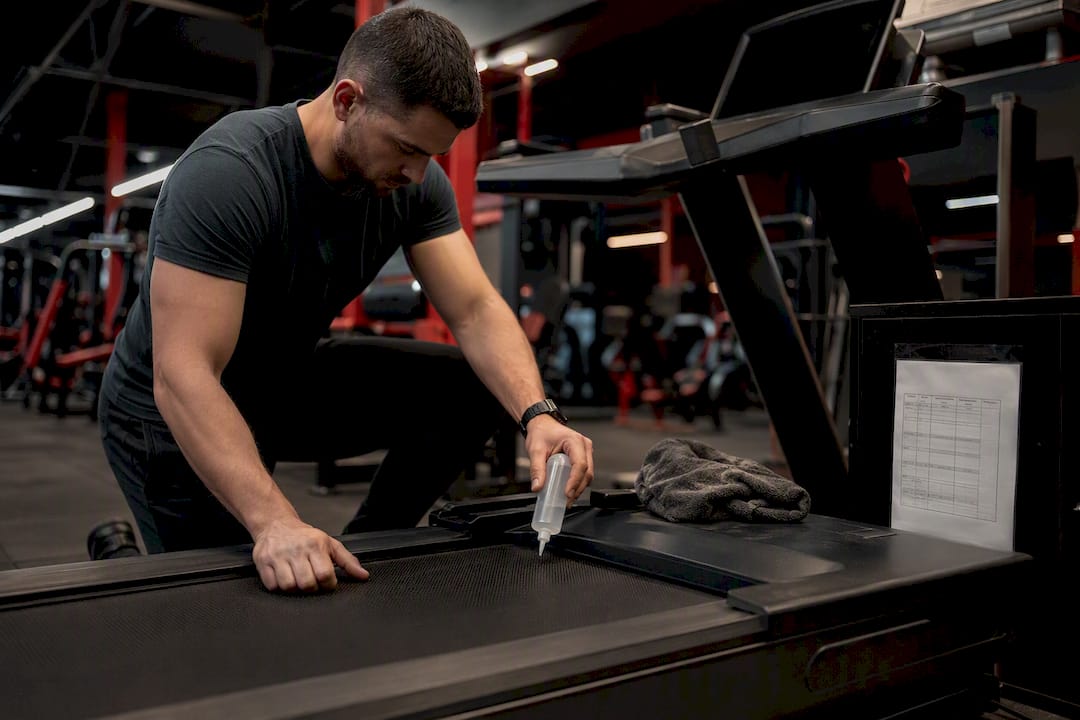
- Monthly. Lubricate guide rods and treadmill belts according to the manufacturer’s strength maintenance schedule. Torque structural bolts on racks and benches. Vacuum motor compartments on every treadmill and bike.
- Quarterly and annual. Replace wear parts like grips, belts, and pulley bearings before they fail mid-workout. Run a full electrical and motor inspection, and bring in a technician for diagnostics if anything reads outside normal range.
Assign each cadence tier to a specific role, not a vague “someone will handle it.” The opening shift lead owns daily wipes. A senior trainer or facilities staffer owns the weekly and monthly rounds. Require a signed or photographed completion log for anything monthly or above, so you have proof if a warranty claim ever comes up.
Pro Tip: Print your monthly checklist and laminate it. Staff turnover is constant in gyms, and a physical card taped inside the equipment closet outlives whatever app training walked out the door with your last hire.
Caring for Cardio Machines, Strength Equipment, and Free Weights
Different equipment classes fail differently, so your fitness equipment upkeep routine needs to flex by category.
- Cardio machines. Check belt tracking and tension weekly; a belt running off-center wears the deck unevenly and burns out the motor faster. Clean motor vents monthly to prevent overheating, test the safety key on every treadmill, and follow Horizon’s routine maintenance guidance on belt lubrication timing, which varies by usage volume.
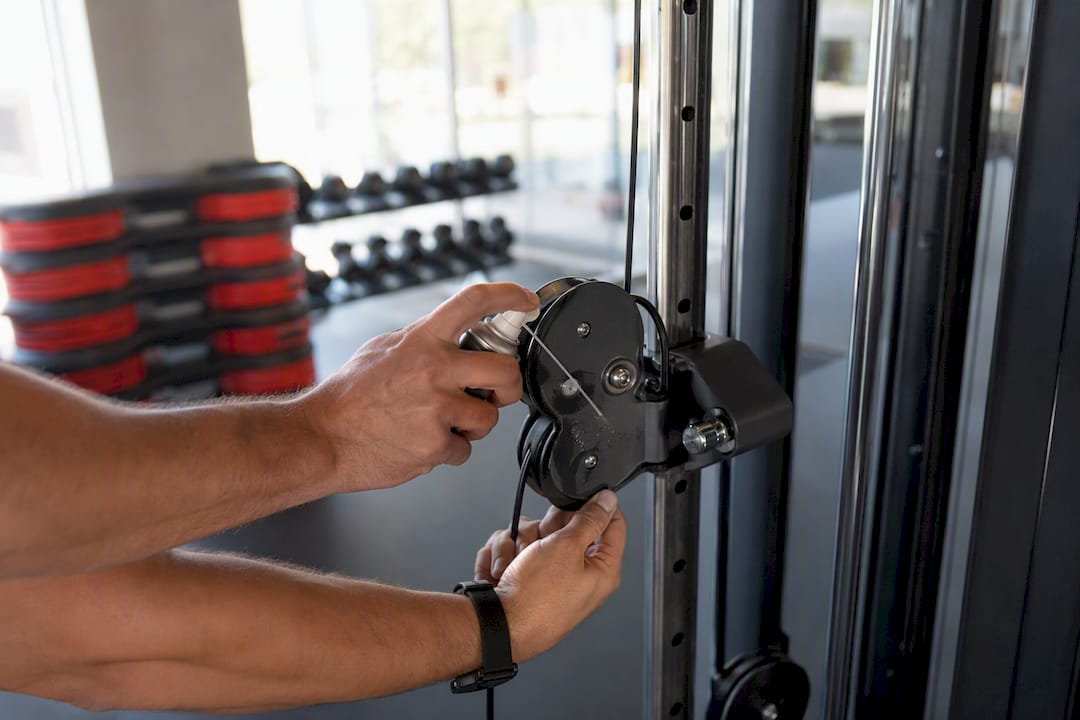
- Strength machines and cable systems. Inspect cables and pulleys weekly for fraying, and lubricate guide rods with a silicone spray monthly. Check jam nuts and weight-stack alignment; a stack that doesn’t sit flush usually means a stretched cable underneath.
- Free weights. Wipe barbells after every session and brush the knurling to clear chalk buildup, since trapped chalk retains moisture and speeds up rust far more than most people expect. Oil sleeves and bearings monthly, and train members to rerack plates rather than drop them, since dropped plates crack collars and warp bars over time.
- Racks and benches. Torque bolts on a set schedule, not just when something wobbles. Check UHMW liners for cracking, and clean upholstery before rips start; a $40 vinyl patch kit beats a $300 bench replacement.
- Flooring. Sweep daily and deep-clean monthly, checking seams for separation. Avoid harsh chemical strippers on rubber flooring; they break down the material faster than foot traffic ever will.
What Cleaners and Lubricants Are Safe for Gym Equipment?
Manufacturer manuals name specific products for good reason: the wrong cleaner degrades vinyl, chrome, and electronics faster than normal wear ever would.
- Use manufacturer-approved cleaners like PureGreen 24 or Gym Wipes on upholstery and touchpoints; both are formulated to disinfect without breaking down vinyl seams.
- For guide rods, use a silicone-based lubricant. For treadmill belts, stick to the manufacturer’s specified 100% silicone treadmill lubricant. For barbells, a light machine oil or 3-in-1 oil applied sparingly prevents rust without attracting more dust.
- Skip bleach and alcohol-based wipes on vinyl upholstery; they dry out and crack the material within months. Skip WD-40 on bearings; it’s a solvent, not a lubricant, and it washes away the grease that’s actually protecting the part.
Using an unapproved cleaner or lubricant is one of the fastest ways to void a manufacturer warranty, since most warranty language explicitly ties coverage to documented, approved maintenance products.
How Do You Know When a Machine Needs a Technician?
Catching a problem early is the difference between a $50 part swap and a $1,500 motor replacement.
- Watch for warning signs. A rhythmic thump usually means a bent roller or flat spot on a belt. A squeal points to a dry bearing or belt slippage. A burning smell means stop the machine immediately and unplug it.
- Run quick diagnostics first. Power down and unplug before touching anything. Check belt alignment and hand-turn rollers to feel for resistance. Inspect cable terminations and tighten any loose fasteners.
- Know when to call in help. Frayed cable strands, any sign of motor smoke, or an electrical fault means the machine comes offline immediately, no exceptions. Improper repairs on wiring or motors can void your warranty and create real liability if a member gets hurt.
- Budget realistically. A belt adjustment or console fix is usually a same-day, low-cost job. A motor or control board replacement can run into the hundreds of dollars and take a week or more if the part has to be ordered.
Busy commercial floors should plan on inspecting belts and rollers roughly every three months, tighter than the schedule a lightly used studio would need.
Do Humidity and Storage Conditions Affect Equipment Life?
Yes, more than most gym owners assume. Keep relative humidity in a moderate range to reduce corrosion risk on chrome, cables, and internal electronics, even in equipment that’s cleaned regularly.
- Install a hygrometer near your cardio floor and weight room to actually track humidity instead of guessing.
- Run a dehumidifier in any space without strong HVAC control, especially basements and converted warehouse gyms.
- Never leave damp towels draped on equipment overnight; that’s a direct moisture source sitting right on metal.
- Increase oiling and inspection frequency during humid summer months, when corrosion risk climbs fastest.
Turning Your Maintenance Checklist Into a Repeatable Workflow
A checklist taped to a wall works until someone forgets to check it. The gyms that actually stay ahead of equipment failures turn their maintenance calendar into a tracked, assigned workflow instead of a hope.
- Set recurring daily, weekly, and monthly tasks inside your management system, and attach the manufacturer’s manual PDF directly to each job.
- Require proof of completion, a timestamped photo or a digital signature, so you have a record if a part fails under warranty.
- Assign one accountable person per cadence tier, and review the completed logs monthly rather than assuming the work happened.
This is exactly the kind of operational gap a platform like Fitness Flow is built to close, since gyms already using structured task workflows report saving 12 hours a week in administrative work that used to get lost in spreadsheets and sticky notes.
Pro Tip: Train a backup staffer on your maintenance workflow the same week you train the primary one. The checklist only works if it survives someone calling in sick.
A Facility Manager’s Take on Maintenance Schedules
Most maintenance advice treats every gym like it’s running the same floor, and that’s the biggest gap in how this topic usually gets covered. A 24-hour unstaffed access gym with six treadmills does not need the same cadence as a 40,000-square-foot commercial club running three shifts. The manufacturer schedules from Life Fitness, Horizon, and Keiser give you the floor, not the ceiling. Busy floors need tighter inspection windows than the manual technically requires.
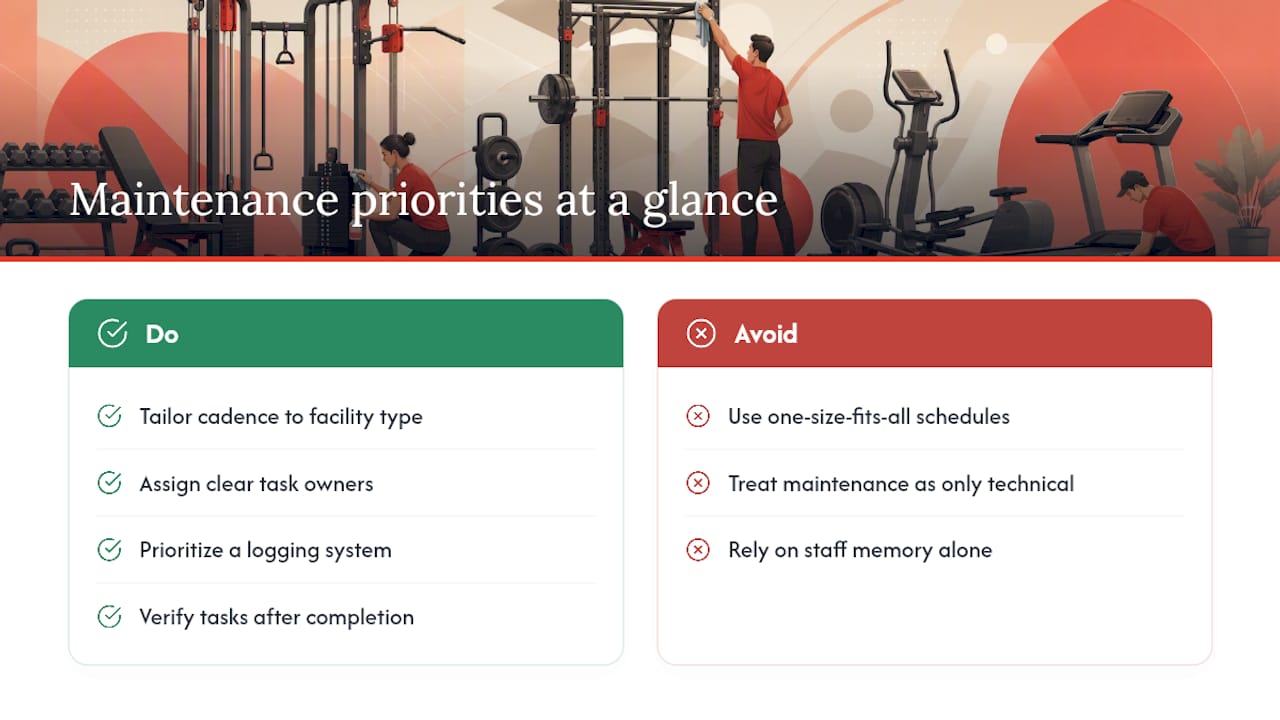
The other overrated idea is that maintenance is primarily a technical skill problem. It isn’t. It’s an accountability problem. Most failures I’d point to trace back to a task nobody actually owned, not a lubricant nobody knew how to apply. Any staffer can wipe a console or check a bolt torque. What breaks down is the tracking: who did it, when, and whether anyone verified it happened.
If you take one thing from this, prioritize the logging system before you obsess over the perfect lubricant brand. A mediocre schedule that’s actually tracked beats a perfect schedule that lives in someone’s memory.
— Louis
Key Takeaways
Preventive gym equipment maintenance, built on a daily wipe, weekly check, regular lubrication as recommended by manufacturers cadence, cuts downtime and protects manufacturer warranties more reliably than reactive repairs ever can.
PointDetails
Follow the frequency tiers
Assign daily wipes, weekly checks, regular lubrication as recommended by manufacturers, and quarterly inspections to specific staff roles.
Match products to surfaces
Use approved cleaners like PureGreen 24 on vinyl and silicone lubricant on guide rods and treadmill belts.
Control humidity
Keep relative humidity between 30% and 50% to slow corrosion on cables and chrome parts.
Escalate real warning signs
Stop machine use immediately for frayed cables, motor smoke, or burning smells, and call a technician.
Track completion, not intent
Log every monthly task with a photo or signature so ownership and warranty proof are both documented.
Sources
- Strength Maintenance Schedule and Guidelines – Life Fitness Support
- Treadmill Routine Maintenance Schedule – Horizon Fitness
- Your complete guide to preventive maintenance for treadmills and exercise equipment