

Gym Referral Program: Your 2026 Growth Playbook

Why a gym referral program outperforms every other acquisition channel
A gym referral program is a structured system that rewards existing members for bringing in new ones, and the numbers behind it are hard to argue with. Referred prospects convert at 55–70%, outperforming paid social acquisition at 30–45%. The acquisition cost for referred members is significantly lower than that of paid advertising. That gap alone justifies building a program before running another Facebook campaign.
The retention story is just as compelling. Members who exercise with friends retain at double the rate of solo members, meaning every successful referral strengthens two memberships at once. The referring member gains a workout partner and a social stake in staying. The new member arrives with a built-in accountability buddy rather than walking into a room full of strangers.
Referral programs also compound. Each referred member becomes a potential referrer, and studios with active programs report that a meaningful share of new member acquisitions come through referrals after the first year. That percentage grows as referral culture embeds itself in the community.
Core benefits at a glance:
- Highest conversion rate of any fitness acquisition channel
- Lowest cost per acquired member (a moderate cost per referred member vs. $80–$200 for paid ads)
- Stronger retention because referred members arrive with social bonds
- Compounding growth as new members become future referrers
- Referred members are less price-sensitive, reducing cost-driven churn
Table of Contents
- Types of gym referral programs and real-world examples
- How to design and launch your referral program step by step
- Choosing rewards that actually motivate members
- How to track and measure your referral program’s performance
- Legal and ethical considerations for your referral program
- How to communicate and promote your referral program
- Common challenges and how to fix them
- Joinfitnessflow makes running a referral program straightforward
- Key Takeaways
Types of gym referral programs and real-world examples
Single-sided vs. dual-sided incentives
Single-sided programs reward only the referring member. They work, but they leave motivation on the table. Dual-sided incentives generate significantly more referrals because both parties have a reason to act. The referring member wants their reward; the friend wants the free trial or discount. Running a single-sided program in 2026 is leaving referrals on the floor.
Common program formats
1. Free month for both parties. The most widely cited structure: the referrer earns one free month, the new member gets their first month free. Simple to explain, easy to track, and motivating for both sides. Boutique studios charging higher monthly rates find this format particularly effective because the reward feels tangible relative to the price.
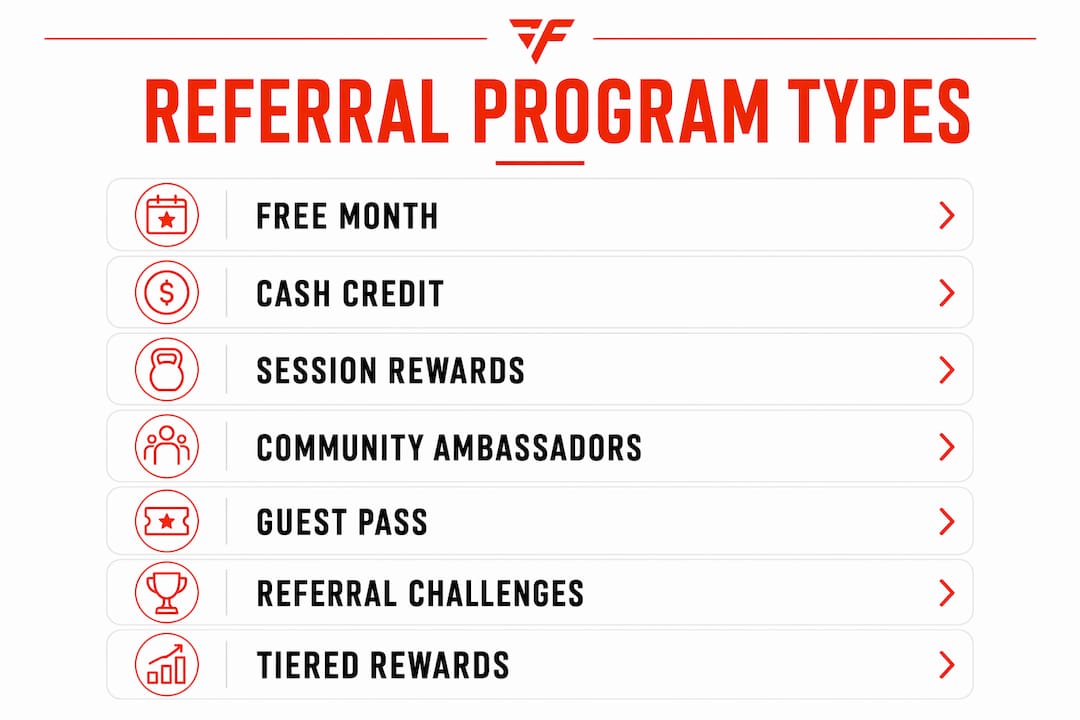
2. Cash credit plus free trial. Big-box gyms with lower monthly dues often pair a moderate account credit for the referrer with a free trial week for the friend. Cash feels immediate and concrete, which matters when the membership price is low enough that a “free month” sounds modest.
3. Session-based rewards for personal training studios. A three-session pack for the referrer and an intro session for the new client matches the higher value of personal training relationships. The reward signals that the gym understands what its members actually want.

4. Community ambassador programs. CrossFit affiliates and boutique studios often find that public recognition matters more than the reward size. A monthly leaderboard, a social media shoutout, or a “wall of fame” in the gym reinforces the referrer’s identity as a community builder. Leaderboards and public acknowledgment increase ongoing referral engagement by 25%.
5. Guest pass systems. Digital guest passes that members can text or share on social media lower the barrier for the friend. The experience sells the membership; the pass just gets them in the door. Studios tracking guest-to-member conversion report a substantial benchmark for passes that actually get used.
6. Milestone-timed referral challenges. Quarterly competitions where members compete to bring the most friends, with meaningful prizes for top referrers, create urgency and social energy around the program. Timing these challenges around January, March-April, and August aligns with peak gym interest periods.
7. Tiered super-referrer rewards. Members who refer five or more people over 12 months earn something disproportionate: a free annual membership, branded gear, or a named recognition on the gym’s social channels. The top 10% of members contribute 40–60% of all referrals in a gym, so treating them like VIPs pays off.
How to design and launch your referral program step by step
1. Set measurable goals before you build anything. Decide what success looks like: a target referral submission count per month, a conversion rate goal (aim for a strong conversion rate), and a cost-per-referred-member ceiling. Without a baseline, you cannot tell whether the program is working or just generating noise.
2. Choose incentives that fit your pricing tier. The reward should represent a meaningful fraction of one month’s membership dues for optimal ROI. Higher incentives do not proportionally increase referral volume; they increase program cost. For a $100/month gym, that means a $15–$25 value reward for the referrer, or a free month if the perceived value justifies it. The average referral reward should represent 15–25% of one month’s membership dues for optimal ROI.
3. Build a friction-free referral mechanism. The referral action must take under 30 seconds. Every additional step in the process reduces completion. The ideal setup: each member gets a unique URL they can text or post to social media, which auto-populates a guest registration form with the referrer’s ID attached. No paper cards, no codes to memorize, no front-desk approval required.
4. Activate referral asks at high-receptivity moments. Post-workout referral prompts convert at three times the rate of email requests because enthusiasm is a depreciating asset. Ask immediately after a great class, after a member hits a personal record, or at the 60-day milestone when community ties are genuinely established. Asking too early backfires; referral asks before day 21 of membership convert at roughly 2%, versus 18% for asks between days 30–60.

5. Automate tracking and reward fulfillment. Manual tracking can miss up to 30% of referral attributions, which destroys member trust. Tie reward fulfillment to the referred member’s first attended class rather than their signup date. This prevents gaming and ensures you are acquiring active members. When the attended-class event fires, the reward credits automatically and both members receive a confirmation.
6. Train staff to make the direct ask. Script it, roleplay it in staff meetings, and track how often it actually happens. Front desk staff and coaches asking directly, “Have you had any friends thinking about joining? We’d love to give you a referral credit,” is the most underused tactic in most gyms. It feels awkward until it becomes habit.
7. Review performance monthly. Treat referral data with the same rigor as your financial accounts. Track total referrals submitted, conversion rate, cost per referred member, and 90-day retention of referred members versus non-referred members. Adjust incentive amounts and prompt timing based on 90-day trend data.
Choosing rewards that actually motivate members
The psychology of referral rewards is counterintuitive. Framing a reward as a gift to a friend rather than a transaction for the referrer reduces social friction and increases referral likelihood. “Give your friend a free month” outperforms “Earn a free month for referring a friend” because it removes the awkwardness of asking someone to do something that benefits you.
Dual-sided rewards work for the same reason. When both parties gain, the referrer is not asking a favor; they are sharing an opportunity. The new member gets a free trial week or a waived enrollment fee, which lowers their barrier to saying yes. The referring member gets their credit when the friend actually attends, not just when they sign up.
For reward type, free months outperform cash credits for higher-priced memberships because the perceived value is higher. Below that threshold, a specific dollar amount off next month’s bill is simpler to understand and more immediately motivating. Avoid percentage discounts entirely; they are harder to grasp and feel less concrete.
Public recognition works as a multiplier on top of monetary rewards. A monthly leaderboard posted in the gym and on social media reinforces the referrer’s identity as a community builder, which motivates continued behavior. For super-referrers, a free annual membership or branded apparel signals that their contribution is genuinely valued.
Pro Tip: Automate reward fulfillment so credits appear within five minutes of the referred member’s first attended class. Reward delays over 48 hours reduce member motivation by more than 60%. Immediate, visible, automatic delivery is what keeps the program alive.
How to track and measure your referral program’s performance
Data-driven management separates programs that compound from programs that quietly die. Successful gym owners review referral metrics monthly, the same way they review revenue.
MetricWhat to trackBenchmark
Referrals submitted
Total monthly referral count
a notable share of active members per year
Conversion rate
Referred prospects who become members
a target of at least half
Cost per referred member
Total program cost divided by new referred members
a moderate cost per referred member
Referred member retention
6-month retention vs. non-referred cohort
twice the retention rate of solo members
Guest pass share rate
Members who shared a pass divided by members prompted
a meaningful share
The conversion rate and retention comparison are the two numbers that matter most. A program generating 25 new members per month who churn at 90 days is worse than one generating 10 members who stay for two years. Track the 6-month retention rate of your referred cohort separately from your overall membership.
Automation in referral tracking triples referral volume compared to manual systems. Tracking referrals manually can miss up to 30% of attributions leading to lost reward fulfillment and reduced referral rates. When your platform captures every referral attribution automatically and writes completed referral records to a dashboard, you can see which members are referring, which incentive amounts are driving behavior, and where prospects are dropping out of the funnel. That visibility is what lets you reallocate budget from paid acquisition to referral channels with confidence.
Legal and ethical considerations for your referral program
Referral programs operate in a straightforward legal space for most gyms, but a few rules apply. The FTC requires that any material connection between a referrer and a reward be disclosed when the referral involves a public endorsement or review. If your ambassador program asks members to post on social media, those posts should note that the member receives a benefit for doing so.
Reward terms must be written clearly and honored consistently. Vague language like “special discounts” creates disputes; specific terms like “one free month credited within 48 hours of your friend’s first attended class” do not. Put the program terms in writing, make them accessible to all members, and apply them uniformly. Inconsistent reward fulfillment is both an ethical problem and a practical one: it kills trust and stops referrals.
Avoid incentive structures that pressure members into referring. A program that withholds a benefit unless a member refers a friend crosses into coercive territory and damages the community culture that makes referrals work in the first place. The best programs feel like a thank-you, not a requirement.
How to communicate and promote your referral program
Most referral programs fail not because the incentive is wrong but because members simply do not know the program exists. Mentioning it once in the welcome email is not a promotion strategy.
Build referral program touchpoints into every stage of the member journey. Include the referral link in the post-class summary email, the monthly member newsletter, and the 30-day and 90-day milestone messages. Post the leaderboard in the gym where members see it during workouts. Train staff to mention the program during check-in conversations, not just when a manager remembers to remind them.
Seasonal campaigns add urgency on top of the always-on program. January, March-April, and August are peak gym interest periods. Running a two-week “bring a friend” challenge with double rewards during launch week creates a social event around the program rather than a passive background offer. Members who might ignore a standing offer will engage with a time-limited competition.
Digital guest passes are one of the most shareable formats because they require zero effort from the member. A link the member can text from the gym parking lot after a great class reaches their friend at exactly the right moment.
Common challenges and how to fix them
Low referral volume despite a good incentive. The problem is almost always timing or visibility, not the reward. Members are not thinking about the program when they are checking in or leaving. Fix it by embedding referral asks into post-class SMS messages and milestone automations rather than relying on passive signage.
Reward disputes and attribution errors. Manual tracking creates gaps. When a referring member does not receive their credit, they stop referring and tell others the program is unreliable. Automated attribution tied to a unique referral link eliminates most disputes before they start. For gyms still using front-desk attribution, build the referral source question into the signup script as a required field, not an afterthought.
High trial-to-member drop-off. If guest passes are being used but few guests convert, the issue is the trial experience, not the referral program. Ensure referred guests are greeted by name, introduced to the referring member’s instructor, and given a clear next step at the end of their trial class. The referral gets them in the door; the experience closes the membership.
Program momentum fading after launch. Most programs see a spike at launch and then a slow decline. Sustain momentum by sending re-engagement messages to members who have not referred anyone in 90 days, rotating the seasonal campaigns, and publicly celebrating top referrers monthly. A program that feels alive keeps members participating.
Joinfitnessflow makes running a referral program straightforward
Running a referral program manually is where most gym owners lose the gains. Credits fall through the cracks, attribution gets missed, and the program quietly fades. Joinfitnessflow is built to close that gap, with referral and review management built directly into the platform alongside CRM, billing, and member engagement tools.
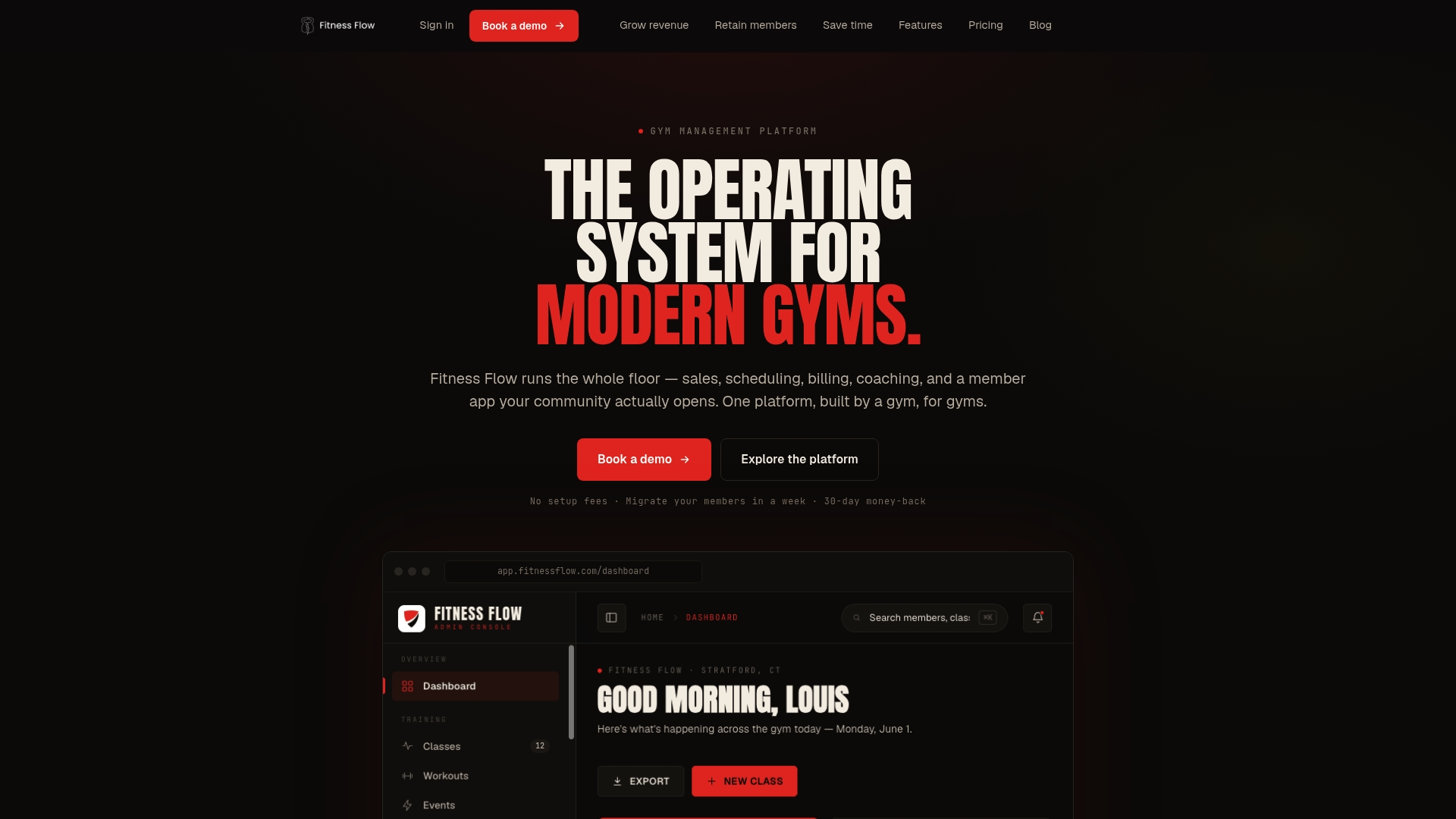
Every referred member signup triggers automatic attribution tracking. Reward credits apply to the referrer’s account when the new member attends their first class, and both members receive instant confirmation. No spreadsheets, no manual credit entries, no disputes. The same platform handles your branded member app, post-class SMS prompts, milestone automations, and the leaderboard your front desk posts each month. For independent and mid-sized gyms that want referral culture without a dedicated marketing team, Joinfitnessflow gives you the infrastructure to run it at scale. Start your free trial and see how the referral module fits into your existing workflow.
Key Takeaways
A well-run gym referral program is the highest-ROI acquisition channel available to independent gyms, delivering referred members at a moderate cost per referred member each while retaining them at twice the rate of members acquired through paid ads.
PointDetails
Conversion advantage
Referred prospects convert at 55–70%, outperforming paid social acquisition at 30–45%.
Dual-sided rewards
Dual-sided incentives generate significantly more referrals than single-sided programs.
Timing the ask
Post-workout referral prompts convert at 3x the rate of email requests; avoid asking before day 21 of membership.
Automate fulfillment
Reward delays over 48 hours reduce member motivation by more than 60%; automated credit delivery prevents this.
Joinfitnessflow
Built-in referral tracking, automated reward fulfillment, and post-class SMS prompts run the program without manual staff effort.