
Run a Gym Referral Program That Actually Converts

Run a double-sided referral program: both the referring member and their friend get a clear, fast reward, tracked through an automated code or link, and triggered at a specific member milestone rather than left open-ended. Referred members show notably stronger retention than people who join through paid ads, according to Wharton School research cited by gym-industry operators, and rewards should only pay out after a verified qualifying event, typically the friend’s first successful monthly payment.
Here’s your next 72 hours:
- Write one sentence describing the offer (e.g., “Give a free month, get a free month, after your friend’s first payment clears”).
- Put a calendar reminder on the books to brief front desk and coaching staff before you announce anything publicly.
- Confirm you can issue a reward within 48 to 72 hours of that qualifying payment. Delayed rewards are the fastest way to kill trust in a new program.
Key Takeaways
A referral program succeeds when it pairs a double-sided reward with automated tracking, a fixed reward window, and a milestone-based ask.
PointDetails
Choose double-sided rewards
Both referrer and friend get a reward to reduce friction and boost participation.
Trigger rewards on payment
Issue rewards only after the referred friend completes their first successful payment.
Time the ask carefully
Send invites 20 to 30 days after check-in or at 30/60/90-day milestones for best response.
Automate attribution and delivery
Track referrer ID, signup date, and payment date, and deliver rewards within 48 to 72 hours.
Use a platform to remove manual work
Getfitnessflow automates referral triggers, attribution, and rewards through its branded member app.
Table of Contents
- What Types of Gym Referral Programs Work Best?
- How Do You Design Incentives That Actually Get Used?
- When Should You Ask Members for Referrals?
- How Do You Track and Measure Referral Results?
- Can Software Actually Run Your Referral Program for You?
- What Does a 30-Day Launch Checklist Look Like?
- What Do Successful Gym Referral Programs Look Like in Practice?
- What Legal and Privacy Rules Apply to Gym Referral Programs?
- Can Referral Programs Bring Back Lapsed Members?
- What Separates Programs That Scale From Ones That Fizzle
- Let Fitness Flow Handle the Referral Grind for You
- Sources
What Types of Gym Referral Programs Work Best?
Most gyms run one of four models, and the right one depends on how hands-on you want to be.
- Member-to-member (single-sided): Only the referrer gets rewarded. Cheapest to run, but conversion tends to lag because the new member has no direct incentive to sign up. Example offer: “Refer a friend, get $20 in account credit.”
- Dual-sided: Both people get something. This is the format most operator guides recommend because it removes friction for the new joiner while still motivating the existing member. Example: “You get a free week, your friend gets a free week too.”
- Time-limited campaigns: A short referral push tied to a season or slow month. Good for a quick membership bump, but it requires more staff attention to promote and wind down cleanly. Example: “Refer 3 friends in January, get a free month.”
- Tiered ambassador programs: Rewards escalate with volume. Best for gyms with a core group of highly engaged members, but they take more administrative setup to track tiers accurately.
How Do You Design Incentives That Actually Get Used?
Double-sided rewards convert better than single-sided ones because the new member feels like they’re getting a deal, not just doing a favor for a friend. That single design choice often makes the difference between a program members casually mention and one they actively push.
Pick a reward format that’s sustainable to fund every month, not just in the excitement of launch week:
- Free month or discounted month — easy to understand, but factor the lost revenue into your monthly forecast.
- Account credit — flexible for members, simple to apply, and easy to cap per year.
- Personal training session — high perceived value, low direct cost if you have coaching capacity to spare.
- Branded merchandise — cheap to fulfill, weaker as a primary incentive, works well as a bonus.
- Guest pass bundle — lets a referrer bring multiple friends without committing your best reward every time.
Set guardrails before you launch: the referrer needs to be a member in good standing, and the referred friend must be a new primary account who completes their first payment. Post a one-line rule members can actually remember, something like “Referral rewards apply once your friend completes their first paid month.”
Pro Tip: Reserve your highest-value reward (a free PT session or three-month credit) for referrers who bring in three or more paying members in a quarter. It costs you nothing extra until they’ve already proven the value.
When Should You Ask Members for Referrals?
Timing beats wording. Ask at the wrong moment and even a great offer falls flat.
- 30/60/90-day milestones: Members who’ve hit a routine, not just joined, refer at higher rates because they’ve already seen results.
- Achievement moments: A first 5K finish, a strength PR, a visible before/after. Ask right after the win, while it’s fresh.
- After positive feedback: If a member compliments a class or coach, that’s your cue.
Automate what you can and keep the rest manual and personal. In-app push notifications and SMS work well for milestone triggers; a front-desk script or a quick mention from a coach works better for in-person moments that software can’t detect. Signage near the check-in desk keeps the offer visible for everyone else.
Run a referral week once a quarter with a small leaderboard, and spotlight your top referrer monthly in your newsletter or on a wall display. For cadence: announce at launch, remind weekly through app or email, and spotlight monthly to keep it from fading into the background.
Pro Tip: Timing an invite 20 to 30 days after a member’s first check-in tends to convert better than a day-one ask, according to gym referral software data, because members are engaged but not yet worn out on the offer.
How Do You Track and Measure Referral Results?
A referral program without tracking is just a rumor mill. You need a system that attributes every signup correctly and pays out on time.
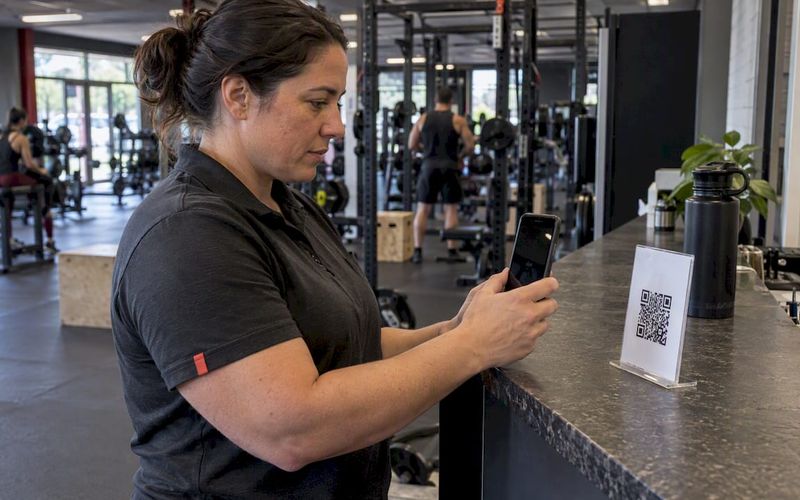
- Unique referral links or codes: Cleanest attribution, easy to automate, but requires members to actually use the link rather than just telling a friend verbally.
- Staff-logged referrals at signup: Catches word-of-mouth conversions the link method misses, though it depends on staff remembering to ask and log it.
- Dedicated landing pages: Useful for time-limited campaigns, weaker for ongoing programs.
At minimum, record the referrer’s ID, the referred person’s contact info, sign-up date, first payment date, and reward issue date. Automate four steps in sequence: issue the code, attribute the signup, trigger the reward, and notify the referrer it’s on its way.
Track three numbers monthly: referral participation rate (percentage of members who’ve made at least one referral), referral-to-paid conversion rate, and 90-day retention for referred members against your gym average. That last figure is the real test, since referred members consistently retain longer than members acquired through paid channels.
Can Software Actually Run Your Referral Program for You?
Manually tracking referral codes in a spreadsheet works for about a month before someone forgets to log a signup or issue a reward. That’s where a platform that automates the entire loop earns its keep.
- Issue a referral code automatically 20 to 30 days after a member’s first check-in or milestone completion, when engagement is highest.
- Send the invite through a branded member app or SMS, rather than relying on a member to remember a promo code.
- Attribute the referral the moment the friend completes their first successful payment, then trigger the reward without a staff member touching a spreadsheet.
The gap between a referral program that works and one that quietly dies is almost never the offer. It’s whether someone remembered to issue the reward on time. Automate that one step and the rest of the program tends to take care of itself.
What Does a 30-Day Launch Checklist Look Like?
- Pre-launch: Set a measurable goal (e.g., 15 new members via referral in 60 days), write your one-sentence offer, prep your app or landing page screen, and configure tracking fields.
- Launch day: Brief staff with a short script, post signage at the front desk, and confirm exactly how and when rewards get delivered.
- First 30 days: Check attribution weekly, fix any misattributed signups fast, and hold yourself to a 48 to 72 hour reward delivery window.
- Watch for: delayed rewards, low staff mentions of the program, or confusing rules members ask about more than once.
Pro Tip: If participation is flat after two weeks, the problem is almost always visibility, not the offer itself. Add one more touchpoint (a class announcement or app push) before you touch the reward amount.
What Do Successful Gym Referral Programs Look Like in Practice?
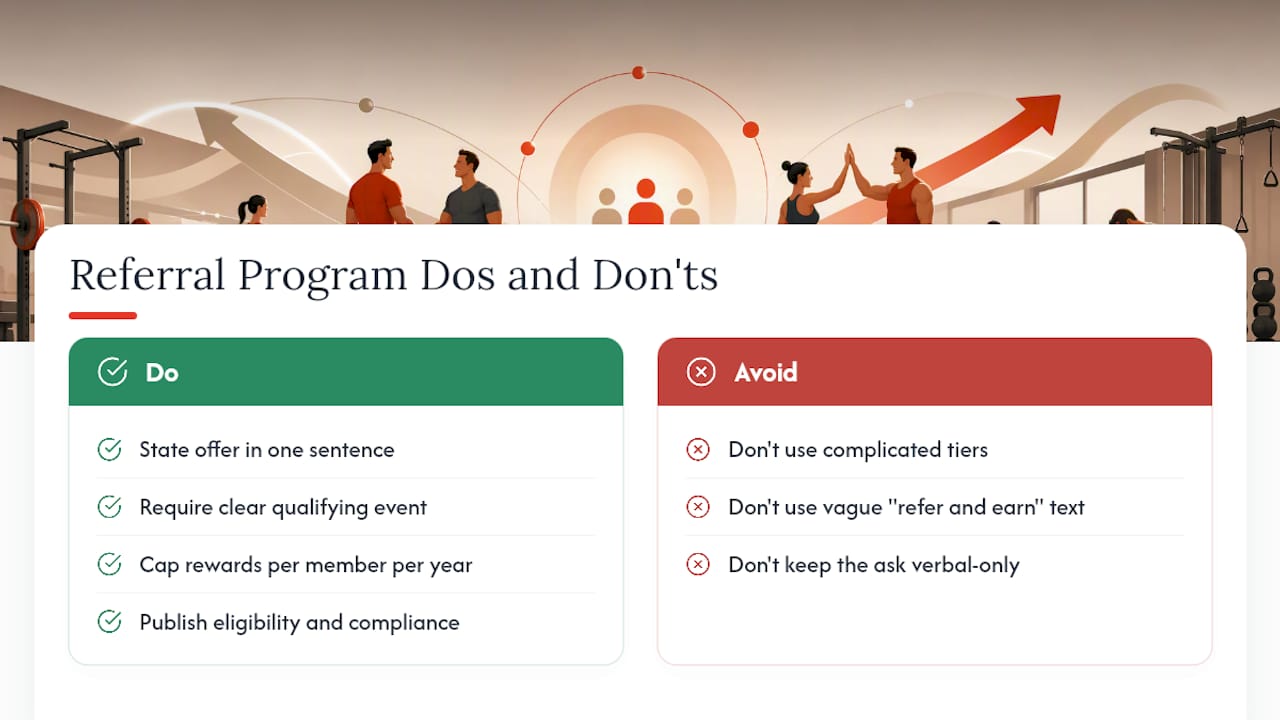
Large chains have essentially productized the referral ask, and their public terms double as a useful template for independent gyms. Planet Fitness defines a “Successful Referral” as a new paid membership tied to a unique referral link, caps how many credits a member can earn per year, and spells out eligibility rules and compliance language up front. That structure prevents disputes before they start, because members know exactly what counts and what doesn’t.
Fitness 19 runs a similar model, restricting eligibility to active members in good standing and requiring the referred friend to be a new, paying primary account before any reward triggers. Notice what both programs skip: complicated tier structures or vague “refer and earn” language. The offer is one sentence, the qualifying event is unambiguous, and the reward timing is fixed.
For an independent gym, the template looks like this: “Refer a friend who joins and completes one paid month, you both get [reward]. Limit of [X] rewards per member per year.” That single sentence covers the offer, the qualifying event, and the abuse guardrail in one breath.
Smaller studios that run informal, verbal-only referral asks tend to see participation stall within a few months, mostly because nobody outside the front desk actually remembers the offer exists. The gyms that sustain referral volume past the first quarter are the ones that put the offer somewhere permanent: a signed wall, an app banner, a recurring line in a monthly email. Consistency of visibility matters more than the size of the reward.
What Legal and Privacy Rules Apply to Gym Referral Programs?
A referral program collects personal contact information about people who never signed a waiver with your gym, and that creates real obligations. Before you launch, decide how you’ll collect consent from the referred friend, not just the referrer.
If your program sends automated texts or emails to a referred prospect, that communication generally needs to comply with anti-spam and telemarketing rules, including a clear opt-out. Large operators build this compliance language directly into their referral terms and conditions, which is worth mimicking even at a small-gym scale. At minimum, your posted rules should state how referral data gets used, how long you retain it, and who can access it internally.
Reward caps matter here too, both for cost control and fraud prevention. Chains commonly reserve the right to revoke credits on suspicion of abuse and apply earned rewards only to active accounts, which gives you legal cover if someone tries to game the system with fake referrals. Write that reservation into your own rules from day one rather than adding it after your first dispute.
If your state or municipality has specific rules around promotional contests, sweepstakes-style mechanics (like a “refer 5, win a prize” drawing) may trigger additional disclosure requirements that a straightforward point-for-point reward program avoids. When in doubt, keep the mechanic simple: one referral, one qualifying event, one reward. Simple structures create fewer legal gray areas and fewer member complaints.
Can Referral Programs Bring Back Lapsed Members?
A referral program isn’t just a new-member tool. It’s one of the more effective ways to reopen a conversation with someone who canceled months ago, especially when a current member does the reaching out instead of your gym.
Ask your most engaged members if any of their lapsed friends might be ready to return, and offer a modest incentive for a successful “win-back” referral distinct from your standard new-member reward. The pitch coming from a friend lands differently than a generic “we miss you” email, because it carries social proof your marketing can’t fake.
Segment your CRM for members who canceled within the last six to twelve months and flag them internally, then quietly encourage staff to mention the referral program to friends and training partners of that group during casual conversation. You can also run a short seasonal campaign, something like a New Year win-back push, where any member who brings back a lapsed friend earns double the standard reward for a limited window.
Track win-back referrals as a separate metric from new-member referrals. The conversion rate will likely be lower, since a lapsed member already has a reason for leaving, but the ones who do return tend to stick around longer than a brand-new signup with no history at your gym. That’s a smaller pool with a higher payoff, and it costs you almost nothing beyond the reward itself to test.

What Separates Programs That Scale From Ones That Fizzle
The offer almost never kills a referral program. Slow reward delivery does. I’ve seen the same pattern across the operator data covered here: gyms that automate the 48 to 72 hour reward window keep momentum, and gyms relying on a manager to “get to it eventually” watch participation quietly die within two months.
Pick one variable, change it for a month, and see what moves. Reward type, timing trigger, or promotion channel. Not all three at once.
— Louis
Let Fitness Flow Handle the Referral Grind for You
Running a referral program by hand means someone has to remember to issue codes, check payment status, and mail out rewards on a deadline, every single week, forever. Getfitnessflow removes that burden by automating the entire loop inside the same platform your gym already uses for billing and scheduling.
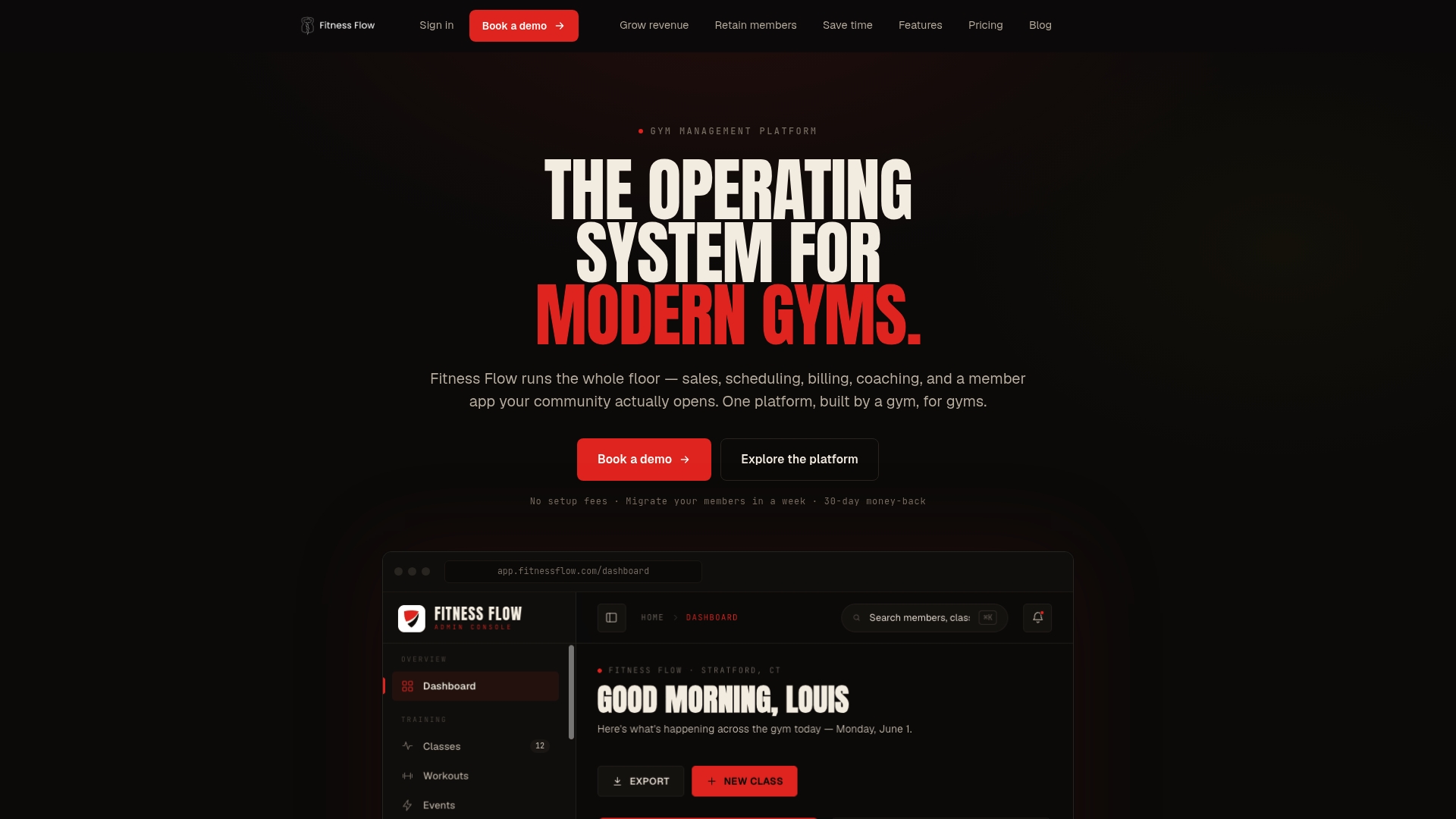
Its branded member app sends milestone-based referral invites automatically, tracks attribution the moment a friend completes their first payment, and triggers the reward without anyone touching a spreadsheet. The analytics dashboard also shows you participation rate and conversion in real time, so you’re not waiting until month-end to know if your offer is working.
If you’re ready to stop chasing referral rewards manually, book a demo of Fitness Flow and see how the automation fits into your current setup.
Sources
- Fitness 19 Referral Program
- Gym Referral Program: Fill Classes & Grow Membership | Referral Earl
- Planet Fitness refer-a-friend terms & conditions