

The Simplest Gym Loyalty Program That Actually Works

The most effective gym loyalty program to launch first is an attendance-driven model: a digital stamp card or visit-credit system layered with a light tier structure, run inside an integrated gym platform rather than a bolted-on app. Reward showing up, not just signing up. That single design choice separates programs that build habits from programs that just discount memberships.
Run it through a platform where check-ins happen automatically and feed straight into your billing and CRM data. Fitness Flow customers see a 27% average increase in retention, and that lift traces directly to programs built on real attendance data instead of manual point tracking.
Your first week:
- Pick one goal: more visits per week, fewer no-shows, or higher class-pack usage.
- Set a simple reward rule (10 visits = 1 free class, or similar) before anything else.
- Turn on automatic check-in tracking so no point is ever recorded by hand.
Key Takeaways
An attendance-based loyalty program run inside an integrated gym platform drives measurably better retention than sign-up bonuses or manual point tracking ever can.
PointDetails
Start with attendance, not sign-up
Reward the 10th visit or a weekly streak, not just joining, to build lasting habits.
Automate check-in capture
Manual tracking loses points and staff time; automatic capture eliminates both problems.
Pilot before full rollout
Test one location or cohort for 6 to 8 weeks and compare retention against a baseline.
Watch churn and redemption rate
These two KPIs reveal design problems faster than visit counts alone.
Run it through Fitness Flow
Fitness Flow ties loyalty logic to real billing and attendance data, with users reporting a 27% average retention increase.
Table of Contents
- What Is a Gym Loyalty Program and Why Does It Matter?
- Which Loyalty Models and Rewards Work Best for Gyms?
- How Do You Design and Launch a Loyalty Program Step by Step?
- What Software Features Does a Gym Loyalty Program Need?
- What KPIs Should You Track to Measure Loyalty Success?
- How Do You Launch a Loyalty Program and Drive Adoption?
- What Mistakes Do Gyms Make With Loyalty Programs?
- How Should You Brand and Communicate Your Loyalty Program?
- What Legal and Privacy Rules Apply to Gym Loyalty Programs?
- What Would a Practical First Loyalty Pilot Look Like?
- How Fitness Flow Makes Running a Loyalty Program Easier
- Frequently Asked Questions
- Sources
What Is a Gym Loyalty Program and Why Does It Matter?
A gym loyalty program raises visit frequency and cuts churn, but only when it rewards ongoing behavior instead of the initial sign-up. Programs built around one-time bonuses for joining tend to fade fast because they stop paying attention to the member the moment the contract is signed. Programs built around the tenth visit, the third class this week, or a three-week streak keep paying attention indefinitely.
The realistic upside for operators:
- Higher visit frequency among members enrolled in a rewards structure versus those who aren’t.
- Lower churn, especially in the first 90 days when most cancellations happen.
- Better utilization of class packs and add-on services members already paid for.
- Higher lifetime value per member as visit habits compound.
Fitness Flow’s data shows a 27% average retention increase among gyms running structured engagement programs, alongside 12 hours saved weekly on administrative work that used to go into manual tracking. There’s a health angle too: regular gym use is tied to lower risk of chronic conditions, and a loyalty structure that nudges someone from twice a month to twice a week is doing more than protecting your revenue. It’s protecting a habit that actually helps them.
Which Loyalty Models and Rewards Work Best for Gyms?
Start simple and layer complexity only once the basics are running. The hierarchy that works, in order: a visit-based stamp card first, points-for-actions second, a tiered status overlay third, and challenge or referral campaigns once the foundation is stable.
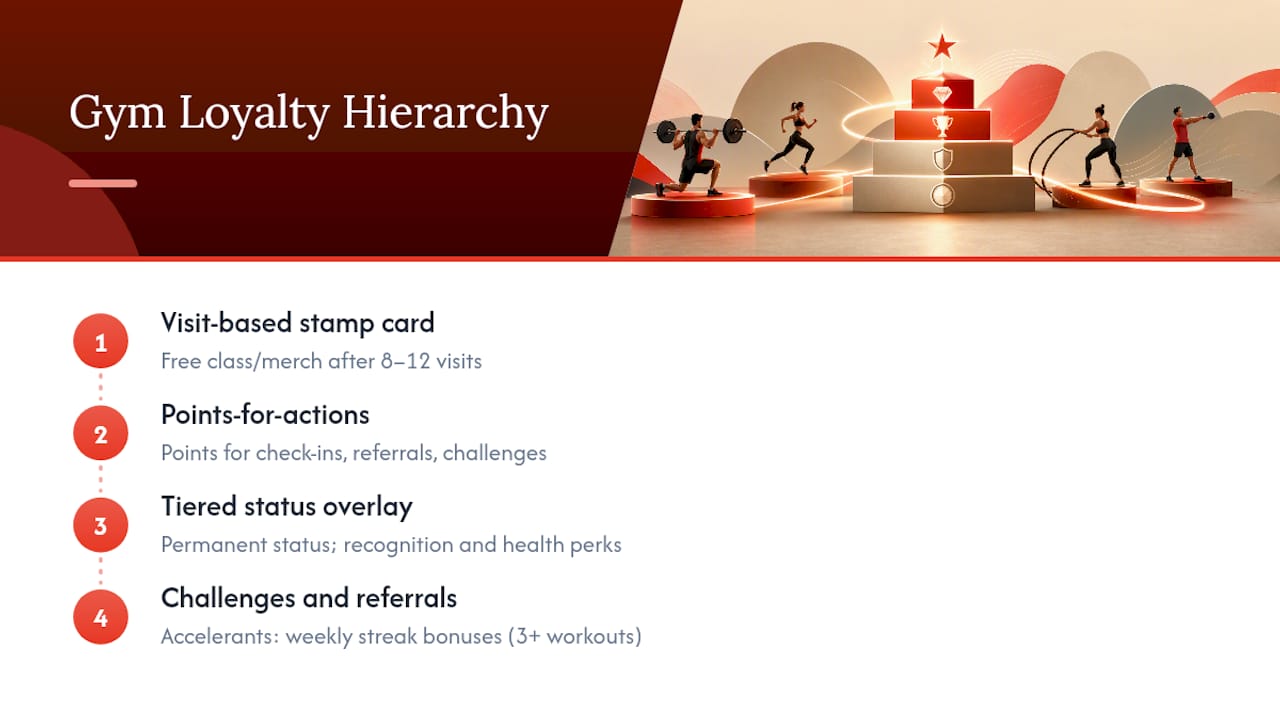
Stamp cards are the easiest entry point. A member hits visit number 10, they get a free class or a merchandise item. No math, no confusion, no app-reading required to understand the deal.

Points-for-actions expand the same logic to more behaviors: a point for check-in, points for referring a friend, points for a birthday, points for completing a challenge. National Fitness’s FIT CLUB Rewards runs exactly this model, awarding points for daily check-ins, classes, and referrals, and requires account enrollment so points don’t expire after 90 days.
Tiered status adds a layer members actually brag about. Redefine Fitness’s Redefine Rewards makes status permanent once earned and leans into recognition and health-focused perks over plain discounts, which keeps the emphasis on identity rather than transactions.
Challenges and referral campaigns work as accelerants, not foundations. F45’s FIT Rewards uses weekly bonus streaks for three-plus workouts to build consistency, on top of points for both in-studio and at-home sessions.
Concrete rewards members respond to: free class after a set visit count, a personal training session, branded merchandise, priority booking windows, member-only events, and membership credit toward the next renewal. Keep stamp counts realistic, 8 to 12 visits for monthly-active members, tied to a 4-week frequency window for weekly regulars. Avoid indefinite point expiration; a 90-day rolling window with a warning notice keeps urgency without punishing a member for one slow month.
Pro Tip: The cheapest rewards are often the ones members value most. Priority booking, first access to a new class, or public recognition on a leaderboard cost you almost nothing but hit the same psychological reward as a discount.
How Do You Design and Launch a Loyalty Program Step by Step?
Finalize these decisions before you write a single rule: program goal, eligible actions, reward cadence, tier names, redemption mechanics, budget ceiling, and privacy/terms language. Skipping any one of these is how programs end up rebuilt three months in.
- Lock the goal. Retention, frequency, or referral volume. Pick one primary metric; the program design follows from it.
- Define eligible actions. Check-ins, class bookings, referrals, purchases, milestones. Fewer actions, cleaner tracking.
- Set reward cadence and redemption rules. How often points convert, what they convert into, and who approves redemptions at the front desk.
- Integrate the technology. Connect booking, billing, and check-in systems so points post automatically.
- Train staff. Front-desk scripts, a one-page cheat sheet, and a person who owns troubleshooting.
- Select a pilot group. One location or one membership cohort, not the whole roster.
A realistic pilot timeline runs 6 to 8 weeks: week one for setup and staff training, weeks two through five for live enrollment and data collection, weeks six through eight for comparing pilot-cohort retention against a baseline group.
To estimate cost, add up projected redemption value per member per month, divide by average monthly dues, and compare that percentage against your current churn-driven revenue loss. If redemption cost runs under the revenue you’d lose to churn without the program, you’re ahead.
Pro Tip: Don’t skip the baseline.
What Software Features Does a Gym Loyalty Program Need?
Loyalty logic works best inside your gym management platform, not as a separate app members forget to open. When points are tied directly to real attendance and billing data, nothing has to be typed in by hand, and nothing gets lost.
The non-negotiable feature list:
- Automatic check-ins via app, QR code, or integrated door access, so attendance posts without staff intervention.
- Member app visibility so people can actually see their point balance and tier status.
- CRM segmentation to identify who’s close to a reward and who’s gone quiet.
- POS integration so redemptions happen at the point of sale, not through a separate spreadsheet.
- Push notifications to nudge members when they’re close to a milestone.
- Analytics dashboards to track redemption cost against retention gain.
- Secure data handling that protects member activity and payment records under a documented privacy policy.
Disconnected systems are where most programs quietly fail. Manual attendance capture is a known failure point; a barcode scan or app-based check-in that writes straight into the member record removes that risk entirely. When booking, billing, POS, and messaging all live in one system, there’s no reconciliation step where points go missing.
Pro Tip: Set your auto-stamp threshold to count once per calendar day. Without that rule, a member who checks in for a morning class and an evening class gets double credit, and your redemption math falls apart within a month.
What KPIs Should You Track to Measure Loyalty Success?
Watch retention rate and 90-day cohort churn above everything else. If your loyalty cohort isn’t outperforming your non-enrolled members on retention within the first quarter, the program needs a design fix, not more marketing.
Track alongside it:
- Visit frequency (visits per member per month)
- Active member count within the program
- Churn rate, cohort-compared against non-enrolled members
- Redemption rate (percentage of earned points actually redeemed)
- Incremental revenue per enrolled member
- Class-pack completion rate
- Referral conversion rate
Review visit frequency weekly, churn monthly, and full cohort retention at the 90-day mark. Fitness Flow’s internal data points to a 27% average retention lift as a reasonable benchmark to aim for once a program matures past the pilot stage. Early signal worth watching: if redemption rate sits near zero after four weeks, members don’t understand the program, not that they don’t want it.
How Do You Launch a Loyalty Program and Drive Adoption?
Sell it as an upgrade to the member experience, not a coupon gimmick. The framing in week one determines whether people treat the program as a habit tool or ignore it as junk-mail marketing.
- Train front-desk staff on a 30-second enrollment script before launch day.
- Build an in-app onboarding flow that explains the program the first time a member opens the app after launch.
- Send an email and text campaign the week before launch, then a reminder on launch day.
- Post in-club signage at the door and near check-in kiosks.
- Run a launch challenge (most visits in two weeks wins a prize) to create early buzz.
- Open a referral double-points window for the first month to accelerate word-of-mouth.
Two-week timeline: week one is staff training and soft-launch to a pilot cohort; week two is the full club rollout with daily front-desk enrollment pushes and app notification nudges. If uptake lags past week two, check two things first: whether front-desk staff are actually mentioning it at checkout, and whether the reward feels worth the effort required.
What Mistakes Do Gyms Make With Loyalty Programs?
The two biggest failures: rewarding only new sign-ups while ignoring existing members, and building redemption rules so complicated that staff can’t explain them at the front desk. Programs that reward acquisition over consistency tend to fail at building the long-term habits that actually drive retention.
Other common pitfalls and fixes:
- Lost points from poor check-in capture. Fix with automatic, app-based attendance tracking.
- Rewards that cannibalize revenue. Fix by pricing redemption value against real churn cost, not guesswork.
- Unclear terms and conditions. Fix with a one-page plain-language summary posted at check-in.
Review redemption cost monthly, simplify tier requirements the moment staff start fielding confused questions, and audit check-in logs quarterly for gaps.
How Should You Brand and Communicate Your Loyalty Program?
Name it something members would actually say out loud. “Fitness Flow Rewards” or “The [Gym Name] Club” beats a generic “Loyalty Points” label every time, because identity-based names get repeated in conversation and generic ones don’t. Redefine Fitness built its entire program around permanent status recognition rather than transactional discounts, and that naming choice does real work: members talk about “reaching Gold” the way they’d talk about a personal record, not a coupon.

Keep your messaging consistent across every touchpoint: the app, in-club signage, front-desk scripts, and email campaigns should all use the same tier names and the same visual language. If your brand runs on bold, high-contrast colors, carry that into the loyalty program’s visuals instead of defaulting to a separate, generic rewards-app look. A program that visually matches your gym feels like part of the membership, not an add-on someone forgot to design.
Communication cadence matters as much as the design. Send a monthly point-balance recap, a milestone notification the moment someone’s close to a reward, and a quarterly “member spotlight” that features someone who leveled up a tier. Avoid over-communicating about points and under-communicating about what the points mean. A push notification that says “You earned 10 points” is forgettable. One that says “Three more visits and you unlock a free PT session” gets someone back in the door.
Keep the tone celebratory, not transactional. The goal is a member who feels recognized for showing up, not one who feels like they’re being sold a discount code.
What Legal and Privacy Rules Apply to Gym Loyalty Programs?
Any program that stores visit data, contact information, or payment activity needs a written privacy policy members can actually find, not one buried in a membership contract’s fine print. Under most U.S. state privacy frameworks, members have a right to know what data you collect and, in some states, a right to request its deletion.
Your terms and conditions should spell out, in plain language: what actions earn points, how points expire, whether status is permanent or resets annually, and what happens to accumulated rewards if a membership lapses or a member transfers locations. National Fitness’s FIT CLUB Rewards ties point retention to account enrollment specifically to avoid disputes over expired points, a detail worth borrowing regardless of which platform you run.
Data security matters here in a way many owners underestimate. A loyalty program that tracks attendance patterns, spending habits, and personal milestones like birthdays is collecting more member data than a basic membership ever did. Store that data inside a platform with documented security practices rather than a patchwork of spreadsheets and marketing tools, and make sure whatever software you choose is explicit about how member data is encrypted, who can access it internally, and how long it’s retained after a membership ends.
Referral rewards carry their own wrinkle: if you’re rewarding members for bringing in friends, check your state’s rules on incentive disclosures, since some jurisdictions require you to disclose that a reward was given in exchange for a referral, particularly in marketing materials that quote the referred member’s experience.
What Would a Practical First Loyalty Pilot Look Like?
Run a 6-week pilot in one location or one membership segment: an attendance-based stamp card (10 visits) layered with two status tiers, “Member” and “Regular.” Keep eligibility simple, anyone enrolled in a standing membership qualifies, and make the reward visible on day one so nobody wonders what they’re working toward.
Front-desk staff own enrollment and troubleshooting; a manager owns the weekly data pull. Hit both, and you’ve earned a full rollout. Miss either, and the fix is almost always the reward threshold, not the whole concept.
How Fitness Flow Makes Running a Loyalty Program Easier
Fitness Flow runs your loyalty program inside the same system that already handles check-ins, billing, and bookings, so points post automatically instead of relying on a spreadsheet someone forgets to update.
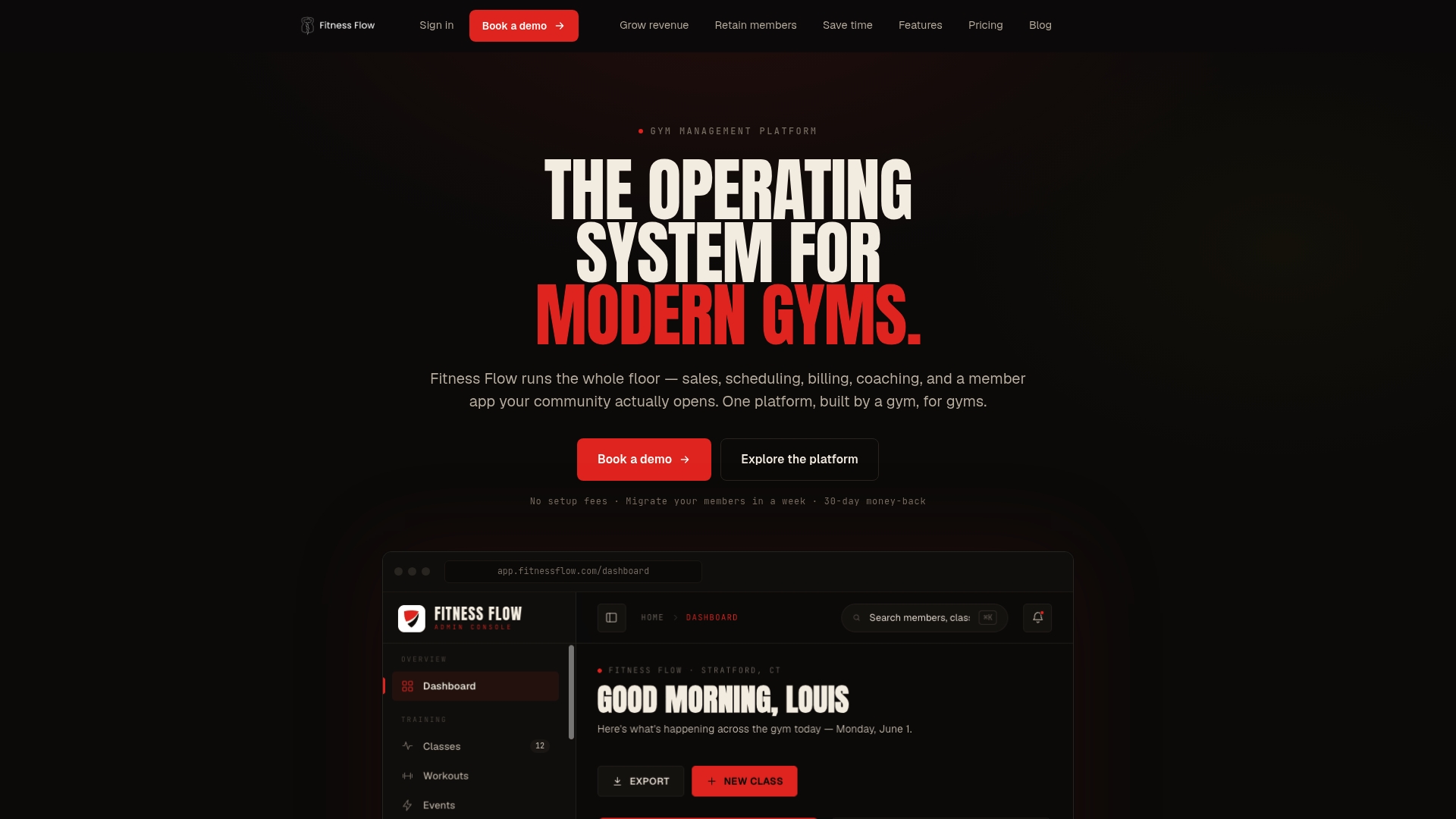
That matters because the biggest reason loyalty programs die isn’t bad reward design, it’s manual tracking that falls apart within a month. Fitness Flow’s branded member app shows point balances and tier status in real time, syncs with your CRM to flag members close to a reward, and connects to your point-of-sale for redemptions without a separate reconciliation step. Gyms running engagement programs through the platform report a 27% average increase in member retention and 12 hours saved weekly on administrative work that used to eat into a manager’s day.
If you’re ready to pilot an attendance-based program without building the tracking infrastructure yourself, book a demo with Fitness Flow and see how automatic check-ins and tiering would work for your member base before committing to a full rollout.
Frequently Asked Questions
How do gym loyalty programs work? Members earn points or stamps for actions like check-ins, class bookings, or referrals, then redeem them for rewards such as free classes, merchandise, or membership credit. The best programs track this automatically through the gym’s management software rather than manual logs.
What’s the best gym loyalty program model for a small studio? A simple visit-based stamp card, 8 to 10 visits for a free class, works better for small studios than a complex points system. You can add tiers or referral bonuses later once the basic model is running smoothly.
Do gym loyalty programs actually reduce churn? Yes, when they reward ongoing attendance instead of just sign-up. Programs built around consistency, streaks, and milestone visits show stronger retention results than one-time discount offers.
What rewards do gym members value most? Free classes, personal training sessions, priority booking, and status recognition tend to outperform straight discounts. Experience-based rewards cost less to fund and create a stronger emotional connection to the gym.
How much should a gym loyalty program cost to run? Cost depends on redemption value per member against your average monthly dues. Compare that percentage to what churn currently costs you; if the reward budget is lower than churn losses, the program pays for itself.