
TCPA SMS Consent: What U.S. Gyms Need to Collect and Keep

TCPA SMS consent is the permission a person gives before your business texts their cell phone. For marketing texts sent with an autodialer, the FCC’s rules generally require prior express written consent. That means a signature, which can be electronic, on a clear authorization that consent is not a condition of buying anything. Purely informational texts generally need a lower standard, prior express consent. Add a promotion to an informational message, though, and the whole text can be treated as marketing. This guide shows how to apply those rules in a gym, from the join form to the STOP reply.
This is general information for gym owners, not legal advice. Your attorney should review your consent language and your state’s rules before you launch a texting program.
Getfitnessflow
Keep Gym Operations Connected
Fitness Flow brings scheduling, billing, sales, and member engagement together in one gym management platform.
TL;DR
- The FCC treats texts generally as telephone calls under the TCPA, so autodialer and do-not-call rules reach your gym’s texts.
- Promotional texts sent with an autodialer need prior express written consent. Informational texts, like a class reminder, generally need prior express consent. Mixing in an offer can raise the standard.
- Honor opt-outs by any reasonable means, including STOP, within no more than 10 business days, and keep an internal suppression list.
- Keep proof of every consent: exact wording, form version, date and time, phone number and how the person agreed.
- Statutory damages run from $500 per violation up to $1,500 if a court finds the violation willful or knowing, and outsourcing your texting does not move that risk away from you.
Table of Contents
- What the TCPA means for a gym’s text messages
- Written consent vs. express consent: which texts need which
- What valid written consent looks like
- Keep proof of every consent
- Handling STOP and other opt-outs
- Exceptions and the state-law layer
- What a violation can cost
- A practical compliance routine for gym owners
- Perspective: consent is a retention tool, not just a legal chore
- Keeping consent and member data in one place
- FAQ
- Sources
What the TCPA means for a gym’s text messages
The Telephone Consumer Protection Act, codified at 47 U.S.C. § 227, was written for phone calls. The FCC applies it to texting. Its guidance says robotexts are generally treated as telephone calls, including the restrictions on autodialers and the commercial do-not-call rules.
The core rule for your gym is that non-emergency autodialed or artificial/prerecorded calls to cell phone numbers are generally barred without prior express consent. Since nearly every member’s number is a mobile number, and nearly every gym uses software to send messages in bulk, the rule applies to you.
Three situations in a typical gym touch it:
- Lead follow-up. A visitor fills in a free-trial form and you text a tour reminder or an offer.
- Member communication. Class bookings, schedule changes, freezes, payment notices.
- Retention and win-back. Promotions, challenges, “we miss you” campaigns.
Each one can carry a different consent standard, which is why one blanket checkbox rarely fits all three.
Written consent vs. express consent: which texts need which
The distinction that matters is purpose. The FCC’s framework separates promotional telemarketing from nonpromotional informational content, and gives marketing the higher written-consent standard.
Type of textExample in a gymConsent generally required
Marketing / telemarketing
“20% off annual plans this week”
Prior express written consent
Informational / transactional
“Your 6 a.m. class is moved to 6:30”
Prior express consent
Informational with promotion added
“Class moved to 6:30. Bring a friend free this week!”
Treat as marketing: written consent
The last row catches many owners. Legal commentary notes that content adding promotion or advertising can make an entire message telemarketing and trigger the written-consent standard. The safe habit is to keep service messages clean of offers, or to collect written consent from everyone you text.
Our own approach to this is simple. Collect written consent once, at sign-up, in a form that covers both service and promotional texts, and keep the two kinds of message separate in your campaigns. That way no one on your list is ever texted under a weaker standard than the content requires.
What valid written consent looks like
The FCC’s 2012 order spells out the elements. Prior express written consent is a written agreement bearing the recipient’s signature that clearly and conspicuously authorizes advertisements or telemarketing by autodialer or artificial/prerecorded voice, and it must not be a condition of purchasing goods or services. Electronic signatures count, which is why a checked box on a web form or a signature on a tablet at the front desk can work.
For a gym, a compliant consent screen has these parts:
- Who is texting. Your gym’s name, written plainly.
- What kind of messages. Promotions, offers, reminders, whatever you will actually send.
- That an automated system may be used to send them to the number provided.
- That consent is not a condition of joining or buying. Members must be able to sign up without agreeing.
- The number the person is authorizing, entered by them.
- A clear action. An unchecked box they tick themselves, or a typed signature, not a pre-ticked box buried in your terms.
A note on the one-to-one rule. In late 2023 the FCC adopted language requiring that consent be given to one identified seller and tied to the interaction that prompted it, with compliance set for January 27, 2025. Reports indicate that the Eleventh Circuit vacated that restriction in Insurance Marketing Coalition v. FCC on January 24, 2025. For a gym this is mostly academic if you do the sensible thing anyway: collect consent for your own gym, not for “partners” you have not named, and tie the wording to what the person was doing, such as booking a trial or joining.
Where gyms collect consent
Most owners already have three natural moments:
- Online lead or trial form. Add the consent checkbox and the disclosure right next to the phone field.
- Membership agreement. Include a separate, optional texting authorization, not a clause tucked into the contract.
- Front desk or app onboarding. A tablet screen or in-app prompt, saved against the member record.
If you also capture signatures for liability waivers, the same habit applies. Our guide to digital waivers for gyms covers how to record legal signatures, and the texting authorization should sit alongside it as its own optional line, never as a condition of signing the waiver.
For the full list of fields we recommend capturing, see 9 SMS consent items U.S. gyms must collect and keep.
Keep proof of every consent
If a former member or lead claims you texted without permission, the burden of showing consent lands on you in practice. Plaintiff-side and defense counsel alike advise preserving the exact wording, the form or page version, the date and time, the phone number and how the consumer agreed.
In gym terms, that means each member or lead record should show:
- The consent text as it appeared on the day (not just today’s version of the form).
- The timestamp and the channel: web form, front desk tablet, app.
- The phone number that was authorized.
- Any later change: opt-out date, re-opt-in, number change.
Bank regulators take the same view. The OCC’s examination procedures show that consent is

The practical rule: if your consent record lives in a spreadsheet, a front desk binder and someone’s inbox, you cannot produce it quickly. Put it in the member record, where it is tied to the number you text.

Handling STOP and other opt-outs
Consent is not permanent. Since April 11, 2025, FCC revocation rules let consumers revoke by any reasonable means, including replies such as STOP, QUIT, END, REVOKE, OPT OUT, CANCEL and UNSUBSCRIBE. The same guidance gives the deadline: honor the request within no more than 10 business days.
What that means in practice:
- Honor any reasonable wording. A member who replies “please stop texting me” or tells a coach at the desk has revoked consent just as clearly as one who types STOP.
- Send one confirmation at most. The framework allows one text within five minutes to confirm or clarify an opt-out request. After that, silence.
- Keep an internal suppression list. Businesses should maintain an internal do-not-call or suppression list that includes opt-outs received through automated mechanisms and direct requests, so a desk conversation gets recorded as well as a reply.
- Apply it across messages. A member who opts out of promotions on one channel should not keep receiving them from another campaign.
There is a moving part here. The broader “revoke-all” provision in section 64.1200(a)(10) was subject to a waiver, and the FCC’s January 6, 2026 order extended that waiver until January 31, 2027. Check the FCC’s page for the current status before you design your opt-out logic, and build your system so that one opt-out can stop every automated marketing text to that number. That approach works whichever way the rule lands.
Do Not Call lists
Texts for marketing are also subject to the commercial do-not-call rules. Screen leads you did not collect yourself, such as purchased or imported lists, against the national and state registries. Members who gave you their number and written consent are a different case from a cold list, and cold lists are where gyms get into trouble.
Exceptions and the state-law layer
The federal rules have exceptions, and none of them is a reason to skip consent for a gym’s marketing program:
- Emergency purposes. The statute recognizes an emergency exception, which does not cover a flash sale or a class promotion.
- Manual texts. Manually dialed calls and texts without a prerecorded message are listed as exceptions when sent to numbers not on a do-not-call registry or your internal list. A coach personally typing a message to a member is a different situation from a platform blasting 800 people.
- Noncommercial informational messages. The FCC’s 2012 order explains that informational messages such as school closings remain subject to applicable consent rules when sent to wireless numbers. Do not assume “informational” means “no consent.”
Then there are the states. Section 227 preserves stricter state requirements on telephone solicitations and autodialer use rather than generally preempting them. If you run locations in more than one state, or text leads who live across a state line, your program has to meet the strictest rule that applies. Ask your attorney which state registration, quiet-hours or opt-out rules reach your markets.
What a violation can cost
The TCPA gives private plaintiffs a right of action. A plaintiff may seek actual monetary loss or $500 per violation, whichever is greater, plus injunctive relief. A court may increase damages up to three times, which is where the $1,500 figure per message comes from, when the violation is willful or knowing.
The math is what makes gym owners nervous. One campaign to 1,000 contacts without valid consent is 1,000 potential violations, each at $500 or more. That is why a ten-minute shortcut at the form stage can turn into the most expensive line in your year.
Two further points:
- Vendors do not carry your risk. Businesses remain responsible for texts sent on their behalf. Outsourcing the communications does not eliminate TCPA liability.
- Every message counts. Damages are per call or text, so repeated messages after an opt-out multiply quickly.
A practical compliance routine for gym owners
Consumer Action’s small-business guidance condenses the day-to-day work into a short list: obtain proper consent, keep detailed records, enable opt-outs, regularly scrub lists against national and state DNC registries and the Reassigned Numbers Database, vet service providers, train staff and know your state laws. Here is how that looks in a gym.
Set it up once
- Write two consent statements. One for service texts, one for promotional texts, each optional where required, neither a condition of joining.
- Put the checkbox where the number is entered. Web forms, trial pass pages, front desk tablets, the member app.
- Store the evidence on the record. Wording, version, timestamp, number, channel.
- Separate your campaigns. Service messages carry no offers. Promotions go only to contacts with written consent.
- Add opt-out language to promotional texts, and configure automatic handling of the standard reply words.
Run it every month
- Scrub lists you did not collect directly against the DNC registries and check for reassigned numbers, since a number your member gave you two years ago may belong to someone else now.
- Review opt-outs collected at the front desk, by phone or by email, and confirm they reached the suppression list within 10 business days at most.
- Audit message content. Has a promotion crept into a reminder template?
- Train front desk and coaches to log a verbal “stop texting me” the same day.
- Re-read your vendor settings whenever you change platforms or add a feature like two-way texting.
Two-way texting deserves its own attention, since a member reply is not a blanket permission for later promotions. We cover that in two-way texting for U.S. gyms. If you are still deciding whether texting belongs in your retention plan at all, should your gym run SMS marketing walks through the verdict.
Cancellations are another place where messages and consent meet. A member leaving should have a clean path, and your follow-up messages should respect the opt-out they just made. See five steps to a compliant cancellation flow for how to build that.
Perspective: consent is a retention tool, not just a legal chore
We talk to gym owners who treat SMS consent as a legal tax: a box to tick so the lawyers stay quiet. We see it differently.
A member who clearly agreed to hear from you, knows what you will send and can leave with one word is a member who reads your messages. That is the whole point of texting in a gym: bringing someone back to a class they booked, a challenge they joined, a streak they are proud of. Messages sent to people who never agreed do the opposite. They get ignored, reported or blocked.
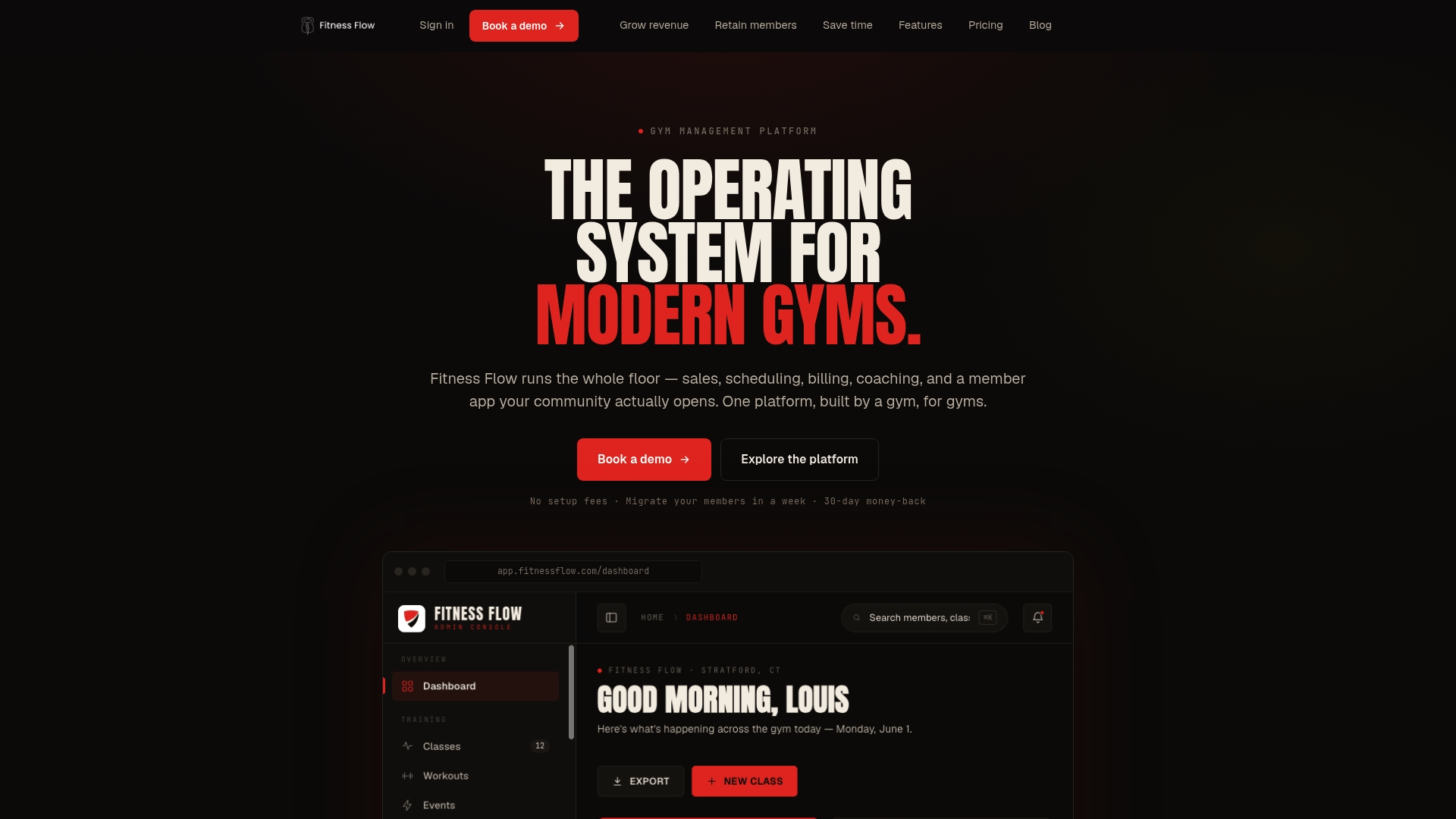
This is why we built Fitness Flow as one platform rather than five tools. When leads, members, waivers, billing, scheduling and engagement sit in a single system, the consent record can sit next to the person it belongs to. It is easier to see who agreed to what, to stop messages to someone who opted out, and to keep service messages separate from promotions. Our platform includes compliance tools, waivers and automated member retention workflows for exactly that reason, and owners who consolidate tell us the admin time they win back is real. On average our customers save 12 hours a week of administrative work and see a 27% increase in member retention, by our own figures.
Our advice: decide your consent rules first, then automate them. Retention automation is only worth running on a list you have earned.
Louis
Keeping consent and member data in one place
A compliant texting program depends on records that are easy to find and workflows that respect opt-outs. Fitness Flow brings lead tracking, CRM, class booking, recurring billing, waivers and the branded member app into one platform, so the consent trail does not scatter across tools. There are three plans: Solo at $149 per month, Studio at $349 per month, and Multi-site, which has no published price. You can see the details on the Fitness Flow plans page, or look at how the platform works for gyms.
If you are setting up your CRM from scratch, our gym CRM setup guide shows how a launch can take one to three hours, which leaves time to get consent capture right from day one.
FAQ
Does the TCPA apply to texts to existing members?
Yes. The FCC treats texts generally as calls under the TCPA, and being a member does not replace consent. Service texts like class changes generally need prior express consent. Promotional texts sent with an autodialer need prior express written consent.
Is a checked box on my website form enough for written consent?
It can be, if it works as a signed agreement. Electronic signatures are valid, and the disclosure must clearly authorize marketing texts by automated technology and state that consent is not a condition of purchase. Keep a record of the wording, the date and time and the number.
Do I have to honor a reply that is not the word STOP?
Yes. Consumers may revoke consent by any reasonable means, and you have no more than 10 business days to honor it. That includes phrases like “don’t text me anymore” and requests made in person.
What if I use a vendor to send the texts?
You stay responsible. Outsourcing does not remove your TCPA liability, so vet the provider, keep your own consent records and make sure opt-outs flow back to your suppression list.
What are the penalties for texting without consent?
A private plaintiff can seek actual loss or $500 per violation, whichever is greater, and a court can increase damages up to three times for willful or knowing violations. State laws may add their own requirements.
Sources
- FCC: Unlawful Communications, Robocalls, Caller ID Spoofing
- FCC: Telephone Consumer Protection Act, 47 U.S.C. § 227
- FCC 2012 order implementing the TCPA
- Federal Register: TCPA consent rule notice, November 2024
- Hunton: TCPA compliance for marketing campaigns
- TCPA compliance for outbound sales: 2026 complete guide
- Clark Meyers PC: TCPA text message marketing compliance
- Consumer Action: A small business’s guide to the TCPA
- Consumer Action: Your rights against unwanted calls and texts
- Consumer Action: The Telephone Consumer Protection Act
- FCC: CGB extends the effective date of the TCPA’s consent revocation rule