
Trial to Membership Conversion: A Gym Owner’s Playbook

Trial to membership conversion is the share of people who complete a trial at your gym and then become paying members. To calculate it, divide new memberships by trials completed (not trials booked) and multiply by 100. To raise it, fix four things in order: the trial experience, the follow-up cadence, the offer, and the tracking that shows where prospects drop off. This guide walks through each one with benchmarks, a worked example and a weekly routine.
Getfitnessflow
Turn More Trials Into Members
Fitness Flow brings sales, scheduling, billing, and member engagement together, helping gyms manage the path from trial to membership.
TL;DR
- Conversion = new memberships ÷ trials completed × 100. Count people who showed up, not people who booked.
- Published benchmarks vary widely with definitions: a professional association targets 60% of paid trials converting, while one industry guide puts free trials at 30-45%.
- A trial that includes goal-setting, a scheduled first session and regular check-ins gives staff natural reasons to talk to the prospect.
- Contact the trialist a couple of days in, halfway, and one to two days before the end, then survey those who do not join.
- Track each stage (lead, booked, showed, joined) separately so you know where people leave.
Table of Contents
- What trial to membership conversion actually measures
- What is a good conversion rate?
- Build a trial that sells itself
- Follow up on a schedule, not on a hunch
- Choose the offer carefully
- Let referrals do some of the selling
- Find out why people join or leave
- Track the funnel so you can see the leak
- Our perspective
- Put the process on autopilot with Fitness Flow
- FAQ
- Sources
What trial to membership conversion actually measures
A trial is any low-commitment first experience: a free class, a week pass, an intro session, or a paid introductory month. Conversion measures how many of those people end up on a recurring membership or package.
The cleanest formula comes from a studio guide to the numbers owners should track: new memberships or packages purchased, divided by trials completed, times 100. The same source stresses using completed trials as the denominator rather than bookings.
That choice matters because it separates two different problems:
- No-shows are a scheduling and reminder problem. They happen before the trial.
- Non-conversion is an experience, follow-up or offer problem. It happens after the person has walked through your door.
If you divide by bookings, a bad no-show week looks like a bad sales week, and you end up retraining staff who did nothing wrong.
A worked example
Say your gym booked 80 trials last month. 60 people showed up and 27 of them signed a membership.
MetricCountRate
Trials booked
80
n/a
Trials completed
60
75% show rate
New memberships
27
45% trial to membership conversion
Conversion on bookings (misleading)
27 of 80
34%
The honest number is 45%. The 34% figure blends your show rate into your close rate and hides what to fix.
What is a good conversion rate?
There is no single answer, and be wary of anyone who gives you one number. Rates depend on whether the trial was free or paid, how long it ran, where the lead came from, and how the source counts a “conversion.”
Here is what the checked sources say:
- The Association of Fitness Studios suggests a training gym generate 30-40 leads a month to convert 20 into paid trials, with a target of 12 of those (60%) becoming regular members.
- One Pilates franchise leader reported conversion rising from 40% to 60% after a growth-marketing engagement.
- The Health & Fitness Association’s 2025 benchmarking report, dated September 30, 2025, covers 175 companies and more than 17,000 facilities across 27 countries. Its published summary does not list a U.S. trial-to-membership benchmark, so treat any “industry average” you see quoted with caution.
The practical takeaway: benchmark against yourself first. Compare this quarter with last quarter, one lead source with another, and one trainer or front-desk employee with another. Use outside figures only as a rough range, and check each one’s definition before comparing.
If you also sell session packs or memberships in other wellness categories, the same logic applies: clear, upfront pricing helps people decide. Seeing hydromassage session and membership prices laid out side by side is a good reminder of how much easier a decision is when the options are visible.
Build a trial that sells itself
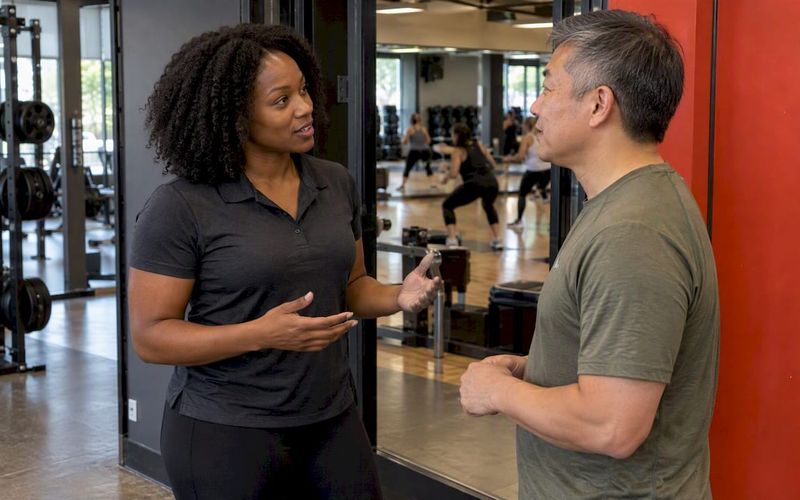
Most owners treat the trial as a favor: here is a free class, hope you like it. The better framing is that the trial is the first week of membership, delivered early.
The Association of Fitness Studios describes a trial process that includes an initial consultation with goal-setting and a physical assessment, followed by a scheduled first session and regular check-ins. That structure does three jobs at once:
- It gives the prospect a personal reason to come back (their goal, not your price list).
- It gives staff a legitimate reason to follow up.
- It lets the person see progress, even small progress, before they decide.
What to include in the trial
- A short goal conversation before the first workout. Five to ten minutes: what they want, what has stopped them before, how many days a week is realistic.
- A guided first session. Do not hand a newcomer a floor map and leave. Introduce them to a coach and at least one regular member.
- A taste of the community. Put them in the class slot where your friendliest regulars train. Researchers describe sustained physical activity as being about context, support and belonging, not just motivation, and a trial is your one chance to show them the context.
- A closing conversation. The studio guide above notes that conversion can depend on follow-up, the conversation at the end of the session, the offer presented and clear communication about progress. Schedule it. Do not leave it to chance at the front desk.
Common trial mistakes
- Ending the visit with “let us know what you think.” Instead, book the next session before they leave.
- Having no written plan for what happens in the trial week. Every trialist should get roughly the same quality of experience, whoever is on shift.
- Collecting a phone number but not a consent to text. Get both at sign-up so you can follow up the way people actually respond.
Follow up on a schedule, not on a hunch
Follow-up is where most gyms lose the sale. The person enjoyed the class, got busy, and drifted. A fixed cadence stops that.
The Association of Fitness Studios suggests contacting prospects a couple of days into, halfway through, and one to two days before the end of a two-week trial. For a 30-day paid trial, it suggests staff call or text at least weekly, survey clients midway, and survey non-converters at the end, with an offer possibly included in the second email and call.
A sample two-week sequence
DayTouchPurpose
0
Text after the first session
Thank them, confirm their second session
2-3
Call from their coach
Ask how they felt, answer questions
7
Text or email with a progress note
Show what they have done so far
12-13
Call with the membership offer
Present options, book the sign-up
After end
Short survey if they did not join
Learn why, keep the door open
Two habits keep this honest. First, make the early touches about the person, not the sale. Second, log every contact in one place so anyone on the team can pick up the thread. If you do not yet have a shared record, our walkthrough on setting up a gym CRM in a single session shows one way to get there quickly.
For prospects who still say no, a short run of attendance-linked emails can bring some back. Here is how to structure 2 to 3 win-back emails.
Choose the offer carefully
The offer at the end of the trial should make joining feel like the easy next step. Two ideas from the checked material are worth weighing.
Mike Beauchamp, writing for the Association of Fitness Studios, recommends paid introductory offers and finds roughly 50% off regular price a sweet spot. His reasoning is that free offers imply zero value and give prospects no skin in the game. Paid intros also pre-qualify people: someone who has paid has already made a small commitment.
Before you set any discount, check three things:
- Margin. A half-price first month still has to cover coach time and class capacity.
- The step-up. Tell people on day one what the regular price will be, so there is no surprise on day 30.
- Consistency. Offer the same terms to everyone in the same situation. Otherwise your front desk will negotiate, and your numbers will be impossible to compare.
If you are reviewing your price ladder as a whole, our guide to gym membership pricing and automation covers how to set tiers and keep billing clean.
Let referrals do some of the selling
People who arrive through a friend already trust you. A channel guide from a lead-tracking vendor puts referral leads at 60-70% trial-to-member conversion on average, against 40-50% for social ads, but treat those as directional since they come from one vendor’s data.

What you can rely on is the principle. Joe Beruta of 24 Hour Fitness said the power of social referrals lies in the personal recommendation, and that sharing tools should be built into the existing member onboarding process. Practically, that means asking new members at the moment they are happiest (after a good session, after hitting a first milestone) to bring a friend for a trial.
We cover the mechanics in how to run a gym referral program that converts and our referral growth playbook. For the top of the funnel more broadly, see our piece on gym lead generation strategies.
Find out why people join or leave
Your conversion rate tells you what happened. Only the prospect can tell you why.
The Association of Fitness Studios recommends surveying trial clients midway through and, if they do not convert, at the end to learn what you could have done better. Keep it to three or four questions:
- What made you want to try us?
- What was the best part of your trial?
- What nearly stopped you from joining (price, schedule, location, comfort level)?
- What would have made joining an easy yes?
Send it by text or email within a day of the trial ending, while the experience is fresh. Review the answers monthly and look for repeats. If three people in a month say the 6 a.m. class was intimidating, that is a coaching fix. If most say price, look at your offer structure, not your sales script.
Track the funnel so you can see the leak
One overall conversion number is a start, but it will not tell you where to act. Split the journey into stages and record each one:
StageWhat to countQuestion it answers
Leads
New inquiries by source
Where do prospects come from?
Booked
Trials scheduled
Are we getting inquiries onto the calendar?
Showed
Trials completed
Are reminders working?
Joined
New memberships
Is the trial and follow-up working?
Still here at 90 days
Members retained
Did we sell the right people?
Compare stage to stage. A low booked-to-showed rate points to reminders and scheduling. A low showed-to-joined rate points to the trial, follow-up or offer. A healthy join rate followed by early cancellations points to onboarding, which our 90-day member retention playbook addresses.
A simple monthly routine
- Pull the five counts above for the month, split by lead source.
- Calculate conversion on completed trials overall and per source.
- Compare against your own previous three months, not against a headline benchmark.
- Pick one stage with the biggest gap and change one thing there.
- Re-measure next month before changing anything else.
Changing one variable at a time is slow but it is the only way to know what worked. For the numbers that sit after the sale, see the member retention metrics every manager should track.
This is easier when leads, bookings, attendance and billing live in one system. With spreadsheets and several disconnected tools, the numbers rarely match and the monthly review gets skipped.
Our perspective
Most gyms do not have a conversion problem. They have a visibility problem. The owner knows roughly how many trials happened, but not who was contacted, when, or what was said, so every missed follow-up is invisible.
We built Fitness Flow around the idea that the trial-to-member journey should be one connected record: the lead, the booking, the class attendance, the follow-up and the first payment. When those live in one platform instead of several subscriptions, a coach can see that a trialist attended twice and has not been contacted since, and an owner can see which lead source actually produces members.
We also think the experience between visits matters. A fully branded member app with live classes and gamified features keeps a new person connected to your gym in the days when they would otherwise drift. Our design goal is simple: reduce admin so your team spends its time on conversations, not data entry.
Start with the basics in this article: count completed trials, follow up on a schedule, make one clear offer, and review the funnel monthly. Then let software carry the repetitive parts.
Louis
Put the process on autopilot with Fitness Flow
Fitness Flow is all-in-one gym management software: sales and lead tracking, CRM, class booking, recurring billing, a branded member app and reporting in one place. That means the funnel stages above sit in a single dashboard, and follow-up tasks and retention workflows can be automated rather than remembered.
Plans are Solo at $149 per month and Studio at $349 per month. Multi-site has no published price, so contact us for details. See plans and pricing, or look at how Fitness Flow works for gyms.
FAQ
What is a good trial to membership conversion rate for a gym?
It depends on the type of trial and how you count. The Association of Fitness Studios sets a target of 60% of paid trials becoming regular members for training gyms. Free trials usually convert lower, so compare your result to your own history first and use outside figures as a loose range.
Should I use completed trials or booked trials in the formula?
Use completed trials. Dividing new memberships by trials completed isolates how well your trial and follow-up work. Booked trials mix in no-shows, which is a separate issue handled by reminders and scheduling.
Is a free trial or a paid intro offer better?
The Association of Fitness Studios recommends paid introductory offers, noting that free offers imply little value and ask nothing of the prospect. It finds around 50% off regular price a sweet spot. Test it against your own margins and capacity before committing.
How often should I contact someone during their trial?
A workable pattern is a touch a couple of days in, one halfway through, and one to two days before the trial ends. For a 30-day paid trial, contact at least weekly. Log each touch so the next person who speaks to the prospect knows what was said.
What should I do with people who do not join?
Send a short survey asking what you could have done better, then review the answers monthly. Follow up with a small number of attendance-based emails to give interested people a reason to return.
Sources
- The Only 7 Numbers Your Studio Needs to Track
- The Art of Converting Leads into Sales, Association of Fitness Studios
- The Key to Turning Prospects into Paying Clients, Association of Fitness Studios
- 2025 Fitness Industry Benchmarking Report, Health & Fitness Association
- How Supafitgrow Drove Growth for F45 and Club Pilates Studios, Athletech News
- ACSM, AMSSM Breaking Barriers Research Grant
- Case Study on 24 Hour Fitness
- Hydromassage Cost: Sessions, Memberships & Home-Unit Prices