

Cut No Shows: Class Booking Policies for Studios, Copy Ready, $15 Fee

Set a 7 day booking window, a 12 hour cancellation window, and a $15 late-cancel fee charged automatically to the card on file. Waive the fee the first time a member misses it. Require cancellation through your app or website, never in person or by phone only, so the process stays as easy as booking.
TL;DR:
- Setting a 7-day booking window with a 12-hour cancellation window helps balance member planning with staffing needs, but shorter or longer windows are appropriate for demand and class type.
- An automated, graduated strike system ensures fair enforcement of late-cancel and no-show fees, starting with waivers and escalating to charges while recording all incidents.
- Clear communication through confirmations, reminders, and integrated check-in reduces no-shows more effectively than reminders alone, especially when combined with fee enforcement.
- Cancellation policies must be easy to understand, disclosed upfront, and accessible via the same app or website used for booking to comply with FTC guidance and avoid unfair barriers.
- Using a comprehensive gym management platform automates reservation, billing, and enforcement, saving staff time and improving member retention through consistent policy application.
Getfitnessflow
Simplify Class Booking Management
Fitness Flow brings scheduling, billing, member engagement, and analytics together for gyms seeking more consistent operations and retention.
Table of Contents
- Booking windows, reservation rules, and waitlist handling
- Cancellation windows and fee structures for early, late, and no-show cancellations
- Late-cancel and no-show enforcement: charging cards, strikes, and grace rules
- Communication and tech: confirmations, reminders, check-in, and software integration
- Compliance and legal considerations for cancellation policies
- Policy examples and sample clauses for your member agreement
- Implementation checklist and best practices for rollout
- Why clear policies protect retention when enforced fairly
- How an all-in-one gym management platform automates policy enforcement
- Sources
- FAQ
Booking windows, reservation rules, and waitlist handling
A booking window of about one to two weeks works for most group fitness schedules: long enough that members can plan their week, short enough that you can adjust staffing and room capacity without guessing. Shorten it to just a few days for high-demand formats like reformer Pilates or small-group strength, where limited spots reward last-minute flexibility. Lengthen it to several weeks for specialty courses or multi-week series that need lead time to fill.
A few operational rules keep the system from breaking down:
- Cap bookings per member per day to prevent one person from locking out a full class schedule.
- Block duplicate bookings for the same time slot so a member cannot double-reserve by accident.
- Promote waitlisted members automatically until 60 to 90 minutes before class start, then close the waitlist so late movement does not confuse front desk staff.
- Notify waitlisted members by push notification or text the moment a spot opens, with a short window to confirm before it passes to the next person.
Cancellation windows and fee structures for early, late, and no-show cancellations
The right cancellation window depends on how far in advance you need firm numbers to staff the room. A boutique studio running one instructor per class can often work with a 2 hour window since headcount barely affects cost. A gym running larger group classes with fixed staffing usually needs 6 to 12 hours. Multi-week courses or workshops that require prep, like nutrition seminars or specialty certifications, justify a full 24 hour window.
Fee structure matters as much as the window itself:
- Late cancellations (inside the window but before class start) generally incur a moderate fee.
- No-shows (no cancellation at all) typically are charged a higher fee or may result in a loss of class credit.
- Unlimited membership tiers often use credit forfeiture instead of cash fees, since members already paid for access.
- Pay-per-class or drop-in members usually respond better to a flat monetary fee, since there is no credit to forfeit.
Credits feel less punitive to members than a card charge, but they only work as a deterrent when the credit actually has value, meaning it expires or is scarce enough that losing one stings.
Late-cancel and no-show enforcement: charging cards, strikes, and grace rules
Enforcement only works when members agreed to it in writing before you ever charge anything. Your member agreement needs explicit language authorizing the studio to charge the card on file for late-cancel and no-show fees, tied directly to the booking policy the member accepted at signup.
Automated detection should compare the class roster against check-in data and flag anyone registered but not checked in. Most studios attempt the charge 1 to 3 hours after class start, giving front desk staff a short window to correct a manual check-in error before the system bills anyone.
A graduated strike system keeps enforcement fair:
- First offense: waived automatically, with a notification explaining the policy.
- Second offense: a warning message, no charge, flagging that the next incident carries a fee.
- Third offense and beyond: full fee applied plus a temporary hold on new bookings until the balance clears.
Disputes should route to a single staff member or manager who can review check-in logs and reverse a charge within a set number of days if the system made an error.
Pro Tip: Log every waived first offense in the member’s profile so staff can see the pattern before deciding on a dispute, rather than relying on memory.
Communication and tech: confirmations, reminders, check-in, and software integration
Prevention matters more than enforcement. A booking confirmation at the moment of reservation, a 24 hour reminder, and a 1 to 3 hour SMS nudge before class each catch a different kind of forgetfulness. Combining reminders with a real fee produces a bigger drop in no-shows than reminders alone, according to industry analysis of studio operations.
- Send booking confirmations immediately, then a 24 hour reminder, then a final SMS 1 to 3 hours before class.
- Offer in-app check-in and a front desk tablet as backup, with a grace period of 5 to 10 minutes for late arrivals before the spot opens to a waitlisted member.
- Promote waitlisted members the instant a cancellation posts, without waiting for staff to notice manually.
- Feed check-in data straight into the auto-charge system so a member who shows up late still avoids a no-show fee if they checked in before the cutoff.
Document the full policy inside the app itself, not just in a printed handbook, and require members to check a consent box at signup acknowledging the card-authorization terms.
Compliance and legal considerations for cancellation policies
The FTC’s guidance following its case against LA Fitness makes one point clear: canceling a membership or a class booking should not be a heavy lift. Regulators treat a cancellation process that is harder than the signup process as an unfair practice, so if members can book and pay through your app, they need to be able to cancel there too.
The FTC’s Negative Option Rule sets the underlying standard for recurring charges: clear and conspicuous disclosure of terms, express informed consent before billing, and a simple cancellation mechanism. Applied to class booking, that means disclosing your cancellation window and fees before a member ever books, not after a charge lands on their statement.
Three steps keep a studio on solid ground: disclose fee terms before the first booking, keep the cancellation button as easy to find as the booking button, and keep dated records of every cancellation and consent so a dispute has a paper trail.

Policy examples and sample clauses for your member agreement
These clauses adapt directly into a member agreement or booking terms page.
- Booking and cancellation window: “Members may reserve classes up to 7 days in advance. Cancellations made more than 12 hours before class start incur no charge. Cancellations made within 12 hours, or no-shows, are subject to the fees below.”
- Card authorization: “By booking a class, you authorize [studio name] to charge the payment method on file for any applicable late-cancel or no-show fee. You may dispute a charge within 5 business days by contacting the studio through the app.”
- Graduated enforcement: “First-time late cancels or no-shows are waived. Subsequent occurrences within a rolling 90-day period incur a $15 fee and may result in a temporary booking hold.”
- Exceptions: “Fees may be waived at the studio’s discretion for documented medical emergencies or facility issues on the studio’s part.”
Implementation checklist and best practices for rollout
A phased rollout avoids the backlash that comes from changing policy without warning.
- Days 1 to 30: Pull no-show and late-cancel data from the past quarter, draft updated terms, and configure fee amounts in your booking software.
- Days 31 to 60: Train front desk and coaching staff on the strike ladder and dispute process, then announce the policy change to members with a clear effective date.
- Days 61 to 90: Turn on auto-charge, monitor no-show rate and complaint volume weekly, and adjust fee amounts or grace windows based on what the data shows.
Give staff a short script for disputes: acknowledge the charge, pull up the check-in log together, and escalate to a manager only if the log itself is ambiguous.
Pro Tip: Run the new policy in “warning only” mode for the first two weeks, logging what would have been charged, before turning on real auto-charge.

Why clear policies protect retention when enforced fairly
Booking policy is not about punishing members, it is about protecting the seats those members are trying to book in the first place. A studio that waives the first offense and automates the rest keeps enforcement predictable rather than personal. That predictability, more than the fee amount itself, is what keeps a strict policy from feeling like a betrayal of trust.
Automating the charge also removes the worst part of the job: the awkward conversation at the front desk. When the system handles it consistently, staff get to spend their energy on coaching and community instead of collecting fees.
— Louis
How an all-in-one gym management platform automates policy enforcement
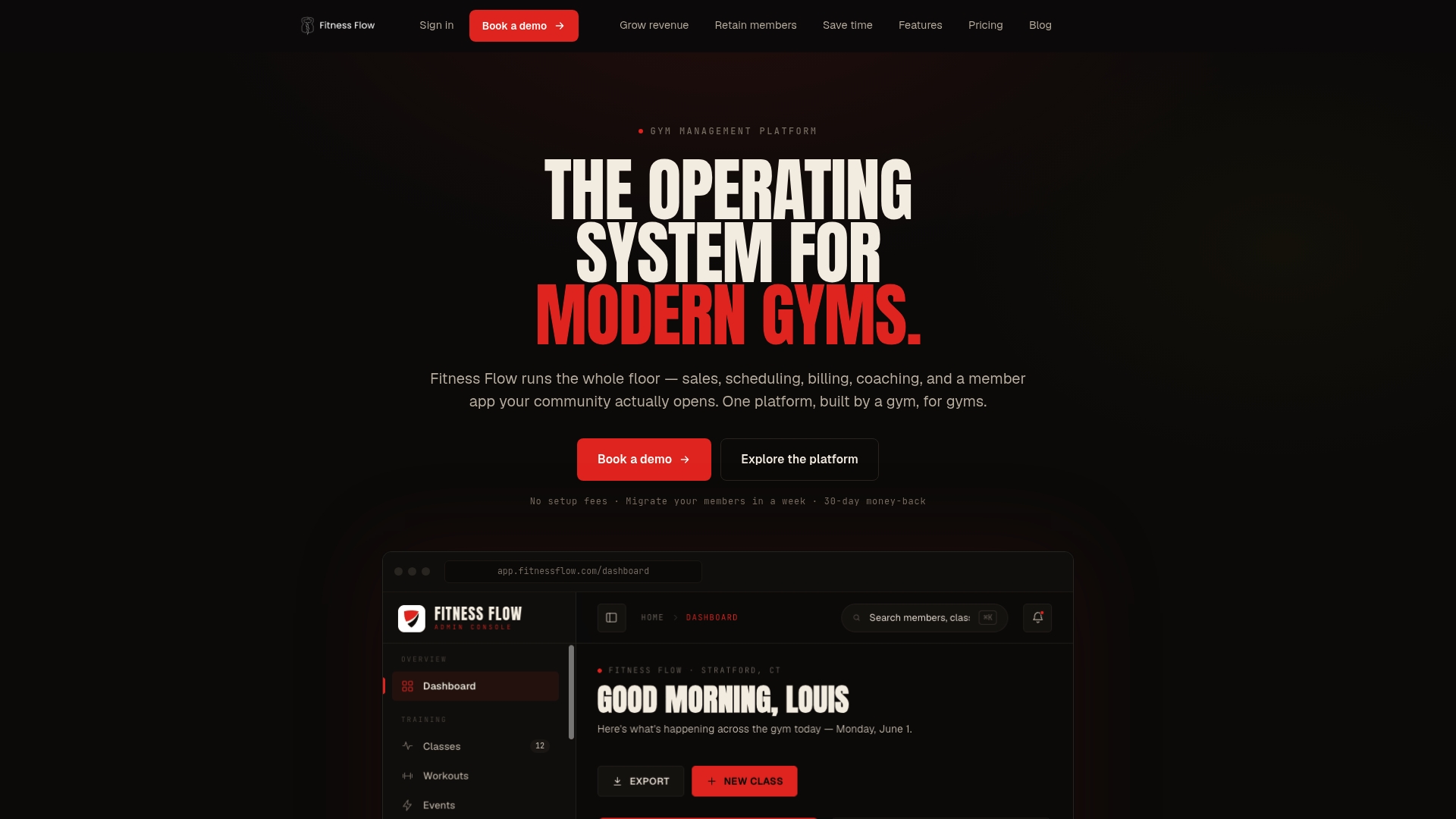
Every clause in this article depends on software that ties booking, check-in, and billing together, which is exactly what Fitness Flow was built to do. Its branded member app handles reservations, reminders, waitlist promotion, and card-on-file charges in one place, so the strike ladder above runs itself instead of landing on a manager’s desk. Use of an all-in-one gym management platform can lead to notable improvements in member retention and significant weekly savings on administrative tasks for gyms that automate enforcement. Visit the Fitness Flow plans page to see the Solo, Studio, and Multi-site options and find the fit for your studio.
Sources
- Cancelling a gym (or other) membership shouldn’t be a heavy lift: what businesses can learn from the FTC’s case against LA Fitness
- No-Show: How Studios Charge Without Losing Members in 2026
FAQ
Are 30 day cancellation policies legal?
A 30 day notice period for canceling a membership is generally allowed as long as the terms are disclosed clearly before signup and the cancellation method is as easy as the sign-up method, per FTC guidance. Studios should avoid requiring mail-only or in-person cancellation, since regulators treat that as an unfair barrier.
Does booking have a 24 hour cancellation policy?
Cancellation windows vary by studio and class type: many boutique studios use shorter windows of 2 to 12 hours for single classes, while multi-week courses commonly use a full 24 hour window. There is no single standard window, so the terms depend on what each studio publishes in its policy.
Can you provide an example of a 24 hour cancellation policy?
A typical clause reads: “Cancellations made more than 24 hours before class start incur no fee. Cancellations made within 24 hours, or no-shows, are subject to a fee charged to the card on file.” Studios pair this with clear disclosure at booking and a first-offense waiver to keep it fair.
What is the cancellation policy for reservations?
Most class reservation policies set a window before class start during which a member can cancel free of charge, followed by a late-cancel or no-show fee if they miss that window. The fee is usually authorized in advance through a card-on-file clause in the member agreement, and cancellation should be available through the same app or website used to book.