

Digital Waivers for Gyms: Legal Signatures Without a Standalone Tool

Yes, switch to a legally compliant digital waiver system that stores signed waivers and their audit trails and integrates them with your member profiles. Done right, digital waivers are more enforceable than paper, cut check-in time, and give you searchable records when an incident happens. We support handling this as part of a single gym operating system rather than another standalone tool.
TL;DR:
- The ESIGN Act requires consent disclosures about hardware and software access, plus clear options to withdraw consent or request a paper copy.
- Keep exact waiver text, checkbox wording, timestamps, device or IP details, and version history; local counsel or your insurer should review state specific language.
- Minors need separate guardian consent, while guests and offsite activities need their own signing flows; verify each waiver before entry.
- For health answers, restrict staff access, encrypt stored records, collect only necessary details, and support member requests to export or delete data.
- A single site rollout takes a few weeks, with legal review consuming most of that time; test record retrieval and audit logs before full staff adoption.
Getfitnessflow
Simplify Gym Operations in One Platform
Fitness Flow brings gym management together, including member engagement features that keep clients connected between visits.
Table of Contents
- What a digital waiver is and how it works in a gym
- Benefits of switching from paper to digital waivers for gyms
- Legal enforceability: ESIGN/UETA and the practical items you must capture
- What to look for in gym waiver software (feature and integration checklist)
- How to implement digital waivers in your gym with minimal disruption
- How Fitness Flow supports digital waivers
- Compliance with HIPAA and data privacy laws specific to gyms
- Customization and branding options for digital waivers to match gym identity
- Tech support and training resources for gym staff during digital waiver adoption
- Mobile device and kiosk usage best practices for waiver signing
- Author perspective: practical priorities for adoption
- Fitness Flow: a turnkey way to implement integrated digital waivers
- FAQ
- Sources
What a digital waiver is and how it works in a gym
A digital waiver, sometimes called an e-waiver or online waiver, is a liability release that a member reviews and signs electronically instead of on paper. The legal substance is the same as a printed form: the member acknowledges risk and releases the gym from certain claims. What changes is how consent gets captured and stored.
Most systems record consent through a mix of checkboxes, a typed or drawn signature, and a timestamp tied to that action. Behind the scenes, the software usually logs:
- The exact waiver text the member agreed to
- A timestamp marking when the signature was completed
- The IP address or device identifier used to sign
- Confirmation that required checkboxes were selected before submission
Once signed, a waiver typically attaches to that person’s member profile, where staff can pull it up during check-in, link it to a class booking, or reference it alongside billing and payment records. That connection between waiver, profile, and activity history is what makes digital waivers useful beyond simple paperwork.
Benefits of switching from paper to digital waivers for gyms
Paper waivers create friction at the front desk and risk at the filing cabinet. Switching to digital versions solves both problems while adding a few you might not expect.
- Faster check-ins: members sign before they arrive, so staff spend seconds confirming instead of minutes handing out clipboards.
- Searchable, backed-up records: a name or date search replaces digging through folders when you need a waiver for an insurance claim or legal request.
- Consistent screening: every member sees the same health questions and disclosures, with no fields skipped because a pen ran dry.
- Smoother onboarding: a clean, professional sign-up flow sets expectations before a new member ever steps through the door.
- Lower storage costs: no filing cabinets, no shredding schedules, and retention periods that update automatically instead of by hand.
The efficiency gains compound at the front desk, where a few minutes saved per new member adds up across a full week of walk-ins, trials, and class sign-ups.
Pro Tip: Send waiver links as part of your booking confirmation email so members sign before they ever reach the front desk.
Legal enforceability: ESIGN/UETA and the practical items you must capture
Electronic signatures are not a legal gray area. The ESIGN Act states that electronic signatures and records cannot be denied legal effect solely because they are electronic, as long as consumer consent and retention requirements are met. In practice, that means your waiver process needs to do more than just collect a typed name.
The statutory text of the ESIGN Act requires specific consumer disclosures before someone consents electronically: notice of the hardware and software needed to access the record, and a clear way for the member to withdraw consent or request a paper copy instead. Your waiver software should support these disclosures automatically rather than leaving you to draft them.
Beyond the baseline, a defensible audit trail should retain:
- The timestamp of signature
- The IP address or device used
- A copy of the exact consent checkbox language shown at signing
- Any version history if the waiver text changes over time
Software compliance alone does not guarantee enforceability. Waiver language still needs review by counsel or your insurer to meet the specific requirements of your state, since language that holds up in one jurisdiction can fall short in another.
Special cases need their own workflow: minors require parental or guardian consent captured separately from the member’s own signature, guest passes need a lightweight waiver that still meets the same consent standard, and offsite events or partner classes need a way to confirm a waiver is on file before someone steps onto the floor.
The National Safety Council reports 4.4 million people were treated in U.S. emergency departments in 2024 for injuries involving sports and recreational equipment, with exercise the most frequently associated activity. That volume is exactly why a fast, reliable way to produce a signed waiver matters when an incident report gets filed.
What to look for in gym waiver software (feature and integration checklist)
Not all waiver tools are built the same, and the gaps usually show up during a real incident, not a demo. A short checklist keeps you from discovering a limitation after you need the record.
Look for these core features:
- Customizable templates with mandatory fields that can’t be skipped
- Automatic capture of signature metadata and a visible audit log
- Pre-sign invitation links sent before a member’s first visit
- Automation that attaches a signed waiver directly to the member’s profile
- Multi-location support if you run more than one site
- A simple guest-pass flow that doesn’t require a full account
- Encryption at rest and in transit, with exportable records for legal requests
- Configurable retention settings, including the ability to place a legal hold on a specific record
- Integrations with your booking, payments, CRM, and incident-reporting tools
- Mobile-first signing and an offline mode for spotty gym Wi-Fi
Pro Tip: During a vendor demo, ask them to pull up a signed waiver’s full audit log in real time. If it takes more than a few clicks, it will take too long during an actual claim.
How to implement digital waivers in your gym with minimal disruption
Switching systems doesn’t have to interrupt daily operations if you sequence it properly.
- Prepare: review your waiver language with counsel or your insurer, map out every point in the member journey where a waiver is needed, and set a retention policy before you migrate anything.
- Pilot: run the new system with one class or a small member group first, then confirm you can retrieve a signed waiver and its audit log without help from support.
- Roll out: send pre-sign links in booking confirmations, update front-desk scripts, and post signage explaining the new sign-in process.
- Integrate: connect waivers to member profiles and set up automatic triggers so an incident report can pull the relevant waiver instantly.
- Verify: run a mock drill, produce a record on demand, and confirm exports and backups work the way you expect.
For a single-site gym, this rollout typically takes a few weeks from vendor selection to full staff adoption, with most of that time spent on legal review rather than the technical setup itself. For more on sequencing this transition, our guide to implementing digital waivers walks through template examples gym owners have used.
How Fitness Flow supports digital waivers
Our waiver management is integrated rather than treated as a bolt-on feature, because a waiver that lives apart from the rest of your member data is a waiver you’ll struggle to find in a hurry.
- A template builder lets you customize waiver language and required fields without a developer
- Every signature carries a visible audit log with timestamp and consent details
- Waivers attach automatically to each member’s profile inside the member app
- Incident reports can pull the relevant signed waiver directly, which we cover in our incident reporting workflow guide
This article is written and maintained by Louis as part of our ongoing coverage of gym operations and compliance topics for owners.
Compliance with HIPAA and data privacy laws specific to gyms
HIPAA applies to covered entities like healthcare providers and health plans, not gyms collecting a general liability waiver. That said, if your intake forms ask about medical conditions, medications, or injuries, you’re handling sensitive personal data even if HIPAA itself doesn’t apply to you directly.
Treat that data with the same care regardless of which specific law governs it, including implementing practical data privacy controls for gym operators to protect member information. Limit who on staff can view health-related answers, store waiver data with encryption at rest, and avoid collecting more medical detail than you actually need for safety screening. If you operate internationally or serve members whose data falls under stricter privacy regimes, our GDPR compliance guide for gyms breaks down the additional controls those rules require, and the same principles of minimal collection and clear consent apply broadly.
Your waiver software should let you export or delete a member’s data on request and should document who accessed a given record and when. That audit capability matters for both legal defense and member trust, since members increasingly expect to know what happens to information they hand over at sign-up.

Customization and branding options for digital waivers to match gym identity
A waiver is often the first document a prospective member interacts with, so it’s worth treating it as part of your brand rather than a generic legal form. Most gym waiver software lets you add your logo, adjust colors to match your gym’s identity, and customize the language around your specific programs, whether that’s a CrossFit box, a boutique studio, or a traditional strength gym.
Beyond visual branding, customization should extend to the actual content: different waiver versions for different activities, like a standard membership waiver versus one for a high-intensity event or an outdoor bootcamp. Some gyms also add a short welcome message or house rules alongside the waiver itself, turning a required legal step into part of the onboarding experience.
Keep the core legal language consistent across versions even as you adjust branding and activity-specific clauses, since fragmented or inconsistent waiver text across locations makes it harder to defend any single version if it’s challenged.
Tech support and training resources for gym staff during digital waiver adoption
Front-desk staff are the ones who will field questions when a member can’t find the sign-up link or isn’t sure why a checkbox won’t let them continue. Before you launch, walk your team through the actual signing flow from a member’s perspective so they can troubleshoot in real time instead of guessing.
Most software vendors provide onboarding resources: setup guides, short video walkthroughs, and a support channel for technical issues. Ask specifically how fast a vendor responds to urgent issues, since a waiver system that goes down during a busy sign-up period creates exactly the kind of gap you switched systems to avoid.
Internally, a one-page reference for staff covering common questions, how to resend a waiver link, and who to contact for technical problems cuts down on repeated training. Revisit that reference whenever you update waiver language or add a new class type that requires its own version.
Mobile device and kiosk usage best practices for waiver signing
Most members will sign a waiver on their phone, whether through a pre-visit link or a kiosk at the front desk. Design your process around that reality rather than assuming people will sit at a desktop.
A few practical habits make mobile and kiosk signing smoother: keep the waiver text scrollable and readable on a small screen, make the signature field large enough for a finger or stylus, and confirm the submission with a clear on-screen message so members aren’t left wondering if it worked. If you use a front-desk kiosk, set it to automatically log out or clear the form after each signature so one member’s information doesn’t carry over to the next.
For areas with unreliable Wi-Fi, an offline signing mode that syncs once connectivity returns prevents a stalled internet connection from backing up your front desk. Test this mode periodically rather than assuming it works, since an offline queue that silently fails defeats the purpose.
Author perspective: practical priorities for adoption
Legal review and a solid audit trail come first. Member experience improvements matter, but they’re worthless if a waiver can’t be produced quickly during a dispute. If you can only tackle one thing first, start with pre-signing and automatic attach-to-profile, since that single change removes the most front-desk friction while building the audit trail you’ll need later. Measure success by how much check-in time drops and how fast you can retrieve a record when asked.
— Louis
Fitness Flow: a turnkey way to implement integrated digital waivers
Our system eliminates the gap between a waiver tool and the rest of your gym’s systems by keeping both in one place, avoiding the need to juggle separate vendors alongside booking and billing software.
- A template builder for waiver language and required fields
- Automatic audit logs with timestamp and consent details on every signature
- Signed waivers attached directly to member profiles inside the member app
- Integrations with booking, payments, and incident reporting
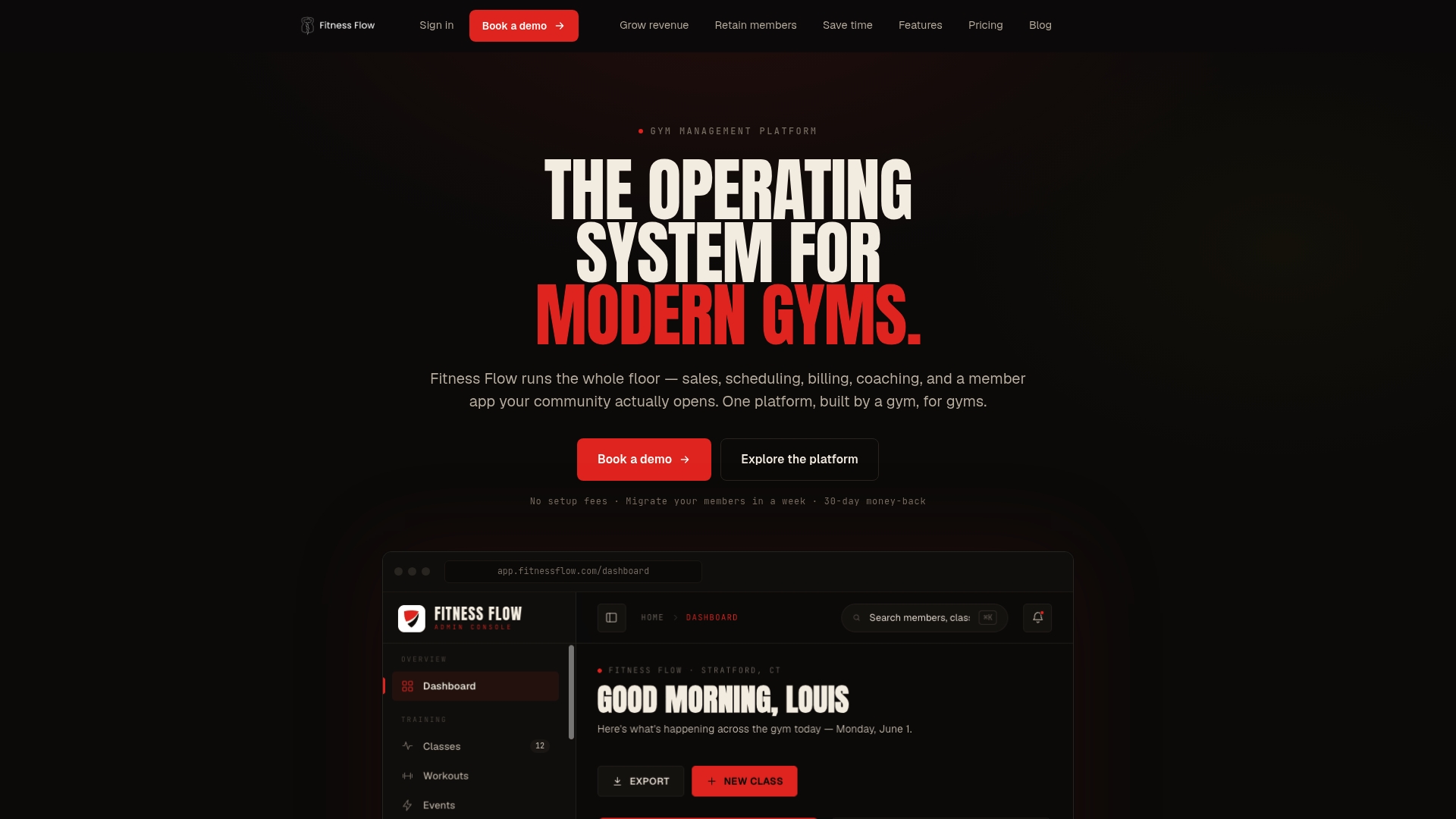
Our Solo plan starts at $149 per month for single-site gyms, and our Studio plan runs $349 per month for growing operations, with Multi-site pricing available on request for gym groups running several locations. Whatever you choose, have your final waiver language reviewed by counsel or your insurer before launch. Visit the Fitness Flow operating system for gyms to see the full feature set or book a demo.
This article is general information, not a substitute for advice from a qualified lawyer. Consult a qualified legal professional about your own circumstances before acting on anything here.
FAQ
Can you provide an example of a gym waiver?
A typical gym waiver includes an acknowledgment of the risks of exercise, a release of liability for injuries not caused by gross negligence, an assumption-of-risk statement, and a signature line with the date. Specific language varies by state and should be reviewed by counsel before use, since a generic template won’t account for jurisdiction-specific requirements.
Are gym waivers legal?
Gym liability waivers are generally enforceable in most states when the language is clear, the member voluntarily signs, and the waiver doesn’t attempt to excuse gross negligence or intentional harm. Enforceability rules vary by state, so language that holds up in one jurisdiction may not in another, which is why review by local counsel matters before you rely on any template.
Are online waivers legal?
Yes, electronic signatures carry the same legal weight as handwritten ones under the ESIGN Act, provided the required consent and disclosure steps are followed. That means an online gym waiver can be just as enforceable as a paper one when the signing process meets those consent requirements.
How to get a gym to waive the joining fee?
Joining-fee waivers are a billing and promotion decision made by each individual gym, often tied to seasonal promotions, referral programs, or membership tier. This is separate from a liability waiver and has no connection to the digital waiver software discussed here, so check directly with the gym about current sign-up offers.
Sources
- National Safety Council: Sports and recreational injuries
- TITLE I—ELECTRONIC RECORDS AND SIGNATURES IN COMMERCE (ESIGN Act)
- Public Law 106-229—June 30, 2000 (ESIGN Act statutory text)