Two-Way Texting for U.S. Gyms: Get Consent Before You Send

Two-way texting is a practical, high-engagement channel that lets gym staff handle member questions, confirm sessions, collect feedback, and recover no-shows. It works far better than one-way blasts when it is implemented correctly, but that means logging consent and registering your sending numbers under TCR/10DLC before you send a single message.
TL;DR:
- SMS can reach response rates around 45%, compared with roughly 6% for email, making it useful for confirmations, surveys, and lead follow up.
- In one benchmark, individual chats made up about 11.8% of outbound messages but generated over 55% of replies, favoring monitored conversations for response driven tasks.
- Class reminders tied to existing bookings are transactional, while promotions and membership upsells require the higher marketing consent standard; register each message type separately.
- Keep first messages under 160 characters when recent context is clear, but explain more when reopening old threads, and text during business hours.
- Start with one use case and a staffed inbox, then review replies, opt outs, confirmations, and recovered revenue after a 30 to 60 day pilot.
Getfitnessflow
Keep Member Conversations Connected
Fitness Flow brings gym scheduling, billing, sales, and member engagement together, helping reduce administrative work and keep clients connected between visits.
Table of Contents
- How gyms use two-way texting today
- What reply, open, and opt-out rates to expect
- U.S. legal and carrier compliance checklist
- Step-by-step setup: opt-ins, numbers, and routing
- Message design and conversation playbook
- Measuring success: KPIs and what to watch
- How an all-in-one gym platform handles the heavy lifting
- When two-way texting pays off fastest
- Start two-way texting with Fitness Flow
- FAQ
- Sources
How gyms use two-way texting today
Two-way texting earns its keep when it replaces a phone call or an email thread that used to take hours to resolve. Most gyms start with member support: questions about hours, billing, or freezing a membership get routed to a shared team inbox, with auto-replies covering the basics outside business hours. That single move clears a surprising amount of front-desk workload.
Scheduling is the next obvious fit. Class confirmations, waitlist notifications, and last-minute opening alerts reduce no-shows because members can reply “yes” or “cancel” in seconds instead of calling.
Lead follow-up is where texting often pays for itself fastest. A walk-in or an online inquiry that gets a same-hour text reply converts to a trial far more reliably than one that sits in an email queue. Feedback collection works the same way: a short, reply-driven survey after a first class or a renewal gets responses that a feedback form rarely does.
Common two-way texting use cases for gyms include:
- Member support questions routed to a staff inbox with after-hours auto-replies
- Class confirmations, waitlist management, and last-minute opening alerts
- Lead follow-up sequences that move walk-ins and web inquiries toward a trial booking
- Reply-driven feedback and satisfaction surveys after key member moments
- Retention and upsell nudges framed as a conversation rather than a blast
Each of these starts as a narrow pilot, not a platform-wide rollout, which keeps staffing and compliance manageable while you learn what members actually reply to.
What reply, open, and opt-out rates to expect
Texting outperforms email on raw response. SMS campaigns can reach response rates much higher than those for email, making texting especially effective for surveys, confirmations, and two-way interactions, making the case strong enough to justify shifting confirmations, surveys, and lead follow-up to text wherever consent allows (Sakari).
The bigger signal is where those replies come from. In one benchmark dataset, one-to-one chat made up only about 11.8% of outbound message volume but generated over 55% of all replies, meaning the conversations you move into a monitored thread do most of the engagement work even though they are a small share of total sends (Project Broadcast). That same dataset found that short first messages drive faster two-hour reply rates, but they can also push opt-outs higher when the recipient does not recognize the sender or the context. Re-opening a dormant thread benefits from a bit more context rather than a bare “hey, you free?” that reads as spam.
Message timing follows a similar logic. Messages sent during business hours and tied to a specific, recent interaction (a class just booked, a question just asked) get replies fast. Messages sent cold or late at night tend to generate either silence or an opt-out.
The practical rule that falls out of this data: use broadcast for pure announcements, campaigns for scheduled reminders tied to a Campaign ID, and chat for anything you want a reply on, including confirmations, surveys, and lead follow-up.

U.S. legal and carrier compliance checklist
Before any of the use cases above go live, your gym needs its compliance foundation in place. Skipping this step risks both carrier blocking and legal exposure.
- Capture prior express written consent at every intake point: front desk sign-up, website form, and the member app, with the disclosure text visible at the moment of opt-in.
- Log every consent event with a timestamp, the source of the opt-in, and the exact disclosure language shown to the member.
- Register your Brand and each Campaign with The Campaign Registry for 10DLC, treating marketing, appointment reminders, and billing as separate Campaign IDs linked to the correct sending number.
- Build STOP and HELP handling into every number so opt-outs are processed immediately and HELP requests return a clear response.
- Separate transactional from marketing messages. A class reminder tied to an existing booking is transactional; a promotional offer or membership upsell requires the higher marketing consent standard.
Unregistered 10DLC traffic gets filtered or blocked outright by carriers, and weak consent records are what turn a billing dispute into a TCPA claim (DojoTrack). Carriers and the CTIA expect that level of consent to match the message type, along with clear sender identification in the first message of any new thread (SignalMash).
For most single-location gyms, 10DLC is the practical starting point: short codes are faster to scale but cost more and take longer to provision, and toll-free numbers suit high-volume transactional alerts better than two-way conversation.
Pro Tip: Keep your consent disclosure text identical across your website, app, and front-desk tablet, so your TCR registration and your actual consent records never conflict during an audit.
Step-by-step setup: opt-ins, numbers, and routing
Launching two-way texting safely is a sequencing problem more than a technical one. Work through these steps in order rather than provisioning a number first and figuring out compliance later.
- Define your message programs first (marketing, class reminders, billing alerts) and register each as its own Campaign before sending anything.
- Choose your sending number type, 10DLC for most gyms, and link each number to the matching Campaign ID so routing and compliance stay aligned.
- Build opt-in capture with clear disclosure language and a checkbox at sign-up, on your website, and inside your member app, each confirmed with an immediate opt-in confirmation text.
- Configure your inbox routing: a shared team inbox for general questions, keyword-based routing for things like “RESCHEDULE” or “BILLING,” and auto-replies for after-hours messages.
- Test your STOP, HELP, and clarification flows end to end, then run a 30-day pilot with one use case before expanding to the rest of your message programs.
Our internal guide on 9 SMS consent items U.S. gyms must collect and keep walks through the disclosure language and recordkeeping in more detail if you want a starting template.
Message design and conversation playbook
Good texting programs read like a person wrote them, not a system. The first line should do three things: identify your gym, state why you are texting, and give the member an obvious next step to reply to. “Hi, it’s [Gym Name], your 6pm spin class tomorrow is confirmed, reply CANCEL to release your spot” does all three in one sentence.
- Keep the first message in a new thread under 160 characters whenever the context is obvious, like a confirmation tied to a recent booking.
- Add more context when re-opening an older thread or texting someone who has not heard from you in weeks, since a bare short message there tends to read as spam and raises opt-outs.
- Send during business hours and close to the triggering event: a confirmation right after booking, a survey right after a class, not a batch sent at midnight.
- Build templates for the four recurring moments: booking confirmation, reply-to-confirm reminders, post-class or post-renewal surveys, and trainer follow-up after a missed session.
When a conversation needs a human reply, make sure whoever picks it up can see the member’s name, membership status, and recent activity without switching screens, since that context is what keeps response times inside your service-level target.
Pro Tip: Write your confirmation and reminder templates once, test them on a small group for a week, and only then roll them out gym-wide. Small wording changes move reply rates more than most owners expect.
Measuring success: KPIs and what to watch
Three or four metrics are enough to run a texting program well. Track your two-hour reply rate, your opt-out rate, your confirmation rate on class and session reminders, and the revenue recovered from no-shows that rebooked after a text.
- Set an initial two-hour reply rate target and refine it after your first 30 to 60 days of pilot data rather than guessing at a number up front.
- Watch opt-out rate alongside reply rate, since a spike in one often explains a dip in the other.
- Use conversation analytics to spot which auto-replies get re-asked as human questions, and rewrite those first.
- Build a single dashboard view of reply rate, opt-outs, and recovered revenue so a manager can check program health in one glance rather than pulling three reports.
A 30- to 60-day pilot window gives you enough conversation volume to judge whether your routing rules and message copy are working before you commit to scaling (Project Broadcast).
How an all-in-one gym platform handles the heavy lifting
Running compliant two-way texting alongside scheduling, billing, and a member app is a lot to coordinate with separate tools. We built an all-in-one gym management platform specifically so consent capture, a shared team inbox, member engagement, and analytics live in one place instead of three or four disconnected subscriptions.
A branded member app gives each conversation context automatically, so a staff reply already knows the member’s booking history and membership status.
If you are piloting two-way texting for the first time, start with class confirmations and a single trainer inbox inside the platform before expanding further.
When two-way texting pays off fastest
Two-way texting earns priority when churn is high, scheduling is genuinely complex, or lead follow-up speed is costing you trials. If none of those apply yet, a basic confirmation flow is plenty to start.
Pilot one use case, staff a single monitored inbox, and only automate replies after you have real conversation data to train them on. Scaling before that step produces auto-replies that sound right in a demo and wrong to an actual member.
— Louis
Start two-way texting with Fitness Flow
Setting up consent capture, number registration, and inbox routing from scratch takes real time most gym managers do not have. This setup helps you launch a compliant texting program in days, not weeks.
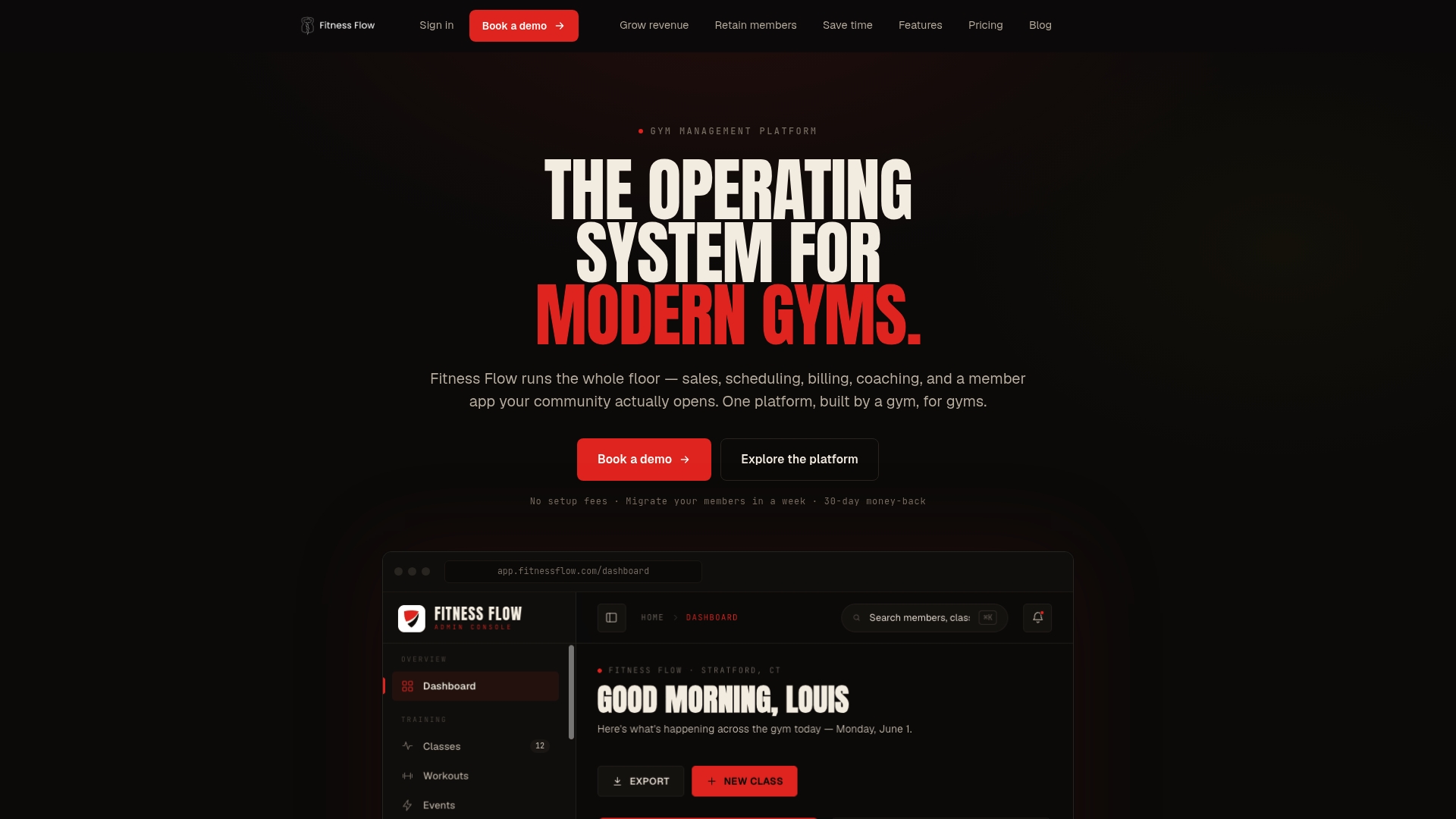
- Consent capture built into sign-up, your website, and your branded member app
- A shared team inbox with keyword routing and after-hours auto-replies
- Retention and engagement analytics tied directly to your texting conversations
See how it fits your gym on our for-gyms page, or start with a plan that matches your size to get your first texting pilot running this month.
FAQ
What is a two-way SMS?
A two-way SMS is a text conversation where the recipient can reply and reach a real person or an automated system, unlike a one-way broadcast that only sends outward. For gyms, this means a member can reply to a class confirmation or ask a billing question directly through text (Sinch).
Can Planet Fitness members go to any gym?
This article covers two-way texting tools for independent gyms and studios rather than any single franchise’s membership policy, so we would point you to that franchise directly for its specific membership rules.
What fitness tracker can show text messages?
Several smartwatches and fitness trackers can mirror phone notifications, including text messages, but this depends on the specific device and its pairing with a smartphone rather than on any gym’s texting system. Check your tracker’s own notification settings to confirm which message types it displays.
Are gyms with extended hours profitable?
Profitability for any gym model depends on factors like location, staffing, and member retention rather than operating hours alone, and no single reliable figure covers all gyms with extended hours. Strong communication and scheduling tools, including two-way texting, support retention regardless of a gym’s operating hours.
What’s a reasonable reply rate to expect from gym texting?
SMS as a channel can reach response rates around 45%, well above email’s roughly 6%, though your actual rate depends on message type and timing (Sakari). Moving a conversation into one-to-one chat tends to produce a much higher share of replies than a broadcast send (Project Broadcast).
Sources
- SMS marketing statistics: Data-backed insights for 2025–2026 (Sakari)
- Conversational commerce (Sinch blog)