

Gym Member Retention: The 90-Day Playbook That Works

Structured onboarding, attendance tracking, community, and automation. That’s the combination that actually moves the needle on gym member retention, and it works because it addresses churn before it happens instead of scrambling to win members back after they’ve already checked out mentally. If you fix nothing else this quarter, fix this: build a real 90-day onboarding sequence, flag inactivity within about two weeks, and give people a reason to bond with the place beyond the equipment.
Here’s what to do this week:
- Set an at-risk trigger after around 12 days of no check-in for regular attendees.
- Schedule your first three onboarding follow-ups (day 7, day 14, day 30).
- Launch a 30-day attendance streak incentive for new joins.
- Pull your current annual retention number and compare it against the HFA 2025 industry benchmark of 66.4%.
If you’re below that number, the gap usually isn’t a facility problem. It’s a systems problem, and it’s fixable with the tactics below. A platform like Fitness Flow can automate most of this without adding headcount.
Key Takeaways
Gym member retention improves most when structured 90-day onboarding, attendance-based early warning triggers, and attendance-driven loyalty mechanics work together rather than in isolation.
PointDetails
Use the right benchmark
Compare your gym against the 66.4% HFA annual retention anchor, not older outdated figures.
Front-load onboarding
Concentrate touchpoints in the first 30 days, since that window is the most predictive of long-term retention.
Flag inactivity early
Trigger outreach after 10 to 14 days without a check-in, before a member mentally checks out.
Separate churn types
Track voluntary and involuntary churn separately so payment failures don’t get mistaken for disengagement.
Automate the repetitive work
Platforms like Fitness Flow run onboarding sequences, attendance triggers, and dunning automatically, helping users improve retention significantly.
Table of Contents
- Why Gym Member Retention Matters More Than New Sign-Ups
- How Do You Build a 90-Day Onboarding Framework That Reduces Churn?
- Can Attendance Data Predict Who’s About to Cancel?
- What Community and Loyalty Tactics Actually Reduce Cancellations?
- Fixing Involuntary Churn: Pause Policies and Payment Recovery
- How Should You Measure and Test Retention Improvements?
- How Fitness Flow Puts This Playbook Into Practice
- What the Data Actually Tells You to Prioritize
- Get Started With Fitness Flow
- Frequently Asked Questions
- Sources
Why Gym Member Retention Matters More Than New Sign-Ups
Every gym owner obsesses over lead flow. Fewer obsess over what happens after someone signs the contract, which is a mistake, because the math on gym member retention is lopsided in favor of keeping people rather than replacing them. Retention spending typically outperforms equivalent acquisition spending dollar for dollar, since a member who stays past month six costs almost nothing to keep happy compared to what you paid to acquire them.
The benchmark to use is 66.4% annual retention, the current HFA industry anchor. Older figures floating around at 71.4% come from 2015 data and no longer reflect how gyms operate today. Before you compare your number to anyone’s, define your window (monthly or annual) and your denominator consistently, or the comparison is meaningless.
There’s a second split that matters just as much: voluntary versus involuntary churn.
- Voluntary churn: a member actively cancels, usually from disengagement, moving, or dissatisfaction.
- Involuntary churn: a payment fails and the account lapses without anyone deciding to leave.
Lump these together and you’ll misdiagnose the problem every time.
How Do You Build a 90-Day Onboarding Framework That Reduces Churn?
The first 90 days determine most of what happens over the next year. Operator networks consistently flag the first 30 days as the single most predictive window for whether a member sticks around, which means the bulk of your retention effort belongs right at the start, not six months in when someone’s already drifting.
Break the 90 days into three phases.
Phase 1: Foundation (days 1 to 30). This is where habits get set or fail to form. Run an orientation session in week one, then follow up with three separate coach touches across weeks one through three, not one generic welcome email. On day 7, check in specifically about whether the workout plan feels achievable. On day 30, acknowledge whatever progress happened, even something small like consistent attendance, because robust onboarding programs drive the biggest jump in six-month survival of any single intervention.

Phase 2: Habit formation (days 31 to 60). By now the member should have a routine. Your job shifts from teaching them the gym to reinforcing the routine. A day-60 touchpoint should invite them into something social, a group class, a challenge, an event, rather than just another check-in call.
Phase 3: Community integration (days 61 to 90). This is where members either become regulars or quietly disappear. Day-90 should include a real review conversation: what’s working, what isn’t, and early renewal groundwork, framed as a relationship check rather than a sales pitch.
Here’s the touchpoint cadence in order:
- Orientation session, day 1.
- Coach follow-up one, end of week 1.
- Coach follow-up two, end of week 2.
- Day-7 check-in on plan fit.
- Coach follow-up three, end of week 3.
- Day-30 progress acknowledgment.
- Day-60 community invite (class, event, challenge).
- Day-90 review and renewal conversation.
Track visits, class bookings, staff interactions logged, and milestone completions across the window. A member hitting four or more of those touchpoints on schedule almost never shows up on your at-risk list.
Small studios with one or two staff can’t run eight manual touchpoints per new member without burning out. That’s where automation earns its keep: templated but personalized messages triggered by the calendar handle the volume, while staff time gets reserved for the members whose attendance is actually dropping. Larger multi-location clubs can afford more staff-led contact, but even they benefit from automating the scheduling logic so nobody falls through the cracks between locations.
Pro Tip: Don’t make day-30 and day-60 touches purely transactional. Mix service information with a social introduction, like meeting a specific coach or a regular who trains at the same time. Members who form one social tie in the first two months churn far less than those who only ever interact with staff.
Can Attendance Data Predict Who’s About to Cancel?
Yes, and it’s the most underused signal most gyms have sitting in their own systems already. Attendance functions as an early-warning system when you define clear at-risk rules instead of waiting for a cancellation request to tell you something went wrong.
Two rules to start with:
- No check-in for 10 to 14 days from a member who normally visits three or more times weekly.
- A week-over-week drop in visit frequency of 50% or more, even without a full gap.
The integration pattern is straightforward: check-in data flows into your CRM, which flags the pattern and fires an automated “we missed you” message, followed by a coaching invite if there’s no response within a few days. Automated attendance triggers let a two-person front desk team run outreach that would otherwise require a dedicated retention coordinator.
On channels, low-friction options like wallet passes and lock-screen notifications work well for casual reminders and class alerts, since members don’t need to open an app to see them. Wallet pass and lock-screen engagement tends to outperform email for simple nudges. Dedicated apps make more sense when you need two-way interaction, like booking a class, tracking a workout, or joining a challenge leaderboard.
One caution that gets ignored constantly: a mass “we haven’t seen you” email blasted to fifty people at once reads as exactly what it is, and members notice. Keep the outreach personal and service-oriented. Reference their actual goal or their usual class time instead of a generic template.
Pro Tip: Route at-risk alerts to whichever staff member has the strongest relationship with that member, not just whoever’s on shift. A message from someone the member actually knows converts far better than one from the front desk.
What Community and Loyalty Tactics Actually Reduce Cancellations?
Group classes and small cohorts build accountability that a solo treadmill session never will. Members who train alongside the same faces each week are less likely to cancel, because leaving means disappointing people, not just breaking a habit. Loyalty programs built around attendance rather than spend consistently outperform points-for-purchases models, since they reward the exact behavior you’re trying to protect.
Design the program around these mechanics:
- Attendance points awarded per visit, not per dollar spent.
- Streaks that reset gently rather than punitively (a missed week shouldn’t erase three months of progress).
- Milestone rewards at 10, 25, and 50 visits.
- Early wins front-loaded into the first 30 days so new members feel momentum immediately.
Loyalty mechanics tracking actual check-ins beat spend-based rewards because they reinforce the habit you actually want, showing up, rather than incentivizing purchases that have nothing to do with retention.
Three low-cost activations worth running on a rolling basis:
- A 30-day challenge tied to a specific, achievable goal (attendance count, not weight loss).
- Member spotlights that recognize consistency publicly, in person or on a shared board or app feed.
- A timed referral ask at day 60, once the member has enough of their own experience to speak credibly about the gym.
One threshold worth building your whole onboarding calendar around: members who hit four or more classes in their first 30 days show dramatically better retention odds than those who attend fewer. Structure your day-7 through day-30 touchpoints specifically to push new members toward that number, and the referral and loyalty mechanics above will have far more to work with.
Fixing Involuntary Churn: Pause Policies and Payment Recovery
Not every cancellation is a member choosing to leave. A meaningful share of raw cancellations trace back to failed payments rather than genuine disengagement, which means better dunning can recover members who never intended to quit at all.
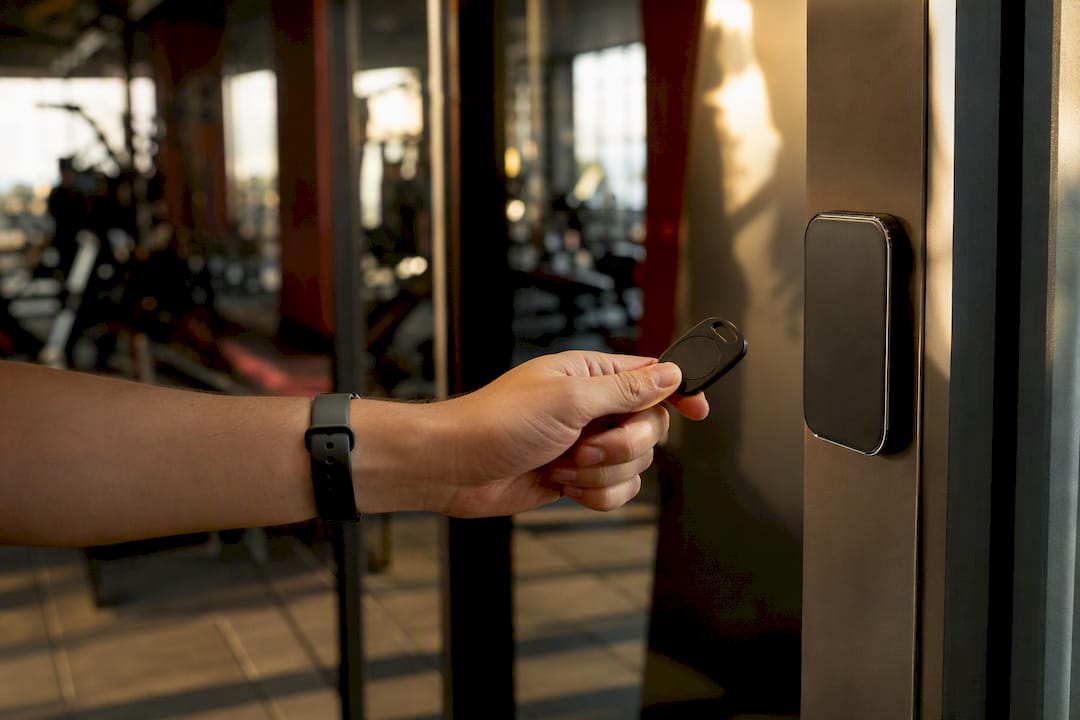
Start with pause and hold policies. A member facing a temporary financial squeeze or a move will cancel outright if pausing isn’t an option, but they’ll stay enrolled if you offer a transparent 30 or 60-day hold instead. Make downgrade tiers visible too. Someone who can’t justify your premium plan right now might happily stick around on a lighter one rather than leaving entirely.
For payment failures specifically:
- Keep the recovery window short, three to seven days, before the account lapses fully.
- Send progressive messaging: a friendly first nudge, then a more direct follow-up if there’s no response.
- Write recovery scripts that sound like a person checking in, not a collections notice.
When a member does attempt to cancel, the intercept conversation matters. Offer a pause before processing the cancellation outright, and make the return path easy enough that leaving doesn’t feel like burning a bridge.
Pro Tip: Tie premium perks, like guest passes or specialty class access, to attendance rather than tenure. It keeps the perceived value of a higher tier obvious every time the member uses the gym, not just on the invoice.
How Should You Measure and Test Retention Improvements?
Retention rate is members retained divided by members at the start of the period, and the period you choose changes everything. Compare your monthly number to someone else’s annual number and you’ll draw the wrong conclusion every time, so pick one window, the 66.4% annual figure is the reasonable current anchor, and stick to it.
Track these metrics on a standing basis:
- Voluntary versus involuntary churn, tracked separately.
- 90-day survival rate for new members specifically.
- Average visit frequency by cohort.
- Payment recovery rate after dunning outreach.
Three experiments worth running over the next two quarters: test a compressed onboarding cadence (fewer, higher-value touches) against your current sequence and measure 90-day survival; test two loyalty reward thresholds against each other and measure visit frequency lift; test a personal outreach script against a templated one for at-risk members and measure response rate. Renewal outreach at 30, 14, and 7 days before term end, run as a relationship check rather than a discount pitch, is worth testing on its own.
Assign one person to own the dashboard, even in a small gym, and segment by join cohort monthly so you can see which onboarding changes actually shifted behavior.
How Fitness Flow Puts This Playbook Into Practice
Everything above requires either a dedicated retention coordinator or a system that runs the repetitive parts automatically. Most independent gyms don’t have the first option, which is why the tactics map cleanly onto a platform built for exactly this job.
Fitness Flow’s structure lines up directly with the framework:
- Automated onboarding sequences that fire the day-7, day-30, day-60, and day-90 touchpoints without a staff member remembering to send them.
- Attendance data feeding directly into at-risk triggers, so a 12-day gap generates a flagged outreach task instead of going unnoticed.
- Gamified streaks and milestone rewards built into the branded member app, covering the loyalty mechanics without a separate points system to manage.
- Billing and dunning automation for failed payments, addressing involuntary churn without manual follow-up calls.
Pro Tip: If you’re testing this playbook manually first, track which touchpoints you actually complete for a month. Most owners find the day-60 and day-90 touches are the ones that quietly get skipped, and automating just those two closes most of the gap.
Explore the Fitness Flow platform to see how the feature set maps to each phase of the 90-day framework.
What the Data Actually Tells You to Prioritize
Most retention advice treats every tactic as equally important, and that’s the biggest thing conventional wisdom gets wrong. It isn’t. The first 30 days carry disproportionate weight, and gyms that pour their limited staff time into that window outperform gyms that spread the same effort evenly across a year.
The second overrated idea is that loyalty programs and discounts are the primary lever. They’re not. They’re reinforcement for a habit that either did or didn’t form in the first month. A generous rewards program bolted onto weak onboarding is decoration on a structure that’s already cracking.
If you’re deciding where to spend your first hour of retention work this week, spend it on the at-risk trigger, not the loyalty program. A 12-day inactivity flag costs nothing to set up and catches problems while they’re still solvable. The community and rewards mechanics matter, but they work on members who already showed up enough times to form a habit. Fix the front door before you decorate the lobby.
The involuntary churn piece gets ignored more than it should, mostly because it’s boring. Payment recovery isn’t glamorous work, but recovering members who never intended to leave is the cheapest retention win available, and most gyms leave it on the table entirely.
Get Started With Fitness Flow
You’ve read the playbook. Running it by hand, across onboarding sequences, attendance flags, loyalty tracking, and payment recovery, means juggling a CRM, a separate app, a scheduling tool, and a payment processor that don’t talk to each other. That’s the real cost most gyms underestimate: not the tactics themselves, but stitching together four subscriptions to execute them.
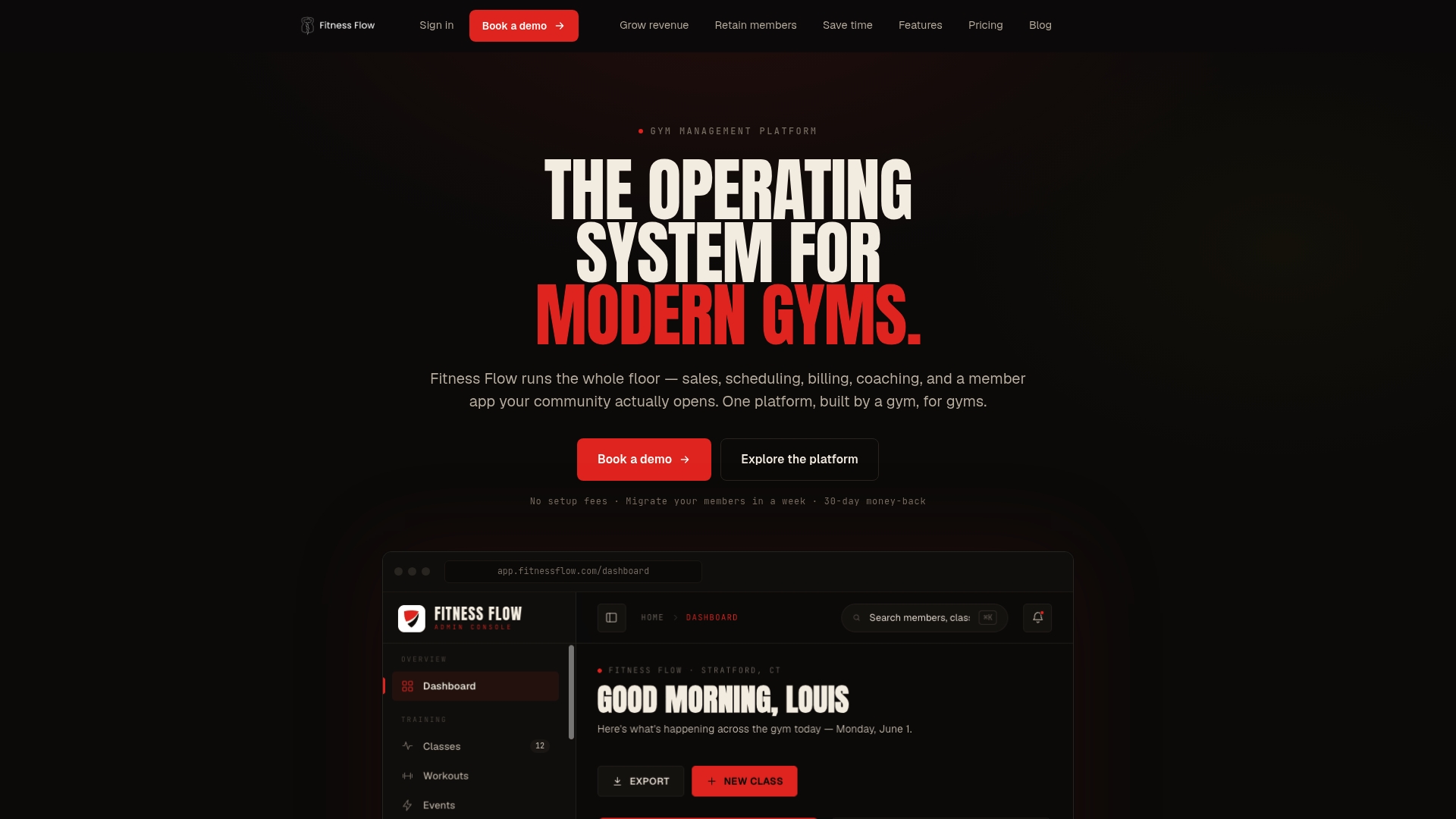
Fitness Flow replaces that stack with one branded system. Onboarding sequences fire automatically on the cadence outlined above. Attendance data feeds straight into at-risk alerts. Loyalty streaks and milestone rewards live inside a member app carrying your gym’s own branding, not a generic third-party interface. Billing recovery runs without a staff member chasing declined cards.
If the 90-day framework above sounds right but your current tools can’t run it, see how Fitness Flow works and book a demo to map your onboarding sequence against the platform’s automation before your next member cohort walks through the door.
Frequently Asked Questions
What is a good gym member retention rate?
The current industry anchor is 66.4% annual retention, according to HFA’s 2025 benchmarking data. Compare your own number against that figure using the same time window, either monthly or annual, since mixing windows produces misleading comparisons.
How long does it take to see results from a new onboarding program?
Most gyms see measurable movement in 90-day survival rates within one full onboarding cycle, roughly three months after launch. The clearest early signal is whether new members are hitting four or more classes in their first 30 days.
What’s the difference between voluntary and involuntary churn?
Voluntary churn happens when a member actively decides to cancel. Involuntary churn happens when a payment fails and the membership lapses without any deliberate decision to leave. Improving dunning and payment recovery addresses the involuntary side specifically.
Do loyalty programs actually reduce gym member churn?
Attendance-based loyalty programs, ones that reward showing up rather than spending, show a stronger link to reduced cancellations than points-for-purchase models. Streaks and milestone rewards work best when front-loaded into a new member’s first month.
How often should gyms reach out to at-risk members?
Trigger the first outreach as soon as a regular attendee hits 10 to 14 days without a check-in, then follow with a coaching invite within a few days if there’s no response. Renewal-specific outreach works best at 30, 14, and 7 days before a term ends.
Sources
- Gym Retention Rate Benchmarks 2026: The Number, Methodology — Nutripy
- How Gyms Are Using Member Data to Increase Retention — Health & Fitness Association
- Best Loyalty Programs for Fitness Studio in 2026: Complete Guide | Regulr
- Gym Membership Retention Strategies: The Definitive 2026 Guide | PushNotice