

Raise Gym Prices Without Losing Members: A Rollout Plan

Most well-run increases in this range produce only 3% to 7% cancellations within 60 days, and the revenue gained from everyone who stays almost always outpaces what you lose from the ones who leave.
This works because you’re not just changing a number. You’re segmenting members by tenure and plan, giving people time to adjust, and adding something visible before you ask for more money.
- Set new-member pricing first, then move to existing members in tiers.
- Give 30 to 60 days’ notice and grandfather your longest-tenured members briefly.
- Add one visible improvement (a class, extended hours, new equipment) before the increase lands.
Quick numbers to anchor your plan: expect 3% to 7% churn on a well-communicated 5% to 15% increase, and expect net revenue to rise even after accounting for that churn.
Key Takeaways
PointDetails
New members first
Launch the new rate for sign-ups before touching existing member pricing.
Segment before you announce
Group members by tenure, plan, and payment method to decide notice length.
Personal outreach beats mass email
Owner-led conversations for long-tenured members prevent avoidable cancellations.
Add value within 60 days
A new class, extended hours, or event helps justify the increase visibly.
Automate the rollout
Fitness Flow handles segmented billing, scheduled messaging, and churn dashboards in one system.
Table of Contents
- The 30-Second Checklist Before You Raise Gym Prices
- How to Prepare: Run the Numbers and Segment Your Members
- Two-Step Rollout: New Members First, Then Existing Tiers
- What to Say and When: The Communication Framework
- How Do You Increase Perceived Value Before a Price Hike?
- Which KPIs Prove a Price Increase Worked?
- How Gym Management Software Handles the Heavy Lifting
- Let Fitness Flow Run the Price Change for You
- Sources
- FAQ
The 30-Second Checklist Before You Raise Gym Prices
Before you touch a single price field in your billing software, run through this:
- Pull your current billing cycles and check auto-pay terms and contract lock-ins.
- Calculate your margin target and the dollar amount needed to hit it.
- Segment members by tenure, plan type, and payment method.
- Estimate expected churn using the 3% to 7% benchmark as your baseline.
- Decide your notice period and whether any group gets grandfathered pricing.
- Assign one staff member to own communications and one to handle cancellation conversations.
Skipping any of these steps is how a reasonable price increase turns into a member relations mess.
How to Prepare: Run the Numbers and Segment Your Members
Start with math, not a gut feeling. If your monthly fixed costs run $18,000, you need roughly $25,700 in monthly revenue to hit that margin. Work backward from there to figure out how much of an increase actually closes the gap.
Segmentation comes next. Not every member should get the same increase or the same notice.
SegmentTypical treatment
New members (post launch date)
Full new price immediately
Members enrolled less than 6 months
Standard notice, standard increase
Members 1+ years
Longer notice, possible short grace period
Month-to-month, no contract
Standard 30–60 day notice
Annual contract holders
Increase applies at renewal only
Before you set a date, confirm your payment processor’s required notice window and check whether your state or local jurisdiction has billing disclosure rules for recurring charges.
Pro Tip: Pull a report of members by join date and plan type before you decide on tiers. Guessing at segments is how gyms accidentally overcharge their most loyal members.
Two-Step Rollout: New Members First, Then Existing Tiers
Raise pricing for new members before you touch anyone currently on the books. This protects your conversion funnel from panic price-matching and gives you real-world data on how the new number performs before you roll it out wider.
- Set the new rate for all new sign-ups immediately.
- Wait two to four weeks and watch your lead-to-member conversion rate.
- Roll the increase to existing members in tiers, starting with your shortest-tenure segment.
- Apply a short grace period (30 to 60 days) for long-tenured members before their new rate kicks in.
Match your increase size to what you’re actually offering:
- Standard increase (5% to 8%): cost-of-living or inflation-driven adjustment, minimal new value needed.
- Value-added increase (10% to 15%): tied to a real service upgrade like added classes or extended hours.
- Repositioning increase (20%+): requires a full rebrand or major facility overhaul, not just a price change.
Keep tiers to two or three at most. Tiers that reflect real differences in access or perks convert well; a fourth or fifth tier usually just confuses people.
What to Say and When: The Communication Framework
Lead with people, not with a mass email. Owner or manager-led personal conversations for your long-tenured members should go out first, followed by email and in-app notices for everyone else. Personalized, owner-led outreach prevents the majority of avoidable cancellations, while mass announcements tend to trigger cancellations that a five-minute conversation would have stopped.
Use one plain sentence to explain the math, then pivot to value and community.
- Front desk script: “We wanted you to hear it from us directly. Your rate is adjusting starting [date], and here’s what’s new for you.”
- Cancellation conversation script: “Before you go, can I ask what’s driving this? If it’s the price, here’s what we can offer.”
- Have a written FAQ ready for staff covering the most common objections before the announcement goes out.
Trust built before the increase does real work here: trust and loyalty measurably raise members’ willingness to accept a higher price.
How Do You Increase Perceived Value Before a Price Hike?
Perceived value isn’t just about equipment. Atmosphere and community carry real weight in how members judge fairness around a price change, which means a $200 investment in the right place can outperform a $2,000 one in the wrong place.
Launch something visible within 60 days of the increase:
- A new class format or an extra instructor shift.
- Extended open hours, even by 90 minutes a day.
- A member appreciation event or small challenge series.
- Loyalty perks: referral credits, priority booking, or guest passes for longer-tenured members.
Avoid pushing people into what amounts to calculator mode, where every message is framed around dollars instead of what they’re actually getting. Lead with progress and belonging, and let the number be a footnote.
Pro Tip: Announce the value addition a week before the price change, not the same day. It reads as a genuine improvement instead of a bribe.
Which KPIs Prove a Price Increase Worked?
Track four numbers in the 30 to 60 day window after your increase: churn rate, net revenue retention, average revenue per member (ARPM), and new-member conversion rate.

KPIWhat to expect
Churn (30–60 days)
3% to 7% for a well-communicated 5–10% increase
Net revenue
Gain from remaining members typically exceeds losses
ARPM
Rises immediately post-increase
New-member conversion
Should hold steady if new pricing launched earlier
A $5 increase on a $50 membership, a 10% rise, commonly lands in that 3% to 7% cancellation range. If your churn runs hotter than that, test a shorter notice window, a longer grace period, or a warmer message tone before you assume the price itself is the problem.
How Gym Management Software Handles the Heavy Lifting
Manually tracking who’s grandfathered, who’s on the new rate, and who needs a personal call is where most price increases fall apart operationally. A billing engine that handles pricing by member segment removes that risk entirely.
- Set new-member and existing-member pricing separately, with automatic effective dates.
- Schedule segmented messages so long-tenured members get personal outreach before the general announcement goes out.
- Track churn and ARPM in real time instead of reconstructing it from spreadsheets after the fact.
- Centralize your front-desk scripts and FAQ so every staff member gives the same answer.
The gyms that handle price increases smoothly are rarely the ones with the best script. They’re the ones where billing, messaging, and reporting live in one system instead of three disconnected tools.
The Fitness Flow platform builds this kind of segmented billing and reporting directly into its CRM, which turns a multi-week manual rollout into a few configured rules.
An Operator’s Take on Raising Prices
Most owners overestimate how many members will leave.
Let Fitness Flow Run the Price Change for You
Fitness Flow is built to handle exactly what this rollout demands: segmented billing rules, scheduled messaging by member tenure, and live dashboards tracking churn and ARPM so you’re not guessing 45 days in.
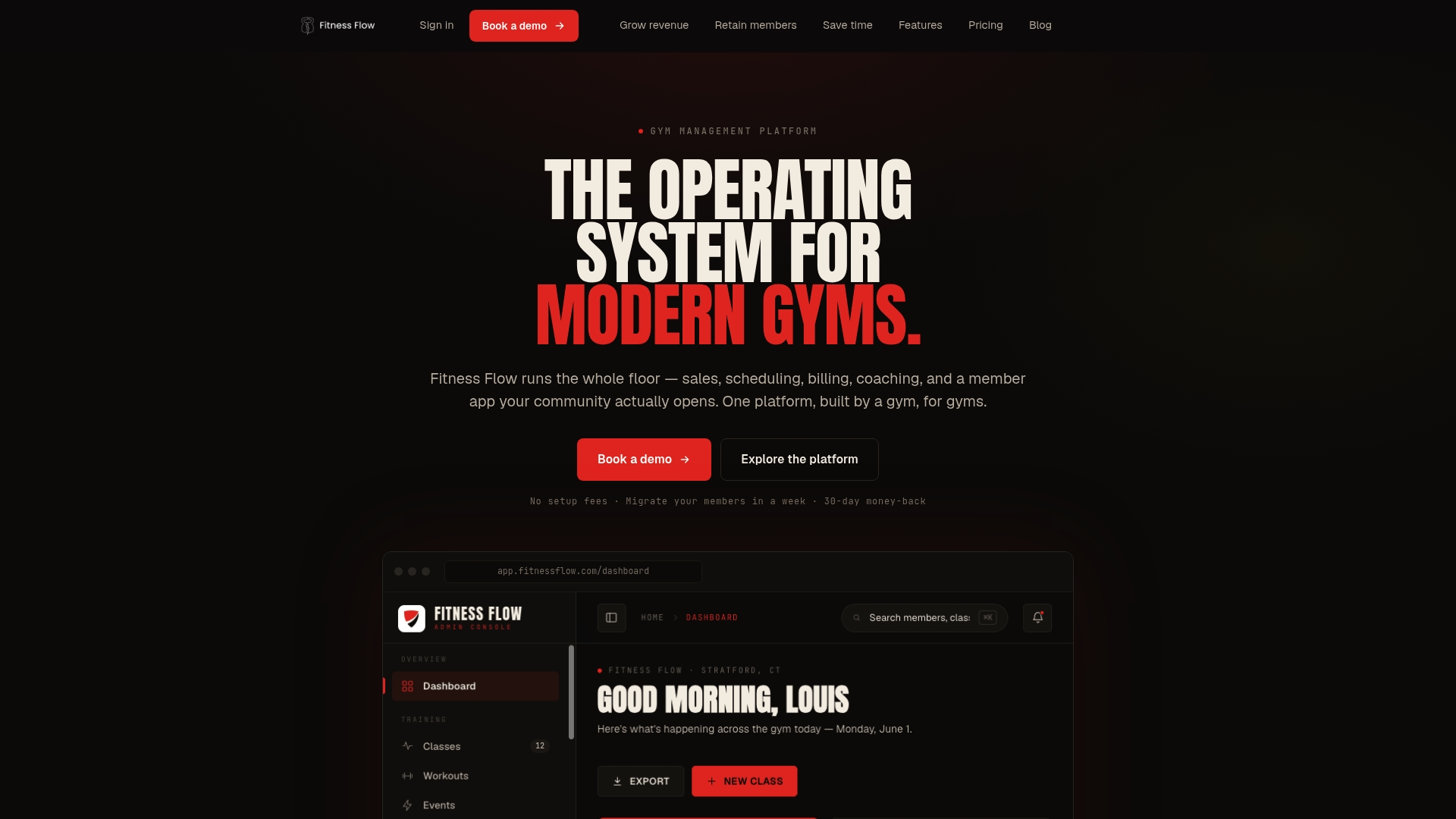
Instead of manually tagging spreadsheets and copying scripts into a group text, you set the new rate, assign your grandfather rules, and let the Fitness Flow system trigger the right message to the right segment at the right time. Owners who’ve automated their gym management software stack spend less time firefighting cancellations and more time on the floor. If losing members to acquisition gaps worries you post-increase, pairing this with a referral push or a Gym SEO strategy helps backfill faster. Book a demo and see how the billing and messaging engine handles your next increase before you set a date.
Sources
- Trust, satisfaction, loyalty and adaptation to price in fitness services (DOI link)
- How to Raise Gym Prices Without Losing Members | Optimized Growth
- How to Raise Studio Prices Without Losing Your Members | Rachel Yacobucci
- How to Price Gym Memberships Without Losing Customers | NTAIFitness
FAQ
Is $25 a Month a Lot for a Gym?
No, $25 a month sits well below the national average for most full-service gyms, and it’s a common price point for budget or basic-access memberships.
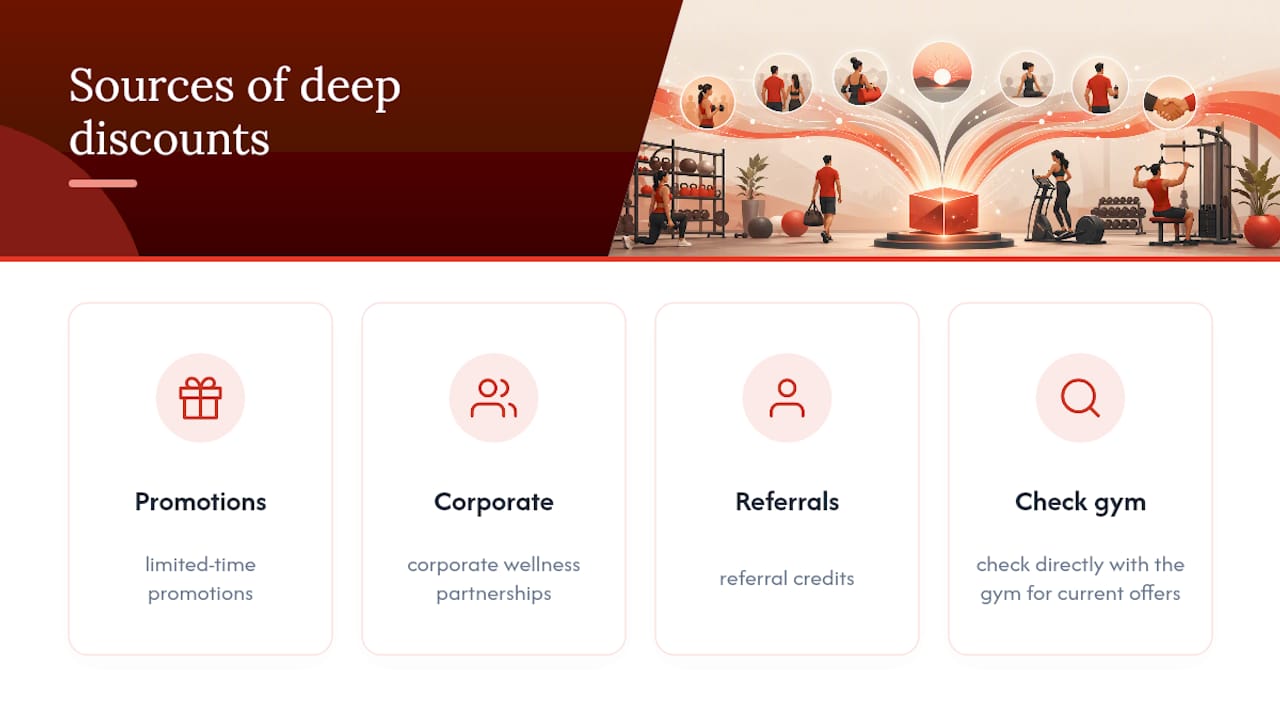
How Do I Get 75% Off a Gym Membership?
Deep discounts like this typically come from limited-time promotions, corporate wellness partnerships, or referral credits rather than standard pricing, so check directly with the gym for current offers.
What Is the Cheapest Gym Membership Right Now?
Pricing varies widely by region and gym type, but budget chains generally offer the lowest monthly rates, often well under $25; check local listings since this changes by market.
Is $40 a Month a Lot for a Gym?
Not for a mid-tier gym with classes and amenities. This amount falls within a reasonable range for gyms offering more than basic equipment access, especially if it includes group classes.
How much should I raise gym prices without losing members?
Most gyms can raise prices 5% to 15% annually with minimal churn if the increase is communicated clearly and paired with visible value.